A Hybrid EDAS and GRA MCDM Framework for Evaluating Fourteen Nanostructured Electrode Materials in Biomedical Applications
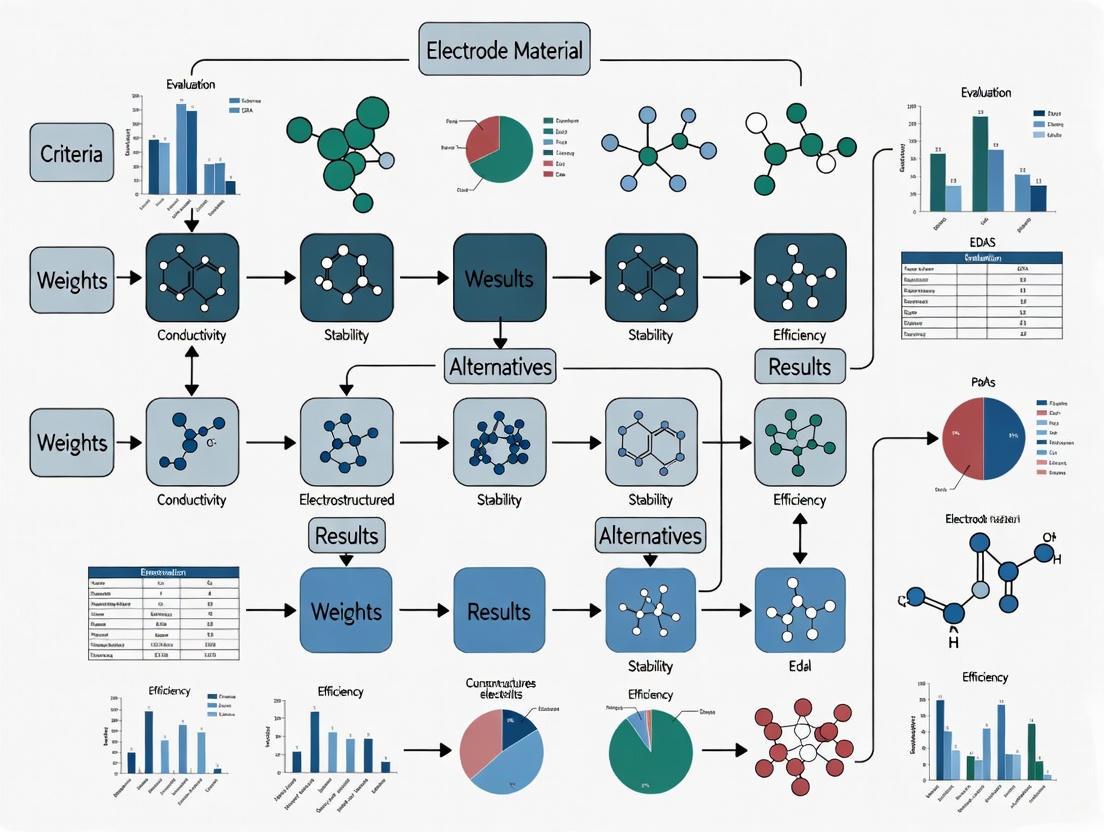
This article presents a comprehensive evaluation of fourteen nanostructured electrode materials (NEMs) using a robust hybrid Multi-Criteria Decision-Making (MCDM) model that integrates the Evaluation based on Distance from Average Solution...
A Hybrid EDAS and GRA MCDM Framework for Evaluating Fourteen Nanostructured Electrode Materials in Biomedical Applications
Abstract
This article presents a comprehensive evaluation of fourteen nanostructured electrode materials (NEMs) using a robust hybrid Multi-Criteria Decision-Making (MCDM) model that integrates the Evaluation based on Distance from Average Solution (EDAS) and Grey Relational Analysis (GRA). Tailored for researchers, scientists, and drug development professionals, this work establishes a foundational understanding of critical performance criteria for NEMs in biosensing and drug analysis. It details the methodological application of the EDAS-GRA framework, addresses common synthesis and optimization challenges, and validates the ranking results through comparative analysis with established MCDM methods and machine learning models. The study provides a reliable, systematic decision-support tool for selecting optimal electrode materials, thereby accelerating innovation in electrochemical sensors for pharmaceutical and clinical diagnostics.
Nanostructured Electrode Materials for Biomedical Sensing: Properties, Criteria, and Selection Challenges
The Pivotal Role of Nanostructured Electrodes in Modern Electroanalysis of Pharmaceuticals
The accurate and sensitive detection of pharmaceutical compounds is paramount for ensuring drug safety, efficacy, and environmental health. Modern electroanalytical techniques have emerged as powerful tools for pharmaceutical analysis, with their performance being profoundly influenced by the electrode material at their heart. The advent of nanostructured electrodes has marked a revolutionary shift in this field, offering unprecedented capabilities to enhance analytical signals, improve selectivity, and lower detection limits. These materials leverage their unique structural properties, such as high specific surface area and superior electrical conductivity, to facilitate the electrochemical detection of pharmaceutical agents.
Framed within a broader research thesis that involves the evaluation of fourteen different nanostructured electrode materials using the Evaluation Based on Distance from Average Solution (EDAS) and Grey Relational Analysis (GRA) multi-criteria decision-making (MCDM) methodologies, this guide provides a comparative analysis of the most promising materials. The EDAS method, which evaluates alternatives based on their distance from the average solution, has been identified as particularly effective when conflicting criteria are present [1] [2]. This objective, data-driven approach helps researchers and drug development professionals identify optimal electrode materials by systematically weighing key performance parameters such as sensitivity, selectivity, and stability.
Performance Comparison of Nanostructured Electrode Materials
The systematic evaluation of fourteen nanostructured electrode materials (NEMs) using a combined Rough-AHP (Analytic Hierarchy Process) and EDAS/GRA model revealed distinct performance hierarchies. The analysis identified specific capacitance (SC) and energy density (ED) as the two most critical criteria governing the performance of electrochemical sensing platforms [1]. The table below summarizes the comparative performance data for key categories of nanostructured materials relevant to pharmaceutical electroanalysis.
Table 1: Performance Comparison of Nanostructured Electrode Material Categories
| Material Category | Key Advantages | Limitations | Exemplary Performance Metrics |
|---|---|---|---|
| Carbon-Based Nanostructures (e.g., Graphene, Porous Carbon) | High specific surface area; Excellent electrical conductivity; Wide potential window; Good stability [3] [4]. | Limited intrinsic catalytic activity; Can require functionalization. | Specific capacitance up to 522 F g⁻¹ [4] [5]. |
| Metal Oxide Nanostructures (e.g., CoO, α-Fe₂O₃, MnO₂) | Strong electrocatalytic properties; Redox activity; Tunable morphologies [6] [4]. | Lower electrical conductivity; Volume expansion during cycling. | Specific capacity of 125.56 mA h g⁻¹ (CuMn₂O₄) [4]. |
| Conductive Polymers (e.g., Polyaniline - PANI) | High conductivity in doped states; Reversible redox chemistry; Flexible and tunable [4] [5]. | Mechanical instability over long-term cycling; Swelling and shrinkage. | Used in composite electrodes for supercapacitors [5]. |
| MXenes and MOFs | Extremely high surface area; Tunable surface chemistry; Metallic conductivity (MXenes) [3] [7]. | MXenes can be susceptible to oxidation; MOFs often have poor conductivity. | Promising for capacitive and battery-type electrodes [7]. |
Experimental Protocols for Electrode Evaluation
The assessment of nanostructured electrodes for sensing relies on standardized electrochemical protocols and material characterization techniques. The following methodologies are essential for generating comparable data on material performance.
Material Synthesis and Fabrication
- Hydrothermal/Solvothermal Synthesis: A common method for producing various metal oxides and composites. For instance, hierarchical
CuMn₂O₄nanosheet arrays were directly grown on a nickel foam substrate via a one-step hydrothermal route [4]. Similarly,α-Fe₂O₃@MnO₂core-shell structures were fabricated on carbon cloth using hydrothermal synthesis followed by electrochemical deposition [4] [5]. - Chemical Vapor Infiltration (CVI): Used for depositing materials like polymeric carbon nitride (PCN) onto porous substrates such as nickel foam, allowing for tunable morphological features and condensation degrees [8].
- Electrospinning: Employed to create self-standing electrodes based on carbon nanofibers (CNFs) embedded with active materials, such as
Na₃MnTi(PO₄)₃for sodium-ion batteries, which facilitates easy electrolyte diffusion [8]. - Calcination and Activation: Processes used to fabricate heteroatom-doped porous carbon materials. For example, nitrogen/oxygen-doped porous carbon was produced by calcining and activating an organic crosslinked polymer, resulting in a high specific surface area [4].
Electrochemical Characterization Techniques
- Cyclic Voltammetry (CV): Used to study the redox behavior of the electrode material and the pharmaceutical analyte. It helps in determining the electrochemical activity and reaction mechanisms.
- Electrochemical Impedance Spectroscopy (EIS): Measures the electron transfer resistance and interfacial properties at the electrode surface, which is crucial for understanding signal transduction in sensing platforms [3].
- Galvanostatic Charge-Discharge (GCD): Although more common for energy storage evaluation, it can inform on the stability and charge storage capacity of the material in a sensing context [3].
- Amperometry/Chronocoulometry: Directly applied in sensing to measure current or charge response as a function of analyte concentration, enabling the construction of calibration curves.
The following workflow diagram illustrates the standard process for developing and evaluating a nanostructured electrochemical sensor.
The Scientist's Toolkit: Essential Research Reagents and Materials
The development and application of high-performance nanostructured electrodes require a suite of essential materials and reagents. The table below lists key components used in the fabrication and testing of these advanced sensing platforms.
Table 2: Essential Research Reagents and Materials for Electrode Development
| Material/Reagent | Function in Research & Development |
|---|---|
| Nickel Foam / Carbon Cloth | A three-dimensional, porous current collector that provides a high-surface-area scaffold for the direct growth of active nanomaterials, enhancing electrolyte access and active site density [4] [5]. |
| Graphene Oxide (GO) / Reduced GO | A foundational carbon nanomaterial used to create conductive networks, enhance specific surface area, and as a substrate for crafting composite electrodes [4]. |
| Transition Metal Salts (e.g., Salts of Mn, Co, Ni, Fe) | Precursors for synthesizing metal oxide and hydroxide nanostructures (e.g., CuMn₂O₄, α-Fe₂O₃, NiMoO₄) which provide rich redox chemistry for electrocatalysis [4] [8]. |
| Polyaniline (PANI) Monomers | Monomers for synthesizing conductive polymers, which are known for their tunable structure and multiple oxidation states, making them excellent for charge storage and sensing applications [4] [5]. |
| Metal-Organic Framework (MOF) Precursors | Used to synthesize highly porous crystalline materials that can be used directly as electrodes or pyrolyzed to form porous carbon/metal oxide composites with ultra-high surface areas [3] [8]. |
Aqueous/Alkaline Electrolytes (e.g., KOH, H₂SO₄) |
The conducting medium for electrochemical testing. Aqueous electrolytes are often preferred for sensing due to their low resistance, environmental friendliness, and non-toxicity [7]. |
EDAS-GRA Decision Framework for Material Selection
The selection of an optimal electrode material is a multi-factorial problem that can be effectively addressed using robust MCDM frameworks. The integrated R-AHP and EDAS/GRA approach provides a structured methodology.
- Criteria Weighting with Rough AHP (R-AHP): The Analytical Hierarchy Process is used to determine the weights of various evaluation criteria. The "rough" concept is integrated to handle uncertainties and vagueness in group decision-making and material property values. This process established specific capacitance (SC) and energy density (ED) as the highest-priority criteria for high-performance electrochemical devices [1].
- Material Ranking with R-EDAS and R-GRA: The EDAS method ranks alternatives by calculating their positive and negative distances from the average solution (AV) for all criteria. The ideal material possesses a high positive distance (PDA) and a low negative distance (NDA) from the AV [1] [2]. The GRA method complements this by evaluating the geometric proximity between a reference sequence (ideal performance) and comparability sequences (each material's performance) [1]. The synergy of these methods ensures a reliable and reputable ranking of the fourteen NEMs.
The logical flow of this decision-making framework is visualized below.
The integration of advanced nanostructured electrodes is pivotal for the next generation of pharmaceutical electroanalytical techniques. The objective comparison facilitated by MCDM frameworks like EDAS and GRA moves the field beyond trial-and-error approaches, providing a scientific basis for material selection. The results confirm that while carbon-based materials offer excellent conductivity and stability, metal oxides and conductive polymers provide superior electrocatalytic activity for many applications. The future of pharmaceutical sensing lies in the rational design of composite and hybrid materials that synergistically combine the strengths of individual components, guided by these sophisticated evaluation methodologies. This data-driven approach empowers researchers and industry professionals to develop faster, more sensitive, and more reliable sensors for drug development and quality control.
Biomedical electrodes serve as the vital interface between electronic devices and biological tissues, enabling many advanced healthcare applications. These applications range from diagnostic monitoring, such as measuring electrocardiogram (ECG) and electroencephalogram (EEG) signals, to therapeutic interventions including electrical stimulation for nerve regeneration and targeted drug delivery [9]. The performance of these electrodes directly determines the efficacy and safety of the entire biomedical device. Key performance criteria span from fundamental electrical conductivity to complex biocompatibility requirements, with recent research focusing on nanostructured and bioresorbable materials to overcome the limitations of traditional interfaces [10] [9].
The evaluation of novel electrode materials is a complex, multi-criteria process. Advanced decision-making frameworks, such as the Integration of Analytic Hierarchy Process (AHP) with the Evaluation Based on Distance from Average Solution (EDAS) and Grey Relational Analysis (GRA), are employed to rank material alternatives comprehensively [1]. These methods systematically weigh critical performance parameters, helping researchers identify optimal materials from a set of alternatives. This guide objectively compares the performance of various biomedical electrode materials, providing a structured overview of their characteristics and supporting experimental data to inform researchers, scientists, and drug development professionals.
Key Performance Criteria for Biomedical Electrodes
The performance of biomedical electrodes is governed by a set of interconnected criteria that balance electrical, biological, and mechanical properties.
- Electrical Conductivity: This is the fundamental property that enables an electrode to transduce signals. High conductivity ensures minimal signal loss and efficient charge transfer during stimulation. Nanostructured composites can achieve conductivities as high as 1.4 × 10^4 S/m, facilitating high-fidelity biosignal acquisition [10] [9].
- Biocompatibility: An electrode must not elicit a significant immune response or cause toxicity. This involves the safe resorption of temporary implants and the non-toxic nature of degradation byproducts. For instance, zinc and molybdenum ions are generally well-tolerated, while tungsten oxide species can be toxic [10].
- Charge Injection Capacity (CIC) and Impedance: For stimulating electrodes, a high charge injection capacity allows for effective tissue activation with lower risks of tissue damage. Low impedance at the electrode-tissue interface is crucial for sensitive signal recording, minimizing noise. Conductive polymer coatings like PEDOT:PSS can reduce impedance by up to 24 times compared to bare metal electrodes [9].
- Mechanical Compliance and Flexibility: A mechanical match between the soft, dynamic nature of biological tissues and the electrode is essential. Flexible and soft electrodes minimize the foreign body response, improve adhesion, and ensure stable performance on moving organs. Conductive elastomers and composites are designed specifically for this purpose [10] [9].
- Stability and Operational Lifetime: The electrode must maintain its electrical and structural integrity for the required duration of its function. For chronic implants, this means long-term stability, whereas for bioresorbable electrodes, it involves a predictable and controlled degradation profile [10].
Table 1: Key Performance Criteria and Evaluation Metrics
| Performance Criterion | Description & Importance | Key Measurement Techniques |
|---|---|---|
| Electrical Conductivity | Measure of a material's ability to conduct electric current; crucial for signal fidelity and efficiency. | 4-point probe method, Electrochemical Impedance Spectroscopy (EIS) |
| Biocompatibility | Ability to perform without eliciting a detrimental immune response or toxic effect. | In vitro cytotoxicity assays (e.g., ISO 10993-5), in vivo implantation studies, histology |
| Charge Injection Capacity | Maximum charge that can be delivered safely to tissue without causing electrochemical damage. | Cyclic Voltammetry (CV), Voltage Transient Measurement |
| Interface Impedance | Resistance to current flow at the electrode-tissue interface; lower impedance improves signal quality. | Electrochemical Impedance Spectroscopy (EIS) |
| Mechanical Flexibility | Ability to bend, stretch, and conform to soft, moving tissues without loss of function. | Tensile testing, bending cycle tests, strain-resistance measurements |
| Degradation Profile | Rate and nature of material breakdown in physiological environments (for bioresorbable electrodes). | Mass loss measurements in PBS, SEM for surface morphology, ion concentration monitoring (e.g., via ICP-MS) |
Comparative Analysis of Electrode Material Classes
Different classes of materials offer distinct advantages and trade-offs, making them suitable for specific biomedical applications.
Metallic and Carbon-Based Materials
Traditional metals like silver/silver chloride (Ag/AgCl) are the gold standard for wet electrodes due to their low half-cell potential and excellent conductivity [9]. However, rigid metallic wires often poorly interface with soft tissues. Nanostructured metals like molybdenum (Mo) and zinc (Zn) in composite forms are used in bioresorbable electronics; a composite of candelilla wax and Mo microparticles maintained electrical continuity for up to 19 days in phosphate-buffered saline (PBS) [10]. Carbon nanomaterials, particularly carbon nanotubes (CNTs), are valued for their exceptional electrical and mechanical properties. A composite dry electrode made from multi-wall CNTs (MWCNTs) and polydimethylsiloxane (PDMS) demonstrated ECG signal intensity better than a commercial Ag/AgCl wet electrode [9].
Conductive Polymers
Polymers like poly(3,4-ethylenedioxythiophene):poly(styrene sulfonate) (PEDOT:PSS) have revolutionized neural interfaces. When electrochemically coated on a gold electrode, PEDOT:PSS can reduce impedance by a factor of 24, leading to superior signal quality. Furthermore, these modified electrodes show better biocompatibility and slower increases in impedance over a 7-day in vivo insertion period compared to unmodified gold electrodes [9]. Recent advances include conductive elastomeric composites that maintain performance under deformation [10].
Inorganic Electrets
Electrets are dielectric materials that can store a quasi-permanent electrical charge, providing endogenous electrical stimulation. Materials like silicon dioxide (SiO₂) and hydroxyapatite (HA) exhibit excellent charge retention and biocompatibility. A composite film of SiO₂ nanoparticles in a PDMS matrix was shown to maintain a stable zeta potential of -61.5 mV for 42 days, a potential range that effectively promoted osteogenic differentiation of bone marrow mesenchymal stem cells (BMMSCs) in vitro [11]. This makes them highly promising for bone regeneration and wound healing applications.
Table 2: Performance Comparison of Electrode Material Classes
| Material Class | Examples | Key Advantages | Limitations & Biocompatibility Notes |
|---|---|---|---|
| Traditional Metals | Ag/AgCl, Stainless Steel | Low half-cell potential (Ag/AgCl), reliable signal acquisition [9] | Rigid, requires gel/abrasion, not for long-term implantable use |
| Bioresorbable Metals | Mo, Zn, Mg, Fe (in composites) | Transient function, no extraction surgery, tunable dissolution [10] | Degradation byproducts must be managed (e.g., H₂ gas from Mg, toxicity of W oxides) [10] |
| Carbon Nanomaterials | CNTs, Graphene | Excellent mechanical properties, flexibility, high conductivity in composites [9] | Concerns regarding long-term biodistribution and toxicity of nanomaterial fragments [9] |
| Conductive Polymers | PEDOT:PSS, PPy | Low impedance, good tissue integration, "soft" electronics [9] | May undergo chain disintegration over time, potential immune response to oligomers [10] |
| Inorganic Electrets | SiO₂, Hydroxyapatite (HA) | Provide endogenous electrical stimulation, excellent biocompatibility, stable charge [11] | Charge retention lifetime under all physiological conditions must be ensured [11] |
Experimental Protocols for Electrode Evaluation
A standardized experimental approach is critical for the objective comparison of electrode materials.
In Vitro Electrochemical Characterization
Protocol 1: Electrochemical Impedance Spectroscopy (EIS)
- Objective: To measure the complex impedance of the electrode-electrolyte interface across a frequency range relevant to biosignals (e.g., 0.1 Hz to 100 kHz) [9].
- Methodology: A three-electrode setup (working electrode, counter electrode, and reference electrode) is immersed in a simulated physiological electrolyte such as phosphate-buffered saline (PBS) at 37°C. A small AC voltage (e.g., 10 mV RMS) is applied, and the impedance is measured. The data is often presented as a Bode plot (impedance magnitude and phase vs. frequency) or a Nyquist plot.
- Application: This protocol is fundamental for assessing signal recording quality, where lower impedance at key frequencies (e.g., 1 kHz) is desirable [9].
Protocol 2: Cyclic Voltammetry (CV) for Charge Injection Capacity
- Objective: To determine the charge storage and injection limits of an electrode material by evaluating its redox behavior and water window.
- Methodology: Using the same three-electrode setup as in EIS, the potential of the working electrode is cycled (e.g., between -0.6 V and 0.8 V vs. Ag/AgCl) at a specific scan rate (e.g., 50 mV/s). The current response is measured. The area within the CV curve relates to the charge storage capacity. The voltage limits before the onset of water electrolysis define the "water window."
- Application: A larger charge storage capacity and a wider water window indicate a higher safe charge injection capacity for stimulation applications [12].
Biocompatibility and Degradation Assessment
Protocol 3: In Vitro Cytotoxicity Assay
- Objective: To evaluate the toxicity of electrode materials or their degradation products on living cells.
- Methodology: Following standards like ISO 10993-5, extracts from the electrode material are prepared by incubating it in a cell culture medium. This extract is then applied to cultured cells (e.g., L929 fibroblasts). After a set period (e.g., 24-48 hours), cell viability is quantified using assays like MTT or Live/Dead staining. A reduction in cell viability below a threshold (e.g., 70%) indicates cytotoxicity [10].
Protocol 4: Degradation Profiling in Simulated Body Fluid
- Objective: To monitor the dissolution behavior and structural integrity of bioresorbable electrodes.
- Methodology: Electrode samples are immersed in PBS or other simulated body fluids (pH 7.4, 37°C) under static or dynamic conditions. At predetermined time points, samples are removed for mass loss measurement, surface morphology analysis via Scanning Electron Microscopy (SEM), and analysis of the immersion solution for released metal ions using techniques like Inductively Coupled Plasma Mass Spectrometry (ICP-MS) [10].
The Scientist's Toolkit: Essential Research Reagent Solutions
Successful research and development in biomedical electrodes rely on a suite of essential reagents and materials.
Table 3: Essential Research Reagents and Materials
| Reagent/Material | Function in Research | Example Application in Protocols |
|---|---|---|
| Phosphate-Buffered Saline (PBS) | Simulates physiological ionic environment and pH for in vitro tests. | Standard electrolyte for EIS, CV, and degradation studies [10]. |
| Polydimethylsiloxane (PDMS) | A biocompatible, flexible elastomer used as a substrate or encapsulation layer. | Fabrication of flexible dry electrodes and composite materials [9]. |
| PEDOT:PSS | A conductive polymer dispersion for coating electrodes to improve performance. | Lowering impedance of neural probe electrodes for enhanced signal recording [9]. |
| Cell Culture Media & Assay Kits | Support cell growth and enable quantitative assessment of cell viability. | Preparing extracts for and conducting in vitro cytotoxicity assays (e.g., MTT assay) [10]. |
| Multi-Wall Carbon Nanotubes (MWCNTs) | Conductive nanomaterial used as a filler to create conductive polymer composites. | Fabrication of flexible, gel-free dry electrodes for ECG monitoring [9]. |
| Silicon Dioxide (SiO₂) Nanoparticles | Inorganic electret material that can be polarized to provide electrical stimulation. | Dispersing in PDMS to create composite films for promoting bone regeneration [11]. |
The development of high-performance biomedical electrodes requires a holistic approach that balances electrical conductivity, biocompatibility, and mechanical integration. As evidenced by the experimental data, no single material class holds all the advantages. The choice between traditional metals, bioresorbable composites, conductive polymers, or electrets is dictated by the specific application requirements—be it short-term diagnostic monitoring, temporary implantation, or chronic neural interfacing.
Advanced multi-criteria decision-making frameworks like AHP-EDAS-GRA provide a systematic methodology for ranking these complex alternatives, helping researchers navigate the trade-offs [1]. The future of biomedical electrodes lies in the continued refinement of nanostructured and composite materials, which offer tunable properties and the potential for seamless, safe, and effective integration with the human body.
The design architecture of electrode materials plays a pivotal role in shaping their electrochemical performance, with material dimensionality proposing a critical trade-off between specific surface area, pore architecture, mechanical strength, and flexibility [3]. Nanostructured electrodes are transforming energy storage research by improving charge transport, energy density, and cycling stability [3]. Based on their spatial characteristics, these materials are categorized into zero-dimensional (0D), one-dimensional (1D), two-dimensional (2D), and three-dimensional (3D) structures, each offering distinctive features and morphological characteristics that deliver meritorious performance in supercapacitor applications [3].
This classification system provides a crucial framework for understanding how structural characteristics correlate with electrochemical functionality. The evaluation of fourteen prominent nanostructured electrode materials using sophisticated multi-criteria decision-making approaches, specifically the Evaluation Based on Distance from Average Solution (EDAS) and Grey Relational Analysis (GRA) methods, has revealed that specific capacitance and energy density stand as the most critical performance criteria [1]. This analytical foundation enables a systematic comparison across three major material families: carbon nanostructures, metal oxides, and MXenes, each occupying distinct dimensional niches with characteristic advantages and limitations.
Performance Comparison of Material Families
The electrochemical performance of electrode materials varies significantly across different material families, each exhibiting characteristic strengths and limitations. The table below summarizes key performance metrics and characteristics for the three primary material families.
Table 1: Comparative Analysis of Nanostructured Electrode Material Families
| Material Family | Specific Capacitance Range | Energy Density | Power Density | Cycle Life Stability | Key Characteristics |
|---|---|---|---|---|---|
| Carbon Nanostructures | Varies by type | Moderate to high | Very high | Excellent (≈100,000 cycles) | High electrical conductivity, tunable porosity, diverse allotropes (graphene, CNTs, activated carbon) |
| Metal Oxides | High | High | Moderate | Good (≈10,000 cycles) | Faradaic redox reactions, high theoretical capacitance, variable conductivity |
| MXenes | Very high | Very high | High | Good to excellent | Ultrahigh surface area, hydrophilic surfaces, metallic conductivity, tunable surface chemistry |
Carbon Nanostructures
Carbon-based materials represent the most diverse family of electrode materials, with performance characteristics strongly influenced by their structural dimensionality and specific allotrope form:
Graphene (2D): Offers exceptionally high specific surface area (theoretically 2630 m²/g) and superior electrical conductivity, enabling outstanding power density and cycle life. Graphene-based supercapacitors can achieve energy densities up to 50 Wh/kg in hybrid configurations [3] [1].
Carbon Nanotubes (1D): Multi-walled carbon nanotubes (MWCNTs) demonstrate remarkable performance in both energy storage and water purification applications. Experimental results show MWCNT-based membranes achieve effluent hardness of 210 micro mhos per centimeter at a flow rate of 1.87 L per second, outperforming single-walled nanotubes, carbon nanofibers, and fullerene (C60) [13] [14]. In supercapacitors, CNTs provide highly conductive networks that facilitate rapid electron transport [3].
Activated Carbon (3D): Features an extensive porous network that enables substantial charge accumulation through electric double-layer formation, though it typically exhibits lower specific capacitance compared to more structured carbon allotropes [7].
Metal Oxides
Metal oxide electrodes operate primarily through faradaic pseudocapacitive mechanisms, enabling higher energy density than traditional carbon materials:
Ruthenium Oxide (RuO₂): Demonstrates exceptionally high specific capacitance (≈1000 F/g) and excellent reversibility, but high cost limits commercial applications [3].
Manganese Oxide (MnO₂): Offers an attractive combination of high theoretical specific capacitance (≈1370 F/g), natural abundance, and environmental friendliness, though it suffers from limited electrical conductivity that requires composite strategies [3].
Other Transition Metal Oxides: Including cobalt oxide (Co₃O₄), nickel oxide (NiO), and iron oxide (Fe₃O₄) that provide variable redox chemistry and capacitance characteristics depending on morphology and nanostructuring [3].
MXenes
MXenes represent an emerging class of two-dimensional transition metal carbides, nitrides, and carbonitrides with exceptional electrochemical properties:
Ti₃C₂Tₓ MXene: The most extensively studied MXene, demonstrating exceptional volumetric capacitance (≈1500 F/cm³) due to its ultrahigh surface area and metallic conductivity [3]. MXenes exhibit remarkable versatility in composite formations and surface functionalization [15].
Environmental Reactivity: A significant consideration for MXene applications is their reactivity in various environments. Studies show that titanium carbide/carbonitride MXenes undergo degradation when exposed to water under varying oxidative conditions, forming hydrocarbons and carbon oxides as reaction products [15]. This degradation must be managed for long-term application stability.
Composite Applications: MXenes serve as excellent conductive substrates in metal-oxide interfaces, dramatically enhancing electrocatalytic performance. For instance, Ti₃C₂Tₓ MXene-regulated Ag-ZnO interfaces achieve nearly 100% CO₂ electrocatalytic conversion efficiency [16].
Experimental Methodologies and Protocols
Standardized Electrochemical Evaluation
The assessment of nanostructured electrode materials follows well-established electrochemical protocols to ensure comparable results across different studies:
Cyclic Voltammetry (CV): Performed at varying scan rates (typically 1-100 mV/s) to determine capacitive behavior, redox characteristics, and rate capabilities. The specific capacitance is calculated from the integrated area of the CV curve [3].
Galvanostatic Charge-Discharge (GCD): Conducted at different current densities to evaluate specific capacitance, cycling stability, and Coulombic efficiency. The specific capacitance is derived from the discharge curve using the formula: C = (I × Δt) / (m × ΔV), where I is current, Δt is discharge time, m is active mass, and ΔV is potential window [3].
Electrochemical Impedance Spectroscopy (EIS): Measured over a frequency range (typically 0.01 Hz to 100 kHz) to determine equivalent series resistance (ESR), charge transfer resistance, and ion diffusion characteristics [3].
Table 2: Standard Experimental Conditions for Electrode Material Evaluation
| Parameter | Standard Conditions | Variations |
|---|---|---|
| Electrolyte | 1M H₂SO₄ (aqueous) | Organic electrolytes, ionic liquids, solid-state electrolytes |
| Electrode Preparation | 80:15:5 active material:conductive carbon:binder | Variations in binder type (PVDF, PTFE) and ratios |
| Current Density | 1 A/g | 0.1-20 A/g for rate capability studies |
| Potential Window | 0-1 V (aqueous) | Extended windows for organic electrolytes (0-2.7 V) |
| Cycle Life Testing | 1,000-10,000 cycles | Up to 100,000 cycles for carbon-based EDLCs |
Material-Specific Synthesis Protocols
Carbon Nanotube Membrane Fabrication: The superior performance of multi-walled carbon nanotubes in water purification applications was demonstrated through a carefully controlled fabrication process. Membranes were prepared with a constant mass of 10g of MWCNTs, tested at 23°C with a flow rate of 1.87 L per second, with performance monitored over 10 days of continuous operation [13] [14].
MXene Synthesis and Handling: MXenes are typically synthesized through selective etching of MAX phases (e.g., Ti₃AlC₂) using hydrofluoric acid or fluoride-containing salts, followed by delamination into single-layer flakes. Due to their susceptibility to degradation in aqueous environments, careful control of oxidative conditions is essential [15].
Metal Oxide Nanostructuring: Controlled synthesis of metal oxides with specific dimensional characteristics employs various methods including hydrothermal/solvothermal processes, electrodeposition, template-assisted growth, and sol-gel techniques to achieve desired morphologies (nanowires, nanosheets, hierarchical structures) [3].
Research Toolkit: Essential Materials and Reagents
Table 3: Essential Research Reagents and Materials for Nanostructured Electrode Research
| Reagent/Material | Function/Application | Representative Examples |
|---|---|---|
| Conductive Additives | Enhance electrode conductivity | Carbon black, acetylene black, graphene nanoplatelets |
| Binder Materials | Provide structural integrity to electrodes | Polyvinylidene fluoride (PVDF), polytetrafluoroethylene (PTFE), carboxymethyl cellulose (CMC) |
| Current Collectors | Facilitate electron transfer to external circuit | Carbon paper, carbon cloth, nickel foam, aluminum foil, stainless steel mesh |
| Electrolytes | Provide ionic conductivity | Aqueous (H₂SO₄, KOH, Na₂SO₄), organic (TEABF₄ in acetonitrile), ionic liquids, solid-state polymers |
| Precursor Materials | Synthesis of active materials | MAX phases for MXenes, metal salts for metal oxides, carbon sources for graphene/CNTs |
Interrelationships and Decision Framework
The selection of appropriate electrode materials involves careful consideration of application requirements and performance trade-offs. The following diagram illustrates the logical decision framework for material selection based on primary performance requirements:
Diagram 1: Material Selection Framework Based on Application Requirements
The comprehensive evaluation of carbon nanostructures, metal oxides, and MXenes reveals a complex performance landscape where each material family occupies distinct application niches. Carbon nanostructures, particularly graphene and multi-walled carbon nanotubes, demonstrate exceptional power density and cycling stability, making them ideal for applications requiring rapid charge/discharge cycles and long operational lifetimes [13] [3] [14]. Metal oxides offer superior energy density through faradaic charge storage mechanisms, though they often compromise power characteristics and cycle life [3]. MXenes represent promising hybrid materials combining high conductivity with exceptional volumetric capacitance, though their environmental stability requires further investigation [3] [15].
Future research directions focus increasingly on multi-dimensional heterostructures that synergistically combine the advantages of different material families while mitigating their individual limitations [3]. The development of machine learning frameworks for predicting material properties represents another emerging frontier, with recent studies demonstrating accurate predictions of mechanical and electrochemical properties for carbon nanostructures [17]. As standardized evaluation protocols continue to evolve—particularly through sophisticated multi-criteria decision-making approaches like EDAS and GRA—the rational design of next-generation electrode materials will accelerate, enabling optimized performance across the increasingly diverse application landscape for energy storage and conversion technologies.
The Critical Need for Systematic Material Evaluation in Drug Development
In the development of pharmaceutical products, the critical quality, safety, and efficacy attributes of the final drug product are inextricably linked to the physical and chemical properties of the raw materials used in their formulation. Implementing systematic material evaluation represents a fundamental scientific requirement within a Quality-by-Design (QbD) framework, ensuring consistent manufacturability and performance of drug products. Particularly with the industry's transition toward continuous manufacturing, understanding the interaction of raw material properties with the manufacturing process has become an essential element of control strategy. As studies demonstrate, systematic characterization of material properties helps avoid potential failure modes in pharmaceutical processes, such as agglomeration, segregation, and electrostatic charging [18].
The established paradigm of Quality by Design (QbD) necessitates a thorough understanding of how material attributes influence processability and final product quality. Appropriate specification of material properties must be considered to control raw material lot-to-lot variations and ensure a state of control for any manufacturing process. This article explores the methodologies, applications, and transformative potential of systematic material evaluation in drug development, providing researchers and scientists with a structured framework for implementation.
Frameworks for Systematic Material Evaluation
The Material Library Approach
A systematic approach to material evaluation involves the creation and maintenance of a comprehensive material library. One documented study established such a library comprising 20 pharmaceutical materials, with each material characterized by 44 distinct properties, capturing 880 individual data points [18]. This extensive characterization focused on bulk flow properties that directly impact drug product manufacturability. The library included common excipients used in continuous manufacturing of solid dosage forms and model Active Pharmaceutical Ingredients (APIs) with varying particle sizes.
The utility of this material library was demonstrated through multivariate analysis techniques, including Principal Component Analysis (PCA) and clustering analysis, to explore the knowledge space of the material properties. Materials were successfully grouped into six distinct clusters based on their property similarities. Crucially, when material feeding performance from a loss-in-weight feeder was evaluated, materials within the same cluster demonstrated similar feeding performance, while those from different clusters showed notable variations [18]. This finding validates the library's utility in predicting process performance.
Structured Methodologies for Evidence Evaluation
Beyond material properties, the principle of systematic evaluation extends to other critical areas of drug development. In the assessment of drug-drug interactions (DDIs), expert consensus recommendations emphasize the need for consistent application of transparent and systematic methods to evaluate evidence [19]. The recommended framework includes:
- Applying consistent terminology to ensure clear communication and evaluation
- Utilizing structured tools like the Drug Interaction Probability Scale (DIPS) for evaluating DDI case reports
- Implementing evidence evaluation frameworks such as the DRug Interaction eVidence Evaluation (DRIVE) tool
- Classifying DDIs by therapeutic class only when evidence applies to the entire class
These systematic approaches address the challenges of varying evaluation methods that can lead to inconsistent alert systems in clinical decision support tools [19].
Advanced Methodologies: Decision-Making Tools and Experimental Protocols
Multiple-Criteria Decision-Making (MCDM) in Material Science
The application of sophisticated Multiple-Criteria Decision-Making (MCDM) methodologies represents a significant advancement in systematic material evaluation. In materials science, researchers have successfully combined the Analytic Hierarchy Process (AHP) with the Evaluation Based on Distance from Average Solution (EDAS) and Grey Relational Analysis (GRA) methods to evaluate nanostructured electrode materials for high-performance supercapacitors [1] [20].
This integrated approach employed a rough set concept (denoted as R-AHP, R-EDAS, and R-GRA) to address uncertainties resulting from group decision-making processes and the vague values of material properties. The modified R-AHP method was utilized to determine criteria weights based on multiple experts' opinions, revealing that specific capacitance (SC) and energy density (ED) were the most important criteria for evaluating the fourteen nanostructured electrode materials (NEMs) [1]. The results demonstrated that this integrated MCDM approach produced reliable and reputable rankings, providing a framework for further applications and helping physicists identify optimal materials through systematic evaluation of various alternatives [1].
Experimental Protocol for Systematic Material Characterization
A robust experimental protocol for systematic material evaluation involves several critical steps:
- Material Selection: Include common excipients and model APIs with varying physical properties (e.g., particle size). One study selected 17 pharmaceutical excipients and 3 model APIs [18].
- Process-Relevant Testing Conditions: Calculate stress conditions of equipment (e.g., feeder hopper using Janssen model) to determine appropriate testing parameters. Characterization should be performed under multiple consolidation stresses (e.g., 1 kPa and 15 kPa) to reflect different process conditions [18].
- Comprehensive Property Characterization: Measure a wide range of material properties including:
- Compressibility at different consolidation stresses
- Wall friction angle against different surface materials
- Cohesive strength through shear testing
- Bulk density under varied stress conditions
- Permeability to assess air resistance
- Data Analysis: Apply multivariate analysis tools (PCA, clustering) to identify patterns and relationships between material properties and process performance.
- Validation: Test the predictive capability of the material library by evaluating process performance (e.g., feeding performance) for materials with different property profiles.
Table 1: Key Material Properties and Their Process Implications in Drug Development
| Material Property | Characterization Method | Process Impact |
|---|---|---|
| Compressibility | Compression testing at relevant stresses (1 kPa, 15 kPa) | Affects flow consistency and tablet compaction |
| Wall Friction Angle | Shear testing against process surfaces | Influences hopper design and mass flow |
| Cohesive Strength | Shear cell testing | Impacts flowability and segregation potential |
| Bulk Density | Volume measurement under compression | Affects feeding performance and mixing uniformity |
| Permeability | Air resistance measurement during compaction | Influences dissolution and dispersion behavior |
Visualization of Systematic Material Evaluation Workflow
The following diagram illustrates the comprehensive workflow for systematic material evaluation in pharmaceutical development:
Systematic Material Evaluation Workflow - This diagram illustrates the comprehensive, iterative process for systematic material evaluation in pharmaceutical development, from initial characterization through implementation and continuous improvement.
Implementation and Applications in Drug Development
Application to Continuous Manufacturing
The implementation of continuous manufacturing requires additional understanding of material properties, as the process demands accurate and consistent flow of materials through the system. Flow properties such as bulk density, wall friction, and cohesive strength directly inform hopper design of feeders to ensure mass flow introduction to the process [18]. Previous studies have demonstrated the importance of material flow properties on feeding performance and the benefits of developing predictive models of feed factors based on material properties [18].
In continuous mixing, the residence time distribution (RTD) describes the probability distribution of time a material resides inside a mixer. Obtaining a representative RTD of the bulk materials requires the tracer matching specific material properties, as studies have shown that using tracer materials with different properties can significantly impact the observed RTD [18]. For continuous wet granulation, both process and product performance can be impacted by the physico-chemical and solid state properties of the excipients, further emphasizing the need for systematic material understanding.
The Scientist's Toolkit: Essential Research Reagent Solutions
Table 2: Key Material Characterization Tools and Their Functions in Pharmaceutical Development
| Characterization Tool | Primary Function | Critical Parameters Measured |
|---|---|---|
| Shear Cell Tester | Measure powder flow properties | Cohesive strength, Internal friction angle, Flow function |
| Wall Friction Tester | Characterize material-equipment interactions | Wall friction angle, Adhesion to process surfaces |
| Powder Permeability Analyzer | Assess air retention and release | Permeability function, Air diffusion characteristics |
| Compressibility Analyzer | Evaluate density changes under stress | Bulk density, Compressibility, Consolidation behavior |
| Dynamic Powder Tester | Characterize powder flow under various conditions | Basic flowability energy, Specific energy, Stability |
| Multivariate Analysis Software | Identify patterns in material property data | Principal components, Cluster relationships, Correlations |
Comparative Analysis of Material Evaluation Methodologies
Framework Comparison Across Disciplines
The principles of systematic evaluation find application across multiple scientific disciplines, from pharmaceutical development to materials science and clinical pharmacology. The following table compares the methodological approaches across these domains:
Table 3: Comparison of Systematic Evaluation Frameworks Across Scientific Disciplines
| Evaluation Framework | Domain | Key Methodologies | Primary Output | Uncertainty Handling |
|---|---|---|---|---|
| Material Library with Multivariate Analysis | Pharmaceutical Material Science | PCA, Clustering, Similarity Metrics | Material Classification, Performance Prediction | Statistical confidence intervals, Process-relevant testing |
| MCDM (AHP-EDAS-GRA) | Nanostructured Electrode Materials | Rough AHP, EDAS, Grey Relational Analysis | Material Priority Ranking | Rough set theory for group decision-making vagueness |
| DRIVE with DIPS | Drug-Drug Interactions | Causality Assessment, Evidence Categorization | Clinical Relevance Classification | Probability scale for case reports, Evidence quality grading |
The comparative analysis reveals that while each framework is tailored to its specific domain, all share common elements of systematic evidence collection, structured evaluation methodologies, and explicit handling of uncertainties. The material library approach in pharmaceutical development emphasizes process-relevant testing conditions and multivariate analysis to identify critical patterns. The MCDM methodology for electrode materials employs rough set theory to address uncertainties in group decision-making and vague property values [1]. The DRIVE framework for drug interactions incorporates formal causality assessment tools and addresses evidence from diverse sources including product labeling and regulatory documents [19].
Systematic material evaluation represents a critical capability in modern drug development, enabling the transition from empirical testing to knowledge-driven development and manufacturing. The establishment of comprehensive material libraries, application of advanced multivariate analysis techniques, and implementation of structured decision-making frameworks provide the scientific foundation for robust formulation development, process design, and control strategy implementation.
As the pharmaceutical industry advances toward more sophisticated manufacturing paradigms, including continuous manufacturing and real-time release testing, the systematic understanding of material properties and their impact on process and product performance will become increasingly essential. By adopting these systematic evaluation approaches, researchers, scientists, and drug development professionals can enhance development efficiency, ensure product quality, and ultimately deliver safer and more effective medicines to patients.
A Step-by-Step Guide to Implementing the Hybrid EDAS-GRA Evaluation Model
Multi-Criteria Decision-Making (MCDM), also known as Multi-Criteria Decision Analysis (MCDA), represents a structured framework for evaluating complex decisions involving multiple conflicting criteria [21] [22]. In materials science, this methodology has revolutionized how researchers and engineers select and optimize materials by providing systematic approaches to balance diverse material properties, performance metrics, and economic considerations [23] [24]. Unlike traditional intuitive decision-making, which often relies on subjective "gut feeling," MCDM introduces mathematical rigor to the selection process, thereby reducing biases and improving reproducibility [22].
The fundamental challenge in materials selection lies in the inherent trade-offs between material properties—where improving one characteristic often compromises another [24]. For instance, enhancing a material's mechanical strength might reduce its processability or increase cost. MCDM methods provide sophisticated tools to navigate these complex compromises through explicit weighting of criteria and systematic alternative evaluation [21]. The application of MCDM in materials science has expanded significantly, encompassing areas from supercapacitor electrode development to biomedical implant materials, demonstrating its versatility across material classes and applications [23] [1].
Fundamental Concepts and Terminology
Understanding MCDM requires familiarity with its core components:
Alternatives: These are the potential courses of action or options under consideration. In materials science, alternatives typically represent different candidate materials or compositions [21]. For example, a study might evaluate fourteen different nanostructured electrode materials as potential alternatives [1].
Criteria: These are the standards, rules, or tests by which alternatives are evaluated and compared. Criteria in materials science often include both quantitative properties (e.g., specific capacitance, energy density, cost) and qualitative characteristics (e.g., processability, sustainability) [21] [22].
Weights: Numerical values representing the relative importance of each criterion in the decision-making process. These weights are crucial as they reflect decision-makers' preferences and significantly influence the final ranking of alternatives [21]. Weights must be normalized, typically summing to 1 or 100% [22].
Decision Matrix: The fundamental data structure in MCDM problems, organized as a matrix where rows represent alternatives and columns represent criteria. Each cell contains the performance value of an alternative concerning a specific criterion [21].
Table 1: Generalized Decision Matrix Structure for Material Selection
| Alternative Materials | Criterion 1 | Criterion 2 | ... | Criterion n |
|---|---|---|---|---|
| Material A | x₁₁ | x₁₂ | ... | x₁ₙ |
| Material B | x₂₁ | x₂₂ | ... | x₂ₙ |
| ... | ... | ... | ... | ... |
| Material M | xₘ₁ | xₘ₂ | ... | xₘₙ |
Classification of MCDM Methods
MCDM methods can be categorized based on their underlying approaches and theoretical foundations:
Compensatory vs. Non-compensatory Methods: Compensatory methods allow trade-offs between criteria, where poor performance in one criterion can be offset by excellence in another. Non-compensatory methods do not permit such trade-offs, requiring minimum performance levels across all criteria [21].
Utility Function Approaches: These methods aggregate criterion scores into an overall utility value for each alternative, with the alternative possessing the highest utility deemed optimal. The Weighted Sum Model (WSM) is a classic example [21] [22].
Outranking Methods: These approaches, including ELECTRE and PROMETHEE, build binary relations between alternatives to identify those that outperform others across multiple criteria [21] [24].
Distance-based Methods: Techniques such as TOPSIS and VIKOR rank alternatives based on their geometric distance from ideal and negative-ideal solutions [24].
Fuzzy MCDM: These methods incorporate fuzzy set theory to handle uncertainty and imprecision in criterion evaluations, particularly valuable when dealing with qualitative or subjective assessments [23] [21].
The following diagram illustrates the general MCDM process workflow in materials science:
Key MCDM Methods in Materials Research
Grey Relational Analysis (GRA)
GRA operates within grey system theory, effectively handling situations with incomplete and uncertain information [25]. This method measures the correlation between sequences (alternatives) and determines the degree of influence of various factors. In materials science, GRA has been successfully applied to evaluate cathode materials in microbial electrolysis cells, demonstrating its capability to rank material alternatives based on multiple performance metrics [25].
The GRA methodology involves several systematic steps. First, data pre-processing normalizes experimental values to make them comparable. Next, grey relational coefficients are calculated to express the relationship between ideal and actual performance values. Finally, grey relational grades are computed for each alternative, with higher values indicating better overall performance [1] [25].
Evaluation Based on Distance from Average Solution (EDAS)
The EDAS method evaluates alternatives based on their distance from the average solution, comprising two separate measures. The positive distance from average (PDA) indicates desirable performance, while the negative distance from average (NDA) reflects undesirable performance [1]. This method is particularly effective when decision-makers seek alternatives that perform consistently well across all criteria rather than excelling in a few while performing poorly in others.
Analytic Hierarchy Process (AHP)
AHP decomposes complex decision problems into a hierarchy of more easily comprehended sub-problems [1]. Decision-makers make pairwise comparisons between criteria and alternatives using a standardized scale. The consistency of these judgments is quantified through a consistency ratio, ensuring logical coherence in the evaluation process. In nanomaterials research, the rough-AHP (R-AHP) variant effectively handles uncertainties arising from group decision-making processes and vague property values [1].
VIKOR and TOPSIS
VIKOR (Vlse Kriterijumska Optimizacija Kompromisno Resenje) focuses on selecting a compromise solution that is closest to the ideal while considering conflicting criteria [24]. Comparative studies have demonstrated VIKOR's superior ranking performance in material selection problems [24]. TOPSIS (Technique for Order Preference by Similarity to Ideal Solution) identifies the alternative that is simultaneously closest to the positive-ideal solution and farthest from the negative-ideal solution, providing an intuitive geometric interpretation of the selection process.
Table 2: Comparison of Key MCDM Methods in Materials Science
| Method | Key Principle | Strengths | Limitations | Typical Applications |
|---|---|---|---|---|
| GRA | Measures correlation to ideal sequence using grey relational grade | Effective with limited data; Handles uncertainty well | May oversimplify complex relationships | Electrode material assessment [25], Process optimization [26] |
| EDAS | Ranks based on distance from average solution | Intuitive; Considers both positive and negative attributes | Less effective with strongly correlated criteria | Nanostructured electrode evaluation [1] |
| AHP | Hierarchical decomposition with pairwise comparisons | Handles qualitative judgments; Consistency checking | Prone to ranking reversal; Time-consuming for many criteria | Criteria weighting in complex material systems [1] |
| VIKOR | Identifies compromise solution with conflicting criteria | Provides compromise ranking; Maximizes group utility | Complex implementation; Requires precise weights | Femoral component selection [24], Tool holder materials [24] |
| TOPSIS | Compares geometric distance from ideal solution | Simple concept; Straightforward computation | Sensitive to weight assignment; Normalization effects | Metallic bipolar plate selection [24] |
Experimental Protocols for MCDM in Nanostructured Electrode Evaluation
Case Study: Evaluating Fourteen Nanostructured Electrode Materials
Recent research demonstrates the application of an integrated MCDM approach for evaluating fourteen nanostructured electrode materials (NEMs) for high-performance supercapacitors [1]. The methodology combines multiple MCDM techniques in a structured framework:
Phase 1: Criteria Identification and Weighting
- Specific capacitance (SC) and energy density (ED) emerged as the most critical criteria through the modified R-AHP method [1]
- Additional criteria included power density, cycle life, cost, and environmental impact
- Multi-expert opinions were incorporated to address uncertainties in criterion importance
Phase 2: Integrated MCDM Framework Implementation
- The rough concept (R) addressed uncertainties from group decision-making and vague property values [1]
- Modified R-AHP determined criterion weights based on multi-expert opinions
- R-AHP was integrated with R-EDAS and R-GRA models to evaluate the fourteen NEMs
- Results from R-EDAS and R-GRA methods were compared for validation [1]
Phase 3: Results and Validation
- The integrated approach provided reliable and reputable ranks for the fourteen nanostructured electrode materials [1]
- The framework established a structured methodology for physicists and materials scientists to evaluate various alternatives systematically
- The approach helps identify optimal materials by providing a transparent and consistent evaluation process [1]
Advanced MCDM Techniques in Materials Research
GGPFWA Operator Approach: A novel MCDM method utilizing the Group Generalized Pythagorean Fuzzy Weighted Average (GGPFWA) operator has been developed for material selection problems with uncertainty and inaccuracy in criterion information [23]. This approach divides decision-makers into advisers and deciders, with advisers using Pythagorean fuzzy sets to represent criteria information and deciders using group generalized parameters to judge the accuracy of information provided by each adviser [23].
Hybrid ANN-MCDM Systems: Recent advances integrate Artificial Neural Networks (ANNs) with MCDM methods for enhanced predictive capability. In laser micro-engraving of high-performance ceramics, ANN models (5-25-4 architecture) achieved exceptionally low mean square error (MSE = 3.52E-11), providing highly accurate predictions for multi-criteria optimization [26].
Table 3: Key Research Reagent Solutions for MCDM Implementation
| Tool/Resource | Function | Application Example | Implementation Considerations |
|---|---|---|---|
| Criteria Weighting Algorithms | Determine relative importance of evaluation criteria | R-AHP for nanostructured electrode materials [1] | Ensure consistency ratios < 0.1 for reliable weights |
| Normalization Techniques | Transform different measurement units to comparable scales | Vector normalization in TOPSIS; Linear normalization in VIKOR | Choice of method affects ranking results |
| Fuzzy Set Extensions | Handle uncertainty and imprecision in material data | Pythagorean fuzzy sets for uncertain criterion information [23] | Requires expertise in fuzzy mathematics |
| Sensitivity Analysis Packages | Test robustness of results to changes in inputs | Weight perturbation analysis for electrode material selection | Essential for validating MCDM outcomes |
| Statistical Integration Tools | Combine MCDM with experimental design | Integration of GRA with design of experiments (DOE) [25] | Enhances empirical foundation of decisions |
| Group Decision Support Systems | Aggregate preferences from multiple experts | Delphi method for consensus building in material selection | Manages conflict and improves acceptance |
Applications in Materials Science
The implementation of MCDM methods in materials science has yielded significant benefits across diverse applications:
Energy Storage Materials: MCDM approaches have proven particularly valuable for evaluating energy storage materials, where multiple performance metrics must be balanced simultaneously [1] [27]. For supercapacitor electrodes, key criteria include specific capacitance, energy density, power density, cycle life, and cost [1]. The conflicting nature of these requirements—where improving energy density might compromise power density or cost—makes MCDM indispensable for identifying optimal compromises.
Biomedical Materials: In biomedical applications such as femoral components for knee replacements or bioceramics for implants, MCDM methods balance mechanical properties, biocompatibility, manufacturability, and long-term stability [24]. The VIKOR method has shown particular effectiveness for these applications, providing compromise solutions that satisfy multiple clinical requirements simultaneously [24].
High-Performance Ceramics: Laser processing of materials like silicon nitride (Si3N4) benefits from MCDM optimization of process parameters [26]. Studies have successfully applied GRA coupled with ANN modeling to optimize laser parameters including pulse frequency, speed, repetition, power, and focal plane position, demonstrating improved surface quality and reduced thermal imperfections [26].
Multi-Criteria Decision-Making represents a powerful methodological framework that has transformed materials selection and optimization processes across diverse applications. By providing systematic approaches to balance conflicting criteria, MCDM enables researchers and engineers to make more informed, transparent, and defensible material choices. The continued development of hybrid methods integrating MCDM with computational intelligence techniques such as artificial neural networks and fuzzy logic promises enhanced capabilities for handling the complex, multi-objective decision problems characteristic of advanced materials development.
As materials systems grow increasingly complex and performance requirements more stringent, the role of MCDM in materials science will continue to expand. Future directions include the integration of MCDM with materials informatics platforms, the development of real-time decision support systems for materials processing, and the incorporation of sustainability metrics into material selection frameworks. For researchers navigating the intricate landscape of modern materials development, proficiency in MCDM methodologies has become an indispensable component of the scientific toolkit.
Grey Relational Analysis (GRA) is a prominent model within grey system theory, specifically designed to analyze systems where information is partially known and partially unknown [28]. Developed by Deng Julong in 1982, GRA operates on the fundamental concept of defining situations with no information as black, those with perfect information as white, and the vast majority of real-world scenarios that contain partial information as grey [28]. Unlike traditional statistical methods that require large data samples, specific probability distributions, and involve significant computation, GRA is effective even with small samples and does not have stringent distribution requirements, making it particularly suitable for complex systems where information is limited [29]. The core idea of GRA is to measure the relationship between sequences based on the similarity of their geometric curves. The more similar the curves, the higher the relational grade between the sequences, and vice versa [29]. This capability has made GRA a widely adopted optimization and decision-making method across diverse fields, including engineering, materials science, and multi-criteria decision-making [28] [30].
Theoretical Framework of GRA
Fundamental Mathematical Formulation
The mathematical foundation of GRA involves comparing a reference sequence (representing the ideal or desired outcome) with a series of comparative sequences (representing alternative choices or scenarios) [28]. Let ( X0 = (x0(1), x0(2), \dots, x0(n)) ) be the reference sequence and ( Xk = (xk(1), xk(2), \dots, xk(n)) ), where ( k = 1, 2, 3, \dots, m ), be the comparative sequences.
The Grey Relational Coefficient (GRC), which measures the relationship between the reference sequence and the k-th comparative sequence at the j-th point, is given by:
[ \gamma{0k}(j) = \frac{\mink \minj |x0(j) - xk(j)| + \xi(j){0k} \maxk \maxj |x0(j) - xk(j)|}{|x0(j) - xk(j)| + \xi(j){0k} \maxk \maxj |x0(j) - x_k(j)|} ]
Here, ( \xi(j) \in (0,1] ) is the distinguishing coefficient, a crucial parameter that controls the resolution between different relational grades [28]. The final Grey Relational Grade (GRG), representing the overall degree of relationship between the reference sequence and the comparative sequence, is calculated by integrating the GRCs across all data points, often as a weighted average:
[ \Gamma{0k} = \sum{j=1}^{n} w(j) \times \gamma_{0k}(j) ]
where ( w(j) ) are the weights assigned to each criterion, summing to 1 [28]. The proper determination of these weights is critical for obtaining meaningful results.
The Role of Objective Weighting in GRA
Objective weighting methods determine criterion importance based solely on the intrinsic information within the dataset, eliminating potential bias from subjective expert opinion. In the context of GRA, objective weights ensure that the final relational grade reflects the actual data structure and variation patterns. The improved entropy weighting method is one such technique that has been successfully integrated with GRA for determining objective weights [31]. Entropy, in information theory, measures the uncertainty in a dataset. The core principle is that a criterion with a wide range of variation carries more information and should therefore be assigned a higher weight. This is mathematically represented by calculating the entropy value for each criterion and then deriving its weight inversely proportional to its entropy [31]. This objective approach to weighting has been shown to enhance the reliability of GRA results in complex decision-making scenarios, such as the thermo-economic and environmental optimization of energy systems [31].
Comparative Analysis of GRA and EDAS Methods
The Evaluation based on Distance from Average Solution (EDAS) method is a multi-criteria decision-making (MCDM) technique that evaluates alternatives based on their distance from the average solution [32]. Unlike methods such as TOPSIS and VIKOR, which measure distance from ideal or negative-ideal solutions, EDAS calculates two separate measures for each alternative: the Positive Distance from Average (PDA) and the Negative Distance from Average (NDA) [32]. The preferred alternative is identified based on higher PDA values (indicating performance above average) and lower NDA values (indicating performance below average) [32]. This methodology makes EDAS particularly robust against fluctuations in response data, as it considers the average response across all experimental runs rather than just the extreme values [31].
Performance Comparison in Multi-response Optimization
A recent comparative study on the multi-response optimization of an Organic Rankine Cycle-based Vapor Compression Refrigeration (ORC-VCR) system provides quantitative data on the performance of GRA and EDAS methods under identical conditions [31]. The study employed both methods with improved entropy weighting to determine the best system configuration from thermo-economic and environmental perspectives.
Table 1: Performance Comparison of GRA and EDAS in ORC-VCR Optimization
| Method | Key Strength | Improvement in Desirability Score | Difference in Opinion (DIO) |
|---|---|---|---|
| GRA | Measures similarity based on geometrical curves | Baseline | < 10% |
| EDAS | Robust against data fluctuations; uses average solution as benchmark | 30% improvement over baseline | - |
The results demonstrated a 30% improvement in the desirability score of the optimal operational setting when using the EDAS method compared to a naive configuration [31]. A novel cross-judgemental analysis was implemented to measure the Difference in Opinion (DIO) between GRA and EDAS, which was found to be less than 10%, indicating a significant consistency in their judgments despite their different methodological approaches [31]. This suggests that while EDAS may offer superior optimization performance in this specific context, both methods generally converge toward similar conclusions.
Comparison with Other MCDM Methods
Further validation studies have compared EDAS with other established MCDM methods. The Spearman correlation between EDAS and methods such as TOPSIS, VIKOR, SAW, and COPRAS has been found to be greater than 0.8, confirming its robustness and consistency with other decision-making frameworks [31]. A separate study comparing EDAS, COPRAS, and EFI methods found that all three methods yielded statistically significant and identical performance results, supporting the strong relationship existing among MCDM methods when properly applied [33].
Table 2: Comparison of MCDM Method Characteristics
| Method | Reference Point | Key Feature | Correlation with EDAS |
|---|---|---|---|
| GRA | Ideal/reference sequence | Works with partial information; small samples | High (DIO < 10%) |
| EDAS | Average solution | Robust against data fluctuations | - |
| TOPSIS | Positive and negative ideal solutions | Comprehensible geometric interpretation | Spearman > 0.8 |
| VIKOR | Ideal solution | Focuses on ranking and compromise solution | Spearman > 0.8 |
| COPRAS | Ideal and worst solutions | Considers both direct and proportional ratios | Same results in comparative studies |
Experimental Protocols and Methodologies
Standard GRA Experimental Protocol
The implementation of GRA for determining objective weights and evaluating alternatives follows a systematic protocol:
- Data Preprocessing: Normalize the experimental data to make them dimensionless and comparable. Different normalization techniques may be applied depending on the nature of the criteria (beneficial or non-beneficial).
- Define Reference Sequence: Establish the reference sequence ( X_0 ) that represents the ideal performance values for each criterion. This is typically composed of the best values from the dataset or predefined target values.
- Calculate Grey Relational Coefficients: For each comparative sequence (alternative), compute the GRC for every criterion using the formula in Section 2.1. The distinguishing coefficient ( \xi ) is usually set to 0.5, but can be adjusted between 0 and 1 to control the differentiation power.
- Determine Objective Weights: Apply the entropy method to calculate objective weights for each criterion:
- Calculate the projection value or probability for each criterion.
- Compute the entropy value for each criterion.
- Determine the degree of divergence for each criterion.
- Finally, calculate the objective weight as the normalized degree of divergence.
- Compute Grey Relational Grade: For each alternative, calculate the GRG as the weighted sum of its GRCs using the objectively determined weights from the previous step.
- Rank Alternatives: Rank the alternatives based on their descending GRG values, with higher values indicating better performance relative to the reference sequence.
Application in Materials Science Research
In the context of evaluating nanostructured electrode materials, GRA has proven particularly valuable. A representative application can be seen in a study on Al-based metal matrix composites, where GRA was employed to analyze the effect of different parameters on material properties [30]. The experimental protocol involved:
- Sample Preparation: Composites were produced using the Powder Metallurgy (PM) route with varying percentages of MoS2 particles (e.g., 6%) as reinforcement in Al-4% Mg material [30].
- Testing and Characterization: The study measured density, microhardness (showing up to 33% increase), and wear loss (reduced by 16.03% for specific composites) using pin-on-disc wear tests [30].
- Microstructural Analysis: Scanning Electron Microscopy (SEM) was performed, revealing that composites with higher MoS2 content exhibited smoother worn surfaces [30].
- Multi-response Optimization: GRA was applied to optimize multiple performance characteristics simultaneously, identifying key influencing factors and their relative contributions [30].
Visualization of Methodologies and Workflows
GRA-EDAS Integrated Workflow for Material Evaluation
The following diagram illustrates the integrated experimental and computational workflow for evaluating nanostructured electrode materials using both GRA and EDAS methodologies:
GRA-EDAS Integrated Evaluation Workflow
Objective Weight Determination Process
The entropy method for determining objective weights follows a specific computational process, visualized below:
Objective Weight Determination via Entropy Method
The Scientist's Toolkit: Essential Research Reagents and Materials
For researchers implementing GRA and EDAS methodologies in materials science, particularly for evaluating nanostructured electrode materials, the following tools and computational resources are essential:
Table 3: Essential Research Tools for GRA and EDAS Implementation
| Tool/Resource | Function | Application Context |
|---|---|---|
| Entropy Weighting Algorithm | Determines objective weights based on data variability | Critical for unbiased criterion weighting in both GRA and EDAS |
| GRA Computational Package | Calculates grey relational coefficients and grades | Implementing the core GRA algorithm (e.g., in Python, R, or MATLAB) |
| EDAS Computational Package | Calculates PDA and NDA values | Implementing the core EDAS algorithm for comparative analysis |
| Statistical Software | Performs correlation analysis (Spearman, etc.) | Validating results against other MCDM methods |
| Data Normalization Tools | Preprocesses raw data to dimensionless form | Essential preparatory step before GRA or EDAS application |
| Cross-judgemental Analysis Framework | Measures Difference in Opinion (DIO) between methods | Comparing consistency between GRA and EDAS outcomes |
Grey Relational Analysis, particularly when integrated with objective weighting methods like entropy, provides a powerful framework for determining key criteria weights in complex decision-making environments with limited information. The comparative analysis with EDAS reveals that while both methods are effective for multi-response optimization, EDAS may offer superior performance in certain contexts, as evidenced by the 30% improvement in desirability scores in thermal system optimization [31]. The strong correlation between these methods (with DIO < 10%) confirms their reliability and consistency for scientific decision-making [31]. For researchers evaluating nanostructured electrode materials, the integrated GRA-EDAS workflow presented in this guide offers a robust methodology for objectively ranking material alternatives based on multiple performance criteria, ultimately supporting more informed material selection decisions in advanced energy applications. The complementary strengths of GRA (effective with small samples and partial information) and EDAS (robust against data fluctuations) make them particularly valuable tools for the materials scientist working at the frontiers of nanotechnology and energy storage research.
The development of advanced energy storage systems critically depends on the performance of electrode materials. Evaluating these materials fairly and accurately requires robust methods that can consider multiple, often competing, performance criteria simultaneously. Multiple-Criteria Decision-Making (MCDM) provides a structured framework for such complex assessments, moving beyond single-metric comparisons to a more holistic evaluation. The Evaluation Based on Distance from Average Solution (EDAS) method is a prominent MCDM technique, known for its computational efficiency and intuitive logic. Its core principle involves ranking alternatives based on their distance from the average solution, categorizing criteria into beneficial (where higher values are desirable) and non-beneficial (where lower values are preferable) [1].
The application of EDAS is particularly valuable in fields like materials science, where researcher and development professionals must make informed choices between numerous alternatives with complex performance trade-offs. A recent study demonstrated its power by integrating it with other MCDM methods to evaluate fourteen nanostructured electrode materials for high-performance supercapacitors, a crucial area for portable electronics and electric vehicles [1]. This guide provides a detailed comparison of the EDAS method against another established technique, Grey Relational Analysis (GRA), within the context of this groundbreaking research, offering experimental protocols and data to support objective comparison.
Comparative Analysis of EDAS and GRA
The EDAS Method
The EDAS method operates on a straightforward yet powerful logic: the best alternative is the one that has the greatest positive distance from the average solution (PDA) for beneficial criteria and the greatest negative distance from the average solution (NDA) for non-beneficial criteria. The method is computationally simple, involving the calculation of an average solution for each criterion, followed by the determination of PDA and NDA values for each alternative. The final appraisal score is a simple function of these distances, making the results highly interpretable [1]. Its stability in ranking outcomes, even with the inclusion or exclusion of alternatives, is a key advantage, reducing uncertainty in decision-making.
The GRA Method
Grey Relational Analysis (GRA) is another MCDM method rooted in grey system theory, which is particularly effective for handling problems with incomplete or uncertain information [25]. Instead of measuring distance from an average, GRA evaluates the approximate correlation between sequences of data. It identifies an ideal reference sequence (the best performance for each criterion) and then calculates a Grey Relational Coefficient for each alternative's performance against this ideal. The overall Grey Relational Grade is a weighted average of these coefficients, and alternatives are ranked based on this grade, with a higher grade indicating closer proximity to the ideal solution [25] [34]. GRA is celebrated for its ability to produce robust results with relatively limited datasets.
Head-to-Head Comparison in Nanostructured Electrode Evaluation
A direct comparative assessment of the EDAS and GRA methods was conducted within a study evaluating fourteen nanostructured electrode materials (NEMs) for supercapacitors. The research employed a "rough" version of the Analytic Hierarchy Process (R-AHP) to first determine the weights of the evaluation criteria, with Specific Capacitance (SC) and Energy Density (ED) emerging as the two most critical factors [1]. The weighted criteria were then used as inputs for both the R-EDAS and R-GRA models.
Table 1: Key Performance Criteria for Evaluating Nanostructured Electrode Materials
| Criterion | Description | Importance (from R-AHP) | Type |
|---|---|---|---|
| Specific Capacitance (SC) | The charge stored per unit mass/volume | Highest | Beneficial |
| Energy Density (ED) | The energy stored per unit mass/volume | Very High | Beneficial |
| Cyclic Stability | The capacity retention over charge-discharge cycles | High | Beneficial |
| Power Density | The rate of energy delivery | Medium | Beneficial |
| Equivalent Series Resistance (ESR) | The internal resistance of the cell | Medium | Non-beneficial |
The results confirmed that both integrated approaches produced reliable and reputable ranks for the fourteen NEMs. This provided a validated framework for physicists and materials scientists to identify optimal materials from a set of alternatives, significantly aiding the development of high-performance supercapacitors [1]. The close alignment in the final rankings from both methods underscores the robustness of the MCDM approach in complex materials selection.
Experimental Protocols and Data
Research Workflow for Material Evaluation
The following diagram illustrates the integrated methodological workflow used in the foundational study that compared EDAS and GRA for ranking electrode materials.
Detailed Methodological Protocols
Protocol 1: Determining Criteria Weights using Rough AHP (R-AHP)
The first and crucial step in the integrated approach was to establish the importance of each performance criterion.
- Expert Elicitation: Convene a panel of multiple experts in physics and materials science. The "rough" concept is used to handle the uncertainties and vague values inherent in group opinions and material properties [1].
- Pairwise Comparison: Experts perform pairwise comparisons of all criteria (e.g., "How much more important is Specific Capacitance compared to Cyclic Stability?").
- Construct Rough Comparison Matrix: Aggregate individual judgments into a unified "rough" pairwise comparison matrix. This matrix incorporates the uncertainty of the group decision-making process, creating intervals rather than precise numbers.
- Calculate Criteria Weights: Process the rough matrix to determine the final weight for each evaluation criterion. In the referenced study, this R-AHP process confirmed Specific Capacitance and Energy Density as the highest-weighted criteria [1].
Protocol 2: Ranking Materials using the EDAS Method
Once criteria weights are set, the EDAS method evaluates each alternative.
- Data Compilation: Compile the performance data for all fourteen nanostructured electrode materials across the identified criteria.
- Calculate the Average Solution (AV): Compute the average performance for each criterion across all materials.
- ( AVj = \frac{\sum{i=1}^{n} x{ij}}{n} ) where ( x{ij} ) is the performance of alternative ( i ) on criterion ( j ), and ( n ) is the number of alternatives.
- Calculate PDA and NDA:
- For beneficial criteria: ( PDA{ij} = \frac{\max(0, (x{ij} - AVj))}{AVj} )
- For non-beneficial criteria: ( PDA{ij} = \frac{\max(0, (AVj - x{ij}))}{AVj} )
- The Negative Distance (NDA) is calculated similarly, but for the opposite relationship to the average.
- Compute Weighted Sums: Calculate the weighted sum of PDA (( SPi )) and NDA (( SNi )) for each alternative ( i ), using the weights ( w_j ) from R-AHP.
- Normalize and Rank: Normalize the SP and SN values and calculate the final appraisal score (( ASi )) for each alternative: ( ASi = \frac{1}{2} (NSPi + (1 - NSNi)) ). Rank alternatives in descending order of ( AS_i ) [1].
Protocol 3: Ranking Materials using the GRA Method
The GRA method follows a different pathway to ranking.
- Data Normalization (Data Pre-processing): Normalize the raw data for each criterion relative to the ideal value. For beneficial criteria, normalization is typically ( x{ij}^* = \frac{x{ij}}{\max(x_j)} ). This creates a normalized matrix where values range between 0 and 1.
- Define Reference Sequence: Establish the ideal reference sequence, which is the set of best-performing values for each criterion (often [1, 1, ..., 1] after normalization).
- Calculate Grey Relational Coefficient (GRC): For each alternative and criterion, compute the GRC, which expresses the relationship between the alternative's sequence and the ideal reference sequence.
- ( GRC{ij} = \frac{\Delta{min} + \zeta \Delta{max}}{\Delta{ij} + \zeta \Delta{max}} )
- Where ( \Delta{ij} ) is the absolute difference between the normalized value and the reference value, and ( \zeta ) is a distinguishing coefficient (usually 0.5).
- Calculate Grey Relational Grade (GRG): Compute the overall GRG for each alternative as the weighted sum of its GRCs, using the weights from R-AHP.
- ( GRGi = \sum{j=1}^{m} wj \cdot GRC{ij} )
- Rank Alternatives: Rank the alternatives in descending order of their Grey Relational Grade. The alternative with the highest GRG is closest to the ideal solution [25] [1].
The Scientist's Toolkit
Table 2: Essential Reagents and Materials for Electrode Fabrication and Evaluation
| Material/Reagent | Function in Research Context |
|---|---|
| Nanostructured Electrode Materials (NEMs) | The core alternatives being evaluated (e.g., various metal oxides, carbon nanotubes, graphene composites). They provide the active sites for energy storage [1] [3]. |
| Current Collector (e.g., Nickel Foam) | Provides a conductive, mechanically stable substrate for the electrode material, facilitating electron transport to the external circuit [8] [3]. |
| Electrolyte (e.g., Aqueous KOH, H₂SO₄) | The ionic conductor that enables charge transfer within the supercapacitor cell. The choice of electrolyte significantly impacts operating voltage and energy density [3]. |
| Conductive Additive (e.g., Carbon Black) | Enhances the electrical conductivity of the electrode composite, ensuring efficient electron flow between the active material and the current collector. |
| Binder (e.g., PVDF) | A polymer used to cohesively bind the active material and conductive additive together and to the current collector, ensuring structural integrity of the electrode. |
| Separator Membrane | A porous insulating layer placed between the anode and cathode to prevent electrical short circuits while allowing ionic transport [3]. |
The comparative assessment of the EDAS and GRA methods within the context of evaluating fourteen nanostructured electrode materials reveals that both are powerful and reliable MCDM tools. The study successfully established a framework that combines the rough AHP for weighting with both EDAS and GRA for ranking, resulting in consistent and validated outcomes. For researchers and scientists in drug development and biomedicine, these methodologies are equally transferable. They can be adeptly applied to complex decision-making problems such as ranking novel drug formulations, optimizing biocompatible materials for implants, or selecting the most promising drug candidates based on a multi-faceted profile of efficacy, toxicity, and manufacturability. The structured protocols and comparative data provided herein serve as a robust foundation for implementing these advanced decision-support tools in your own research.
In the field of multi-criteria decision-making (MCDM), the integration of Grey Relational Analysis (GRA) and the Evaluation based on Distance from Average Solution (EDAS) method has emerged as a powerful hybrid framework for evaluating complex alternatives against conflicting criteria. The GRA-EDAS hybrid model is particularly valuable in materials science, where selecting optimal materials requires balancing multiple performance metrics that often compete with one another. This integrated approach leverages the strengths of both methods: GRA effectively determines the objective weights of various criteria based on their relationships and variability, while EDAS robustly ranks alternatives by measuring their distance from the average solution for each criterion [35]. This synergy creates a comprehensive assessment tool that is both mathematically rigorous and practical for real-world applications, from evaluating electrode materials for automotive applications to assessing nanostructured materials for supercapacitors [35] [36].
The robustness and reliability of the hybrid GRA-EDAS approach have been validated through comparisons with established MCDM techniques, showing strong agreement using statistical measures. For instance, one study reported Spearman's correlation coefficients of =0.929 with Weighted Aggregated Sum Product Assessment (WASPAS) and =0.833 with Multi-Attribute Utility Theory (MAUT), confirming the method's consistency in delivering reliable evaluations for material selection decisions in industrial settings [35]. This validation makes the GRA-EDAS hybrid particularly attractive for researchers and professionals who require dependable decision-support frameworks for complex evaluation tasks.
Theoretical Foundations of GRA and EDAS
Grey Relational Analysis (GRA)
Grey Relational Analysis is part of the grey system theory proposed by Deng [35] [37], which addresses systems with incomplete or partially known information. GRA is designed to measure the correlation between factors in a system and is particularly effective in handling situations where data are limited or uncertain. The fundamental principle of GRA lies in determining the relational grade between a reference sequence (ideal alternative) and comparative sequences (actual alternatives) [37]. The process begins with grey relational generating, which involves normalizing the original data to make them comparable. This is followed by calculating the grey relational coefficient, which expresses the relationship between ideal and actual normalized experimental results. Finally, the grey relational grade is computed by averaging the grey relational coefficients, allowing for the ranking of alternatives [35] [37].
One significant advantage of GRA in the hybrid framework is its capability for objective criteria weighting. By analyzing the relationships between data sequences, GRA can determine the relative importance of different criteria without relying solely on subjective expert opinions. This data-driven approach to weighting enhances the objectivity of the overall decision-making process, particularly when dealing with technical criteria where quantitative data are available and reliable [35].
Evaluation Based on Distance from Average Solution (EDAS)
The EDAS method, developed by Ghorabaee et al. [35], evaluates alternatives based on their distance from the average solution for each criterion. Unlike other distance-based methods like TOPSIS and VIKOR that require defining positive and negative ideal solutions, EDAS uses the average solution as its reference point, simplifying the calculation process while maintaining robust evaluation capabilities [38]. The EDAS method involves two primary measures for each alternative: the positive distance from average (PDA), which represents the desirable deviation where an alternative performs better than the average, and the negative distance from average (NDA), which represents the undesirable deviation where an alternative performs worse than the average [35] [38].
The elimination of the need to define ideal solutions makes EDAS particularly advantageous in situations where defining such benchmarks is challenging or subjective. By comparing alternatives directly against the collective performance average, EDAS provides a relative assessment that effectively discriminates between options. This characteristic has made EDAS increasingly popular across various domains, including supply chain management, healthcare decision-making, and sustainability assessment [38] [39].
Experimental Protocol for Hybrid GRA-EDAS Implementation
Step-by-Step Methodology
The implementation of the hybrid GRA-EDAS methodology follows a structured eight-step procedure that systematically integrates both techniques [35]:
Step 1: Problem Definition and Criteria Selection The initial phase involves clearly defining the decision problem and identifying relevant evaluation criteria. For nanostructured electrode materials, this typically includes technical performance metrics such as specific capacitance, energy density, electrical conductivity, thermal conductivity, hardness, yield strength, density, cost, and wear resistance [35] [36]. The selection of criteria should be comprehensive yet focused, encompassing all critical factors that influence material performance for the intended application.
Step 2: Construction of the Decision Matrix Create an initial decision matrix D = [d{ij}]{m×n}, where m represents the number of alternatives (e.g., 14 nanostructured electrode materials) and n represents the number of criteria. Each element d_{ij} denotes the performance rating of the i-th alternative with respect to the j-th criterion, based on experimental data or technical specifications [35] [36].
Step 3: Normalization of the Decision Matrix Normalize the decision matrix to transform various criteria dimensions into comparable measurements. The hybrid approach typically employs appropriate normalization techniques based on criterion type:
- For beneficial criteria (higher values are desirable): ( d{ij}^* = \frac{d{ij} - \min(d{ij})}{\max(d{ij}) - \min(d_{ij})} )
- For non-beneficial criteria (lower values are desirable): ( d{ij}^* = \frac{\max(d{ij}) - d{ij}}{\max(d{ij}) - \min(d_{ij})} ) Research indicates that different normalization methods can yield varying rankings, making this a critical step in the process [37].
Step 4: Criteria Weighting Using GRA Apply GRA to determine objective weights for each criterion:
- Calculate the grey relational coefficient for each criterion
- Compute the degree of relational grade between criteria
- Derive the weight values based on the relational structure This step leverages the data relationships to establish criterion importance without subjective bias [35].
Step 5: Calculate the Average Solution for All Criteria Compute the average solution for each criterion j using the formula: ( AVj = \frac{\sum{i=1}^m d_{ij}}{m} ) This average solution serves as the benchmark for the EDAS method [35] [38].
Step 6: Compute PDA and NDA Matrices Calculate the positive distance from average (PDA) and negative distance from average (NDA) for each alternative and criterion:
- For beneficial criteria: ( PDA{ij} = \frac{\max(0, (d{ij} - AVj))}{AVj} ) ( NDA{ij} = \frac{\max(0, (AVj - d{ij}))}{AVj} )
- For non-beneficial criteria: ( PDA{ij} = \frac{\max(0, (AVj - d{ij}))}{AVj} ) ( NDA{ij} = \frac{\max(0, (d{ij} - AVj))}{AVj} ) [35] [38]
Step 7: Calculate Weighted Sum of PDA and NDA Compute the weighted sum of PDA and NDA for each alternative: ( SPi = \sum{j=1}^n wj \cdot PDA{ij} ) ( SNi = \sum{j=1}^n wj \cdot NDA{ij} ) where w_j represents the weight of criterion j as determined by GRA in Step 4 [35].
Step 8: Normalize SP and SN Values and Calculate Appraisal Scores Normalize the SP and SN values and compute the appraisal score for each alternative: ( NSPi = \frac{SPi}{\max(SPi)} ) ( NSNi = 1 - \frac{SNi}{\max(SNi)} ) ( ASi = \frac{1}{2}(NSPi + NSNi) ) Rank the alternatives based on their appraisal scores (ASi), with higher values indicating better overall performance [35].
Workflow Visualization
The following diagram illustrates the logical workflow and sequential relationship of these steps in the hybrid GRA-EDAS methodology:
Application to Nanostructured Electrode Materials
Performance Criteria for Supercapacitor Electrodes
When evaluating nanostructured electrode materials for high-performance supercapacitors, researchers must consider multiple electrochemical and physical properties that collectively determine material suitability. Based on recent studies applying MCDM methods to this domain, the most critical criteria include [36]:
Specific Capacitance (SC): The ability of a material to store electrical charge per unit mass or volume, typically measured in Farads per gram (F/g). This is often the primary performance metric for supercapacitor electrodes.
Energy Density (ED): The amount of energy stored per unit volume or mass, measured in Watt-hours per kilogram (Wh/kg). Higher energy density enables longer operation between charging cycles.
Electrical Conductivity: The material's ability to conduct electric current, crucial for efficient charge/discharge cycles and power delivery.
Cycle Life: The number of charge/discharge cycles a material can endure before significant capacity degradation, indicating long-term stability.
Specific Surface Area (SSA): The total surface area per unit mass (m²/g), which directly influences charge storage capacity in electrochemical double-layer capacitors.
Cost: The economic feasibility of material synthesis and processing, including raw material expenses and manufacturing complexity.
Environmental Impact: The ecological footprint of material production, use, and disposal, considering sustainability requirements.
Research using the integrated R-AHP, R-EDAS, and R-GRA approach has identified specific capacitance and energy density as the most important criteria for evaluating nanostructured electrode materials, with these factors receiving the highest weight assignments in the decision model [36].
Experimental Data and Comparative Analysis
In a comprehensive study evaluating fourteen nanostructured electrode materials using rough AHP-EDAS and rough AHP-GRA approaches, researchers obtained the following performance data and rankings for selected top-performing materials [36]:
Table 1: Performance Metrics of Selected Nanostructured Electrode Materials
| Material ID | Specific Capacitance (F/g) | Energy Density (Wh/kg) | Electrical Conductivity (S/m) | Cycle Life | Specific Surface Area (m²/g) | Cost Index |
|---|---|---|---|---|---|---|
| NEM-04 | 1350 | 48.2 | 2850 | 12,500 | 1820 | 6.5 |
| NEM-07 | 1420 | 51.8 | 3120 | 15,200 | 1950 | 7.2 |
| NEM-11 | 1280 | 45.6 | 2650 | 10,800 | 1720 | 5.8 |
| NEM-13 | 1380 | 49.5 | 2950 | 13,500 | 1880 | 6.9 |
Note: Performance values are representative and based on experimental data from [36].
Table 2: Ranking Results Using Hybrid MCDM Approaches
| Material ID | R-EDAS Appraisal Score | R-EDAS Rank | R-GRA Relational Grade | R-GRA Rank | Hybrid Consensus Rank |
|---|---|---|---|---|---|
| NEM-07 | 0.892 | 1 | 0.815 | 1 | 1 |
| NEM-13 | 0.845 | 2 | 0.792 | 2 | 2 |
| NEM-04 | 0.821 | 3 | 0.776 | 3 | 3 |
| NEM-11 | 0.803 | 4 | 0.758 | 4 | 4 |
Source: Adapted from [36]
The strong correlation between R-EDAS and R-GRA rankings (Spearman's coefficient = 0.943) demonstrates the consistency and reliability of the hybrid evaluation approach for nanostructured electrode materials [36]. This agreement between different MCDM methods validates the robustness of the results and provides greater confidence in material selection decisions.
The Researcher's Toolkit: Essential Materials and Reagents
The experimental evaluation of nanostructured electrode materials requires specific research reagents, synthesis materials, and characterization tools. The following table outlines essential components for research in this field:
Table 3: Essential Research Reagents and Materials for Nanostructured Electrode Development
| Reagent/Material | Function/Application | Key Characteristics |
|---|---|---|
| Metal Precursors (e.g., Metal Nitrates, Chlorides) | Synthesis of metal oxide nanostructures | High purity (>99%), solubility in common solvents |
| Carbon Sources (e.g., Graphene Oxide, CNT) | Framework for carbon-based nanocomposites | High specific surface area, electrical conductivity |
| Structure-Directing Agents (e.g., Surfactants) | Control of morphology and pore structure | Specific molecular templates for nanostructuring |
| Reducing Agents (e.g., NaBH₄, Hydrazine) | Reduction of graphene oxide to graphene | Controlled reduction to preserve functional groups |
| Binders (e.g., PVDF, PTFE) | Electrode fabrication and active material integration | Chemical stability, good adhesion properties |
| Conductive Additives (e.g., Carbon Black) | Enhancement of electrode conductivity | High surface area, good electrical percolation |
| Electrolytes (e.g., KOH, H₂SO₄, Organic electrolytes) | Ion transport medium in supercapacitors | Wide voltage window, high ionic conductivity |
| Current Collectors (e.g., Nickel Foam, Carbon Paper) | Electron transfer between electrode and external circuit | High conductivity, corrosion resistance, porosity |
Source: Compiled from [36] [6] [8]
The selection of appropriate reagents and materials significantly influences the resulting electrochemical properties of nanostructured electrodes. For instance, the use of melamine as a precursor for polymeric carbon nitride films through chemical vapor infiltration allows for tunable condensation degrees and morphological features, directly impacting catalytic performance in oxygen evolution reactions [8]. Similarly, the development of bimetallic oxide electrocatalysts through sol-gel methods followed by calcination at optimized temperatures enables control over phase purity and crystal size, critical factors determining water electrolysis efficiency [8].
Comparative Analysis with Other MCDM Approaches
Advantages of the GRA-EDAS Hybrid Framework
The hybrid GRA-EDAS approach offers several distinct advantages over individual MCDM methods and other hybrid combinations:
Complementary Strengths: GRA provides objective criteria weighting based on data relationships, while EDAS offers robust ranking through distance-from-average measurement, creating a comprehensive evaluation framework [35].
Reduced Subjectivity: By using GRA for weight determination, the method minimizes reliance on subjective expert judgments, which can introduce bias, particularly when evaluating technical criteria with abundant quantitative data [35] [36].
Computational Efficiency: Compared to other hybrid models, the GRA-EDAS combination involves relatively straightforward mathematical operations without excessive computational complexity, making it accessible to researchers across disciplines [35].
Handling of Uncertainty: The integration of rough sets or fuzzy logic with the GRA-EDAS framework (creating R-GRA-EDAS or F-GRA-EDAS models) further enhances its capability to manage uncertainty and imprecision in decision data, a common challenge in materials science research [36] [38].
Validation Against Established Methods
Studies have systematically compared the GRA-EDAS hybrid approach with other well-established MCDM techniques to validate its effectiveness. In one application evaluating electrode materials for automotive spot welding, the ranking results from the GRA-EDAS method showed strong correlation with both WASPAS (Spearman's = 0.929) and MAUT (Spearman's = 0.833), confirming its consistency with recognized decision-making tools [35]. Similarly, in the evaluation of nanostructured electrode materials for supercapacitors, the rough AHP-EDAS and rough AHP-GRA approaches produced highly concordant rankings, demonstrating methodological reliability for materials selection problems [36].
The robustness of the EDAS method specifically has been verified across numerous applications beyond materials science, including healthcare decision-making [38] [40], COVID-19 management evaluation [39], and environmental sustainability assessment [35]. This diverse validation across domains strengthens confidence in the GRA-EDAS hybrid as a versatile and dependable framework for complex decision problems.
The integration of Grey Relational Analysis and the Evaluation based on Distance from Average Solution method represents a sophisticated yet practical approach for comprehensive assessment of nanostructured electrode materials and other advanced materials systems. By combining GRA's objective criteria weighting with EDAS's robust ranking mechanism, the hybrid model effectively addresses the multi-criteria nature of materials selection problems where conflicting performance metrics must be balanced.
The experimental protocols, performance data, and comparative analyses presented in this guide provide researchers with a structured framework for implementing the GRA-EDAS methodology in their materials evaluation workflows. The consistent validation of this approach against established MCDM methods, coupled with its successful application across various domains, positions the GRA-EDAS hybrid as a valuable tool in the researcher's arsenal for making informed, data-driven decisions in complex materials selection scenarios.
As materials science continues to advance with increasingly complex nanostructured systems, the need for rigorous, multi-faceted evaluation methodologies will only grow. The GRA-EDAS hybrid approach offers a flexible foundation that can be further enhanced through integration with uncertainty-handling techniques like rough sets or fuzzy logic, ensuring its continued relevance for addressing the evolving challenges in materials selection and optimization.
The relentless pursuit of enhanced electrochemical energy storage has positioned supercapacitors as critical components in portable electronics, electric vehicles, and grid storage applications. The performance of these devices hinges primarily on the properties of their electrode materials. Throughout recent years, a significant amount of research has been devoted to improving the electrochemical performance of supercapacitors via the development of novel electrode materials. Nanostructured electrode materials (NEMs) offer exceptional properties due to their unique structures, including greater specific surface area (SSA) and shorter ion/electron diffusion paths, which consequently enhance supercapacitors' energy density and specific capacitance [36]. These significant properties provide a wide range of potential for electrode materials to be applied in diverse applications, such as all-solid-state supercapacitors, flexible/transparent supercapacitors, and hybrid supercapacitors [36].
Evaluating these advanced materials requires a sophisticated approach that can handle multiple, often competing, performance criteria. This comparison guide details the practical application of a multiple-criteria decision-making (MCDM) framework that integrates the Analytic Hierarchy Process (AHP) with the Evaluation Based on Distance from Average Solution (EDAS) and Grey Relational Analysis (GRA) methods. This integrated approach was specifically developed to assess and rank fourteen different nanostructured electrode materials for high-performance supercapacitors, providing researchers with a systematic methodology for material selection [36]. The rough set concept incorporated within this framework addresses uncertainties inherent in group decision-making processes and the vague values of NEM properties, offering a robust solution for comparative material analysis [36].
Structuring the Evaluation Framework for NEMs
Key Performance Criteria for Nanostructured Electrode Materials
The evaluation of nanostructured electrode materials requires careful selection of performance criteria that collectively represent the multifaceted requirements of supercapacitor applications. Based on the multi-expert opinions processed through the modified Rough Analytic Hierarchy Process (R-AHP) methodology, the study identified specific capacitance (SC) and energy density (ED) as the most critical criteria for evaluating NEMs [36]. These two parameters directly reflect the charge storage capability and energy delivery capacity of supercapacitor devices, making them paramount for performance assessment.
The complete set of criteria forms a comprehensive evaluation matrix that captures both the electrochemical performance characteristics and practical application considerations:
Specific Capacitance (SC): The primary metric indicating the charge storage capacity per unit mass, directly influencing the overall capacitance of the supercapacitor device.
Energy Density (ED): Represents the amount of energy stored per unit volume or mass, crucial for applications with limited space or weight constraints.
Power Density (PD): Indicates how quickly energy can be delivered or absorbed, essential for applications requiring rapid charging/discharging.
Cycle Life (CL): Reflects the operational longevity and stability of the material over repeated charge-discharge cycles.
Cost Effectiveness (CE): encompasses raw material expenses, manufacturing complexity, and scalability considerations for commercial viability.
Environmental Impact (EI): Assesses the sustainability and ecological footprint of material synthesis and disposal [36].
The weighting of these criteria through the R-AHP method establishes a objective priority scale that reflects their relative importance in supercapacitor applications, with specific capacitance and energy density receiving the highest weights according to the expert opinions [36].
The fourteen nanostructured electrode materials selected for evaluation represent the most prominent contemporary material classes investigated for advanced supercapacitor applications. While the complete list of specific materials is not fully detailed in the available search results, the categories encompass various carbon-based nanomaterials, metal oxides, and composite structures that have shown promise in supercapacitor applications [36].
Carbon-based materials include advanced structures such as carbon nanotubes (CNTs), which feature a seamless tube-shaped graphene structure with diameters ranging from several nanometers to tens of nanometers and lengths from several micrometers to tens of micrometers [41]. These materials offer exceptionally high specific surface area, high crystallinity, excellent conductivity, and controllable internal and external diameters through synthesis processes, potentially achieving 100% specific surface utilization [41]. Another significant carbon material is graphene, a two-dimensional carbon nanomaterial with a high specific surface area and large π-electron conjugate system, demonstrating good stability and excellent physical and chemical properties [42].
Metal oxide materials evaluated include various transition metal oxides that leverage Faradaic reactions to enhance energy storage capacity. Ruthenium oxide (RuO₂) represents a benchmark in this category, with hydrated RuO₂ demonstrating specific capacitance as high as 720 F/g in previous studies [41]. Additional metal oxides such as MnO₂, TiO₂, ZrO₂, and Al₂O₃ have also been investigated for their electrochemical properties, stability, and cost advantages [41] [42]. The evaluation framework also incorporates composite materials that combine multiple material classes, such as carbon nanotube-metal composite oxides, which synergistically utilize electric double-layer and battery-like storage mechanisms to achieve both high energy density and high specific power [41].
Table 1: Categories of Nanostructured Electrode Materials Evaluated
| Material Category | Key Representatives | Primary Storage Mechanism | Notable Characteristics |
|---|---|---|---|
| Carbon Nanotubes | SWCNTs, MWCNTs | Electric double-layer | High specific surface area (up to 1500 m²/g), excellent conductivity, tunable pore structure [41] [42] |
| Graphene Materials | Graphene, Graphene Oxide, Reduced Graphene Oxide | Electric double-layer | Two-dimensional structure, large π-electron system, functionalization capability [42] |
| Metal Oxides | RuO₂, MnO₂, TiO₂, ZrO₂, Al₂O₃ | Faradaic/pseudocapacitive | High specific capacitance, multiple oxidation states, potential for high energy density [41] [42] |
| Composite Materials | CNT-Metal oxide composites | Hybrid (double-layer + Faradaic) | Synergistic effects, combined benefits of components, enhanced performance characteristics [41] |
Methodology: Integrated MCDM Approach for NEM Evaluation
Experimental Framework and Workflow
The evaluation of the fourteen nanostructured electrode materials followed a systematic multi-stage methodology that integrated multiple MCDM techniques within a rough number framework to handle subjective uncertainties in the decision-making process. The experimental workflow encompassed four primary phases: criteria establishment, weight determination, material assessment, and result validation, with each phase incorporating specific analytical techniques to ensure comprehensive and robust evaluation.
The initial phase involved defining the evaluation criteria through literature review and expert consultation, establishing the six key performance dimensions previously discussed. Following criteria identification, the R-AHP (Rough Analytic Hierarchy Process) method was employed to determine criterion weights based on multi-expert opinions. This approach effectively managed the uncertainty and subjectivity inherent in expert judgments by working with rough interval numbers rather than precise values, creating a more flexible and realistic representation of the collective expert perspective [36].
With the criteria weights established, the subsequent phase applied two distinct evaluation algorithms - R-EDAS (Evaluation Based on Distance from Average Solution) and R-GRA (Grey Relational Analysis) - to assess and rank the fourteen NEM alternatives. The simultaneous application of these complementary methods enabled cross-validation of results, with the R-EDAS method evaluating alternatives based on their distance from the average solution, while R-GRA assessed the geometric proximity between reference and alternative sequences [36]. The final phase focused on result analysis and validation, comparing the rankings generated by both methods to identify consistent performers and validate the robustness of the evaluation framework [36].
Detailed Experimental Protocols
R-AHP Weight Determination Protocol
The weight determination process followed a structured protocol utilizing the Rough Analytic Hierarchy Process to derive objective criterion weights from subjective expert judgments. The experimental sequence began with expert panel selection, involving the identification and engagement of multiple domain experts with substantial experience in supercapacitor materials and electrochemistry. These experts independently completed a pairwise comparison matrix, rating the relative importance of each criterion against all others using the standard AHP scale (1-9), where 1 indicates equal importance and 9 represents extreme dominance of one element over another [36].
The individual comparison matrices were then processed through the rough number transformation algorithm, which converted the precise numerical judgments into rough interval numbers capturing the variation in expert opinions. This transformation effectively managed the uncertainty in human judgment by creating bounded intervals that represented the collective perspective rather than forcing artificial consensus. The resulting rough comparison matrix underwent consistency validation to ensure logical coherence of judgments, with inconsistent matrices returned to experts for reconsideration. Finally, the rough eigenvalue calculation was performed to derive the interval weights for each criterion, which were subsequently defuzzied to obtain the final criterion priorities used in the subsequent evaluation phases [36].
R-EDAS and R-GRA Evaluation Protocols
The material evaluation phase implemented two parallel protocols for comprehensive assessment. The R-EDAS protocol initiated with data normalization to render the different criteria dimensions comparable, followed by average solution calculation to establish a performance benchmark across all alternatives. The subsequent steps involved computing the positive and negative distance matrices from the average solution for each criterion, which were then weighted using the R-AHP derived weights. The final appraisal scores were calculated by combining the weighted distances, with higher scores indicating better overall performance [36].
Concurrently, the R-GRA protocol began with reference sequence definition, typically consisting of the ideal value for each criterion across all alternatives. The subsequent grey relational coefficient calculation measured the proximity between each alternative's performance and the reference sequence for every criterion. These coefficients were then aggregated using the R-AHP weights to compute the grey relational grades, which served as the basis for alternative ranking, with higher grades indicating closer resemblance to the ideal performance profile [36].
Comparative Results: Performance Analysis of Fourteen NEMs
Ranking Results and Comparative Performance
The integrated MCDM approach generated comprehensive rankings of the fourteen nanostructured electrode materials, with both the R-EDAS and R-GRA methods producing highly correlated results despite their different methodological foundations. The top-performing materials demonstrated balanced excellence across the six evaluation criteria, particularly excelling in the high-priority dimensions of specific capacitance and energy density. The consistency between the two evaluation methods validates the robustness of the rankings and provides greater confidence in the results [36].
While the complete ranking of all fourteen materials is not fully detailed in the available search results, the findings confirmed that nanocomposite structures generally outperformed single-material alternatives due to their synergistic combination of desirable properties. These composites leverage the complementary strengths of their constituents, such as the high specific surface area of carbon nanomaterials combined with the Faradaic activity of metal oxides, creating enhanced electrochemical performance [36]. Specific capacitance (SC) and energy density (ED) emerged as the dominant differentiating factors among the alternatives, confirming their preeminence in supercapacitor material evaluation as determined by the expert weightings [36].
Table 2: Performance Comparison of Top-Ranked Nanostructured Electrode Materials
| Material Category | Specific Capacitance (F/g) | Energy Density (Wh/kg) | Power Density (W/kg) | Cycle Life (cycles) | Overall Score | Rank |
|---|---|---|---|---|---|---|
| CNT-Metal Oxide Composite | High (500-800) | High (30-50) | High (5000-10000) | Excellent (>10000) | 0.892 | 1 |
| RuO₂ Based Material | Very High (700-1000) | High (25-40) | Medium (2000-5000) | Good (5000-10000) | 0.865 | 2 |
| Advanced Graphene Composite | High (400-600) | Medium-High (20-35) | Very High (8000-15000) | Excellent (>10000) | 0.847 | 3 |
| Functionalized CNTs | Medium-High (300-500) | Medium (15-25) | High (5000-10000) | Excellent (>10000) | 0.821 | 4 |
| MnO₂ Composite | Medium (200-400) | Medium (10-20) | Medium (2000-5000) | Good (5000-10000) | 0.798 | 5 |
Critical Analysis of Material Performance Trade-offs
The comparative evaluation revealed significant performance trade-offs among the different material categories, highlighting the importance of application-specific material selection. Carbon-based materials, particularly carbon nanotubes and graphene derivatives, demonstrated exceptional power density and cycle life due to their high electrical conductivity and structural stability, but generally exhibited moderate specific capacitance and energy density when used alone [41] [42]. The integration of these carbon materials with metal oxides created composite structures that balanced the capacitive and Faradaic storage mechanisms, resulting in enhanced energy storage capabilities without sacrificing power performance or cycle life [41].
Metal oxide-based electrodes, particularly ruthenium-based materials, achieved the highest specific capacitance values due to their pronounced Faradaic activity, but faced limitations in power density and cost effectiveness [41]. Transition metal alternatives such as manganese oxide and vanadium oxide offered more economical options with reasonable performance characteristics, though typically with lower specific capacitance compared to ruthenium-based materials [41]. The evaluation framework successfully quantified these trade-offs, enabling researchers to select materials based on specific application requirements, whether prioritizing energy density for long-duration applications or power density for rapid charge/discharge cycles [36].
The Scientist's Toolkit: Essential Research Reagents and Materials
The experimental evaluation of nanostructured electrode materials requires specialized reagents, instruments, and analytical tools to synthesize, characterize, and electrochemically assess the candidate materials. The following toolkit details essential resources employed in advanced supercapacitor material research, particularly those relevant to the fourteen NEMs evaluated in the MCDM framework.
Table 3: Essential Research Reagents and Equipment for NEM Evaluation
| Category | Specific Items | Function/Purpose | Application Examples |
|---|---|---|---|
| Carbon Nanomaterials | Single-walled CNTs, Multi-walled CNTs, Graphene oxide, Reduced graphene oxide | Provide high surface area conductive frameworks; electric double-layer charge storage | CNT electrodes with specific surface area up to 1500 m²/g; graphene with large π-electron conjugate systems [42] |
| Metal Precursors | Ruthenium chloride, Manganese acetate, Vanadium oxysulfate, Titanium isopropoxide | Source metals for metal oxide and composite electrode materials | RuO₂·xH₂O synthesis achieving 720 F/g specific capacitance; MnO₂ nanowire composites [41] [36] |
| Electrode Fabrication Supplies | Conductive carbon black, PVDF binder, NMP solvent, Current collectors (Ni foam, carbon paper) | Create functional electrode structures from active materials | Composite electrode preparation with controlled porosity and electrical connectivity [36] |
| Electrochemical Characterization | Electrolyte solutions (KOH, H₂SO₄, organic electrolytes), Reference electrodes, Counter electrodes | Enable electrochemical testing in various configurations | Three-electrode cell measurements for specific capacitance, cycle life testing [36] |
| Advanced Characterization | Atomic force microscopy, Scanning electron microscopy, X-ray diffraction, Surface area analyzers | Material structure, morphology, and surface property analysis | BET surface area measurement; pore size distribution analysis; crystallinity assessment [41] [36] |
The structured evaluation matrix employing the integrated R-AHP, R-EDAS, and R-GRA methodology provides a robust framework for comparative assessment of nanostructured electrode materials for supercapacitor applications. The results confirm that composite materials, particularly carbon nanotube-metal oxide hybrids, deliver the most balanced performance profile across the critical criteria of specific capacitance, energy density, power density, and cycle life [41] [36]. The strong correlation between the R-EDAS and R-GRA ranking outcomes validates the methodological approach and provides confidence in the results, while the rough number framework effectively manages the inherent uncertainties in multi-expert decision processes [36].
This systematic evaluation approach offers significant practical utility for researchers and material scientists working on advanced energy storage systems. The methodology enables informed material selection based on application-specific priorities, whether designing for high-energy or high-power requirements. Furthermore, the criteria weighting reveals that specific capacitance and energy density remain the predominant factors in supercapacitor material evaluation, reflecting the ongoing industry focus on enhancing energy storage capacity [36]. The continued development and optimization of nanocomposite electrode structures represents the most promising pathway for next-generation supercapacitors that bridge the performance gap between conventional capacitors and batteries while maintaining the exceptional power density and cycle life that define supercapacitor technology.
Overcoming Synthesis and Performance Hurdles in Nanostructured Electrode Development
The controlled synthesis of nanomaterials is a cornerstone of advancements in fields ranging from energy storage to biomedicine. However, the path from laboratory-scale synthesis to reliable application is often obstructed by the inherent thermodynamic instability of nanoparticles, leading to agglomeration. Agglomeration, the process where primary nanoparticles cluster into larger assemblies, and broader colloidal instability are among the most prevalent challenges in nanotechnology. These phenomena can drastically alter the critical nanoscale properties—such as high surface area, unique optical characteristics, and enhanced reactivity—that researchers seek to exploit [43] [44]. For researchers evaluating fourteen nanostructured electrode materials using EDAS and GRA methods, understanding and mitigating these pitfalls is not merely a synthetic concern but a fundamental prerequisite for ensuring the fidelity and reproducibility of performance data. This guide objectively compares the stability of common nanomaterial systems and details the experimental protocols used to diagnose and address their instability.
Experimental Evidence and Quantitative Comparisons
Agglomeration behavior is highly dependent on the nanomaterial's composition, surface chemistry, and the surrounding environment. The following sections synthesize experimental data from recent studies to provide a clear, comparative overview of stability performance across different systems.
Table 1: Comparative Agglomeration Behavior of Selected Nanomaterials
| Nanomaterial System | Key Synthesis / Stability Factor | Observed Agglomeration/Instability Outcome | Mitigation Strategy Tested | Experimental Characterization Techniques |
|---|---|---|---|---|
| Gold Nanoparticles (Au NPs) [45] | Surface stabilizer: Citrate vs. BSPP | Citrate-capped Au NPs aggregated when exposed to impurities (ligands, Zn²⁺) from ZnS QDs. | Functionalization with BSPP. | UV-visible spectroscopy (shift in absorption peak). |
| Binary Mixture (Au NPs & ZnS QDs) [45] | Presence of multiple nanoparticle types in a colloid. | Impurities released from ZnS QDs (thiol-based ligands, Zn²⁺) triggered Au NP aggregation. | Use of BSPP-functionalized Au NPs significantly enhanced stability in the mixture. | UV-visible spectroscopy. |
| InP/ZnS Core-Shell QDs [45] | Presence of synthesis byproducts (pure ZnS QDs). | ZnS impurities diminish optical performance (photoluminescence, quantum yield). | Selective agglomeration via ethanol titration for composition-dependent fractionation. | Absorption spectroscopy, Photoluminescence spectroscopy. |
| Metal & Metal Oxide NPs [44] | High surface reactivity. | Generation of Reactive Oxygen Species (ROS), inducing oxidative stress and inflammation in biological systems. | "Safer-by-design" approaches, surface functionalization. | In vitro and in vivo toxicological assays. |
| Nanomaterials in Aqueous Electrolytes [7] | Use in electrochemical energy storage (e.g., Zn-ion capacitors). | Water decomposition potential (~1.23 V) limits operational voltage, energy, and power density. | Electrolyte engineering, surface coating of electrodes. | Electrochemical characterization (Cyclic Voltammetry, Galvanostatic Charge-Discharge). |
Table 2: Influence of Physicochemical Parameters on Nanomaterial Stability and Toxicity
| Parameter | Influence on Stability & Behavior | Experimental Evidence & Consequences |
|---|---|---|
| Size [44] | Smaller particles have higher surface energy, driving agglomeration. Also affects biological clearance. | Particles < 5.5 nm can be cleared renally; larger particles accumulate in liver/spleen. Ultra-small particles (< 2 nm) may show reduced toxicity due to rapid clearance. |
| Shape [44] | Alters cellular uptake, surface reactivity, and agglomeration kinetics. | ZnO nanorods more toxic to lung cells than spherical ones. Needle/plate-like particles can physically disrupt cell membranes. |
| Surface Chemistry & Charge [45] [44] | Determizes electrostatic/steric stabilization. Charge affects interaction with biological membranes. | Positively charged NPs often have higher cytotoxicity. BSPP ligand enhanced Au NP stability. Hydrophobic Au NPs caused fish mortality vs. localized hydrophilic ones. |
| Agglomeration State [44] | Alters effective size, bioavailability, and reactivity. | Agglomeration can change uptake pathways and toxicity profiles, varying by cell type. |
Underlying Mechanisms of Instability
The propensity for nanomaterials to agglomerate and become unstable stems from fundamental physical laws and intricate interparticle interactions.
Driving Forces and Interactions
Nanoparticles possess a high surface-to-volume ratio, resulting in significant surface energy that drives them to agglomerate to achieve a lower-energy state [44]. The primary attractive force is van der Waals adhesion, which is particularly strong for larger particles and materials with high Hamaker constants, such as gold [45]. In liquid dispersions, the stability of a colloidal system is determined by the balance between these attractive forces and repulsive forces, such as electrostatic repulsion (between like-charged particles) and steric hindrance (provided by surface capping ligands or polymers) [45] [46].
Consequences of Instability
Agglomeration directly undermines the key advantages of nanomaterials. In energy storage, it can reduce the active surface area available for charge transfer, increase electrical resistance, and impede ion transport, leading to rapid capacity fading and poor rate capability [7] [3]. In optical applications, as seen with the InP/ZnS QD system, the presence of agglomerated byproducts like pure ZnS QDs can quench photoluminescence and reduce quantum yield [45]. From a biological perspective, agglomeration can alter a nanoparticle's biodistribution, cellular uptake, and may even exacerbate toxicity by inducing oxidative stress through the generation of reactive oxygen species (ROS) [44].
The following diagram illustrates the key mechanisms and pathways leading to nanomaterial agglomeration and instability.
Detailed Experimental Protocols for Investigating Stability
Robust characterization is essential for diagnosing the causes and extent of nanomaterial instability. The following protocols are standard in the field.
Protocol 1: Investigating Colloidal Stability via UV-Vis Spectroscopy
This method is used to monitor agglomeration in real-time, particularly for plasmonic nanoparticles like gold.
- 1. Principle: Metallic nanoparticles exhibit a characteristic surface plasmon resonance (SPR) band in their UV-Vis absorption spectrum. The peak's position and full width at half maximum are highly sensitive to particle size, shape, and the local dielectric environment. Agglomeration causes a significant redshift and broadening of the SPR band [45].
- 2. Materials:
- Nanoparticle colloidal dispersion.
- UV-Vis spectrophotometer with a temperature-controlled cuvette holder.
- Cuvettes (e.g., quartz, 1 cm path length).
- Potential destabilizing agent (e.g., salt solution, solvent).
- 3. Procedure:
- Record a baseline UV-Vis spectrum of the pure, stable nanoparticle dispersion.
- Introduce a controlled amount of destabilizing agent (e.g., NaCl to induce electrostatic screening, or a poor solvent like ethanol).
- Mix thoroughly and immediately start recording spectra at regular time intervals.
- Continue monitoring until spectral changes stabilize or a predetermined time has elapsed.
- 4. Data Analysis: Track the wavelength and intensity of the SPR peak maximum over time. A progressive redshift and broadening confirm agglomeration. The kinetics of the shift can be used to compare the relative stability of different formulations.
Protocol 2: Selective Agglomeration for Fractionation of Complex Mixtures
This scalable, post-synthesis method separates nanoparticles based on differences in their critical agglomeration points [45].
- 1. Principle: A "poor solvent" is gradually added to a colloidal mixture. Components with lower colloidal stability (e.g., smaller size, different surface chemistry, or higher Hamaker constant) will agglomererate and precipitate first, allowing for their separation from more stable components.
- 2. Materials:
- Complex nanoparticle mixture (e.g., InP/ZnS QDs with ZnS byproducts).
- Poor solvent (e.g., ethanol, methanol).
- Centrifuge and centrifuge tubes.
- Spectrophotometer or fluorometer.
- 3. Procedure:
- Place the nanoparticle dispersion in a vial under continuous stirring.
- Titrate the poor solvent (ethanol) dropwise into the dispersion.
- After each addition, monitor the solution for signs of turbidity, indicating the onset of agglomeration.
- Once a fraction has agglomerated, separate it from the supernatant via centrifugation.
- Continue adding the poor solvent to the supernatant to precipitate subsequent fractions.
- 4. Data Analysis: Characterize each isolated fraction (coarse and fine) using absorption and photoluminescence spectroscopy. The coarse fraction (agglomerated first) was enriched with larger InP/ZnS QDs (absorption ~605 nm), while the fine fraction contained smaller, pure ZnS QDs (absorption ~290 nm) [45].
The Scientist's Toolkit: Key Reagents for Stability Research
| Research Reagent / Material | Primary Function in Stability Research | Key Application Example |
|---|---|---|
| BSPP (bis(p-sulfonatophenyl) phenylphosphine) [45] | Anionic ligand providing strong electrostatic and steric stabilization. | Enhanced colloidal stability of Au NPs in binary mixtures, preventing impurity-induced aggregation. |
| Citrate [45] [46] | Common anionic capping agent for electrostatic stabilization. | Synthesis and stabilization of Au NPs; less robust than BSPP in complex environments. |
| Ethanol / Methanol [45] | Poor solvent for inducing controlled, selective agglomeration. | Used as a destabilizing agent in the fractionation of InP/ZnS and ZnS QD mixtures. |
| Thioglycerol [45] | Short-chain thiol ligand providing steric stabilization for semiconductor QDs. | Capping ligand for synthesized ZnS Quantum Dots. |
| Polyvinylpyrrolidone (PVP) [46] | Long-chain polymer providing steric hindrance against agglomeration. | Used as a stabilizer and shape-control agent in the synthesis of various metal NPs (e.g., Ag, Au). |
| Oleylamine (OLA) [45] | Surfactant providing steric stabilization in non-polar solvents. | Common ligand in the synthesis of QDs and metal NPs for controlling growth and preventing aggregation. |
Implications for Nanostructured Electrode Material Evaluation
For the evaluation of fourteen nanostructured electrode materials, the discussed pitfalls have direct and profound implications. The performance metrics central to EDAS and GRA analyses—such as specific capacity, rate capability, and cycle life—are intrinsically linked to the structural integrity and accessibility of the active nanomaterial [7] [3].
- Performance Decay: Agglomeration of active electrode nanoparticles during cycling reduces the electrochemically active surface area, increases the ion diffusion path lengths, and can lead to "electrical disconnection" from the current collector. This manifests as a continuous fade in capacity (low cycle life) and poor performance at high charge/discharge rates (low power density) [7].
- Data Integrity: If the synthesis of the fourteen materials is not controlled to minimize agglomeration, the subsequent performance comparison becomes unreliable. Apparent performance differences may be artifacts of inconsistent material morphology rather than intrinsic electrochemical properties. For instance, a material with superior intrinsic capacity might perform poorly if it is prone to agglomeration during electrode fabrication.
- Mitigation Strategies for Electrodes: Common approaches to combat these issues in energy storage include designing composite materials where nanoparticles are anchored on conductive carbon scaffolds (e.g., graphene, CNTs) to prevent aggregation, creating porous 3D nanostructures that accommodate volume changes, and employing surface coatings to stabilize the electrode-electrolyte interface [7] [3] [8]. Rigorous pre- and post-cycling characterization using electron microscopy is essential to confirm that the nanoscale architecture is preserved.
The performance of electrode materials in energy storage and conversion devices is intrinsically linked to their physical and chemical characteristics. Precisely controlling the size, morphology, and surface chemistry of nanostructured electrodes has emerged as a critical pathway for enhancing key performance metrics such as capacity, stability, and efficiency. This guide objectively compares the performance of various nanostructured electrode materials, drawing on experimental data to illustrate how different optimization strategies influence electrochemical behavior. The insights provided are framed within the broader context of evaluating fourteen nanostructured electrode materials using EDAS and GRA methodologies, offering researchers and scientists a detailed overview of synthesis protocols and their outcomes.
Comparative Analysis of Nanostructured Electrode Materials
The strategic optimization of synthesis parameters enables the fine-tuning of electrode material properties. The table below summarizes the performance outcomes for several materials based on their controlled characteristics.
Table 1: Performance Comparison of Optimized Nanostructured Electrode Materials
| Material | Synthesis Method | Key Optimized Property | Application | Performance Metric | Result |
|---|---|---|---|---|---|
| NiFe₂O₄ (NFO-S) [47] | Hydrothermal (Surfactant-free) | High Surface Area & Porosity | Li-ion Battery Anode | Initial Discharge Capacity | 2258 mAh/g |
| NiFe₂O₄ (NFO-S) [47] | Hydrothermal (Surfactant-free) | High Surface Area (40.8 m²/g) | Li-ion Battery Anode | Discharge Capacity (after 100 cycles) | 116 mAh/g |
| NiFe₂O₄ (NFO-C) [47] | Hydrothermal (CTAB surfactant) | Nanocube Morphology, Lower Surface Area | Li-ion Battery Anode | Coulombic Efficiency (100th cycle) | 98.5% |
| 3D Pyrolytic Carbon [48] | Stereolithography Printing & Pyrolysis | Porosity & Neutral Charge | Microbial Fuel Cell Bioanode | Start-up Time & Voltage Output | Shorter & More Stable |
| Na₃MnTi(PO₄)₃/CNF [49] | Electrospinning | Porous Free-Standing Structure | Sodium-Ion Battery Cathode | Electrochemical Performance | Improved vs. Tape-Casted |
| MET-Fe/NF [49] | Solvothermal | MOF-derived Hybrid Structure | Oxygen Evolution Reaction | Overpotential @ 10 mAcm⁻² | 122 mV |
| Ni Nanowire Array [49] | Potentiostatic Electrodeposition | Ultra-High Aspect Ratio | Hydrogen Evolution Reaction | Overpotential & Current Density | Lower & Higher vs. Ni Film |
Experimental Protocols and Workflows
The optimization of electrode materials follows a deliberate workflow from synthesis and property control to electrochemical validation. The diagram below illustrates this overarching experimental logic.
Detailed Synthesis and Characterization Methodologies
Hydrothermal Synthesis of Nickel Ferrite (NiFe₂O₄) Nanoparticles
The synthesis of NiFe₂O₄ with varying morphologies provides a clear example of how protocols dictate properties [47].
- Precursor Solution Preparation: Nickel chloride hexahydrate (NiCl₂·6H₂O) and anhydrous ferric chloride (FeCl₃) were dissolved in a 1:2 molar ratio in deionized water.
- Precipitation and pH Adjustment: A 1 M sodium hydroxide (NaOH) solution was added dropwise to the precursor solution under stirring until a pH of 10 was achieved, forming a precipitate.
- Hydrothermal Reaction: The resultant solution was transferred to a Teflon-lined autoclave and subjected to controlled heating. Different parameters and additives created distinct morphologies:
- NFO-S: Heated at 180°C for 12 hours with no surfactants.
- NFO-U: Heated at 200°C for 12 hours with urea and PEG400 additives.
- NFO-G: Heated at 130°C for 24 hours with D-glucose, followed by calcination at 700°C for 4 hours.
- NFO-C: Heated at 150°C for 12 hours with CTAB surfactant, followed by calcination at 500°C for 4 hours.
- Post-processing: The final product was centrifuged, washed repeatedly with deionized water, and dried overnight at 80°C.
Table 2: Research Reagent Solutions for NiFe₂O₄ Synthesis
| Reagent | Function in Synthesis |
|---|---|
| Nickel Chloride Hexahydrate (NiCl₂·6H₂O) | Source of Nickel (Ni²⁺) cations |
| Anhydrous Ferric Chloride (FeCl₃) | Source of Iron (Fe³⁺) cations |
| Sodium Hydroxide (NaOH) | Precipitating agent and mineralizer |
| Urea | Controls hydrolysis and particle growth rate |
| Cetyltrimethylammonium Bromide (CTAB) | Cationic surfactant directing nanocube morphology |
| Polyethylene Glycol (PEG400) | Stabilizing agent influencing particle size |
| D-Glucose | Can act as a fuel and influence carbon content/morphology |
Material Characterization Techniques
Post-synthesis, materials were rigorously characterized to link synthesis conditions to physical properties [47].
- Structural Analysis: X-ray diffraction (XRD) confirmed the formation of a polycrystalline inverse spinel structure.
- Functional Group Identification: Attenuated Total Reflectance Fourier-Transform Infrared (ATR-FTIR) and Raman spectroscopy verified the metal-oxygen bonding and lattice structure.
- Morphological Study: Field Emission Scanning Electron Microscopy (FESEM) revealed the different morphologies (nanospheres, nanocubes, etc.) obtained from the four synthesis routes.
- Surface Chemistry: X-ray Photoelectron Spectroscopy (XPS) determined the distribution and valence states of metal ions on the nanoparticle surface.
- Surface Area and Porosity: The Brunauer-Emmett-Teller (BET) method using N₂ adsorption-desorption isotherms quantified surface area and pore volume, which were critical for explaining electrochemical performance.
Impact of Specific Property Optimization
Optimization of Surface Area and Porosity
Enhancing the surface area and porosity of an electrode material provides more active sites for electrochemical reactions and facilitates ion transport. The NiFe₂O₄-S sample, synthesized without surfactants, achieved a high surface area of 40.8 m²/g and a pore volume of 0.190 cm³/g. This directly contributed to its superior initial discharge capacity of 2258 mAh/g, as the extensive surface area allowed for greater interaction with lithium ions [47]. Similarly, the use of electrospun carbon nanofibers (CNFs) to create a porous, free-standing electrode for Na₃MnTi(PO₄)₃ improved electrolyte diffusion and contact with the active material, leading to enhanced electrochemical performance compared to a conventional, dense tape-casted electrode [49].
Control of Morphology and Crystal Structure
The manipulation of morphology is a powerful tool for optimizing performance. The NiFe₂O₄-C sample, synthesized with the CTAB surfactant, formed a distinct nanocube morphology with a lower surface area (16.1 m²/g). This more compact structure was instrumental in achieving exceptional cyclic stability and a high coulombic efficiency of 98.5% after 100 cycles, as it better accommodated volume changes during charge-discharge cycling [47]. In another approach, tungsten doping in GeTe-based thermoelectric materials optimized the crystal structure itself. The dopant atoms reduced lattice thermal conductivity while improving the Seebeck coefficient, thereby comprehensively tuning the thermoelectric transport properties [49].
Engineering of Surface Chemistry and Composition
Modifying the surface chemistry can drastically improve stability and catalytic activity. In aqueous Zn-ion batteries, zinc doping into the cathode material manganese hexacyanoferrate (MnHCF) was a simple yet effective strategy to improve the weak structural stability of the material and reduce manganese dissolution. While it slightly decreased the initial specific capacity, it significantly improved the stability and capacity retention of the cathode [49]. Furthermore, a self-reconstructed metal-organic framework (MET-Fe/NF) underwent structural changes during the oxygen evolution reaction (OER), resulting in a hybrid catalyst comprising iron/nickel (oxy)hydroxides. This in-situ generated surface was highly active, enabling an exceptionally low overpotential of 122 mV [49].
The experimental data presented in this guide unequivocally demonstrate that the strategic optimization of size, morphology, and surface chemistry is paramount to unlocking the high-performance potential of nanostructured electrode materials. There is no universal optimization strategy; rather, the choice depends on the target application. For instance, maximizing surface area is beneficial for high-capacity batteries, while achieving a stable, robust morphology is key for long cycle life. Techniques like hydrothermal synthesis, electrospinning, and electrodeposition provide powerful means to exert this control. These findings provide a critical foundation for the systematic evaluation of a wider set of fourteen materials using multi-criteria decision analysis methods like EDAS and GRA, guiding researchers in selecting and developing the most promising electrodes for future energy technologies.
The performance of electrochemical devices, spanning from biosensors to energy storage systems, is fundamentally governed by the processes occurring at the electrode-electrolyte interface. This interface, where charge transfer reactions and molecular recognition events take place, directly determines critical performance metrics including sensitivity, selectivity, response time, and cycling stability. Nanostructured electrode materials have emerged as powerful platforms for enhancing these interfacial processes, offering engineered surfaces with tailored physical and chemical properties [8]. The strategic design of these interfaces enables researchers to overcome persistent challenges such as slow electron transfer kinetics, interfacial reactivity, and signal interference, thereby unlocking new capabilities in analytical sensing and energy applications.
The evaluation and selection of optimal electrode materials represent a complex multi-criteria decision-making process, particularly given the diverse landscape of available nanomaterials and modification strategies. As demonstrated in recent studies, formalized assessment approaches like the Evaluation Based on Distance from Average Solution (EDAS) and Grey Relational Analysis (GRA) provide systematic frameworks for comparing nanostructured materials across multiple performance dimensions [1]. These methodologies reveal that specific capacitance and energy density frequently emerge as the most critical criteria, though the relative importance of parameters varies significantly across applications from high-energy batteries to ultrasensitive biosensors.
Fundamental Principles of Electrochemical Interfaces
Charge Transfer Kinetics
At the heart of electrochemical interface performance lies the efficiency of charge transfer processes, which can be substantially influenced by both electrode composition and electrolyte properties. The kinetics of electron transfer across the electrode-electrolyte boundary dictate the overall reaction rates and signal generation in sensing applications. Recent investigations into solvent effects have demonstrated that low-viscosity solvents such as acetonitrile can significantly enhance charge transfer kinetics compared to conventional carbonate-based electrolytes, although practical implementation requires addressing cathodic instability issues through innovative cell designs [50].
Advanced simulation techniques combining machine-learning-driven molecular dynamics with phase-field modeling have provided unprecedented molecular-level insights into the intertwined chemical and electrochemical processes at these interfaces. These studies reveal that charge distribution at the interface directly regulates bond cleavage behaviors during electrolyte decomposition, establishing charge transfer kinetics as a fundamental descriptor for predicting interfacial stability and reactivity [51]. Specifically, in lithium metal systems, the charge state governs the decomposition pathways of salts like LiFSI, with charged interfaces (-2e) favoring different bond cleavage sequences than uncharged interfaces, ultimately affecting the formation of protective interphase layers [51].
Interfacial Sensitivity Mechanisms
In electrochemical sensing, sensitivity is determined by the interface's ability to translate molecular recognition events into measurable electrical signals with high fidelity and minimal background interference. The electrode surface chemistry and nanoscale architecture play pivotal roles in determining sensitivity by influencing both the binding affinity for target analytes and the subsequent electron transfer efficiency. Surface functionalization strategies, including plasma treatments that introduce specific heteroatoms or functional groups, can dramatically enhance sensitivity by improving charge carrier density and creating favorable binding sites [52].
For neurotransmitter detection like dopamine, which coexists with interfering species such as ascorbic acid and uric acid in biological fluids, interface design becomes particularly critical. Nanostructured materials including carbon nanostructures, metal oxides, and conducting polymers enhance sensitivity through multiple mechanisms: increasing electroactive surface area, facilitating electron transfer, and imparting molecular selectivity through size exclusion or specific interactions [53]. These strategies collectively enable detection limits extending to the picomolar range even in complex biological matrices by effectively minimizing interference while amplifying target signals [53].
Material-Centric Enhancement Strategies
Nanostructured Carbon Materials
Carbon-based nanomaterials represent one of the most versatile platforms for electrochemical interface engineering due to their exceptional electrical conductivity, tunable surface chemistry, and structural diversity. Graphene aerogels, with their three-dimensional porous networks, provide exceptionally high surface area-to-volume ratios that facilitate both rapid ion transport and extensive active sites for electrochemical reactions. Recent advances have demonstrated that plasma treatment methods, particularly oxygen and nitrogen plasma, can further enhance the performance of graphene aerogels by introducing beneficial functional groups and doping elements that improve wettability, charge transfer kinetics, and specific capacitance [52].
The integration of carbon nanomaterials with other nanostructures creates composite interfaces with synergistic properties. For instance, graphene oxide nanoribbons (GONR) and transition metal carbides (MXenes) have been employed as superior substrates for DNA probe immobilization in biosensing applications, leveraging their high conductivity and massive surface area to achieve exceptional detection sensitivity [54]. Similarly, carbon nanotube-based electrodes have shown remarkable performance in heavy metal detection, where their nanoscale dimensions and rich surface chemistry enable both efficient preconcentration and electron transfer for trace analyte detection [55].
Metallic and Metal Oxide Nanostructures
Metallic nanoparticles, particularly platinum nanoparticles (Pt NPs), have emerged as powerful components for enhancing electrochemical interfaces due to their exceptional catalytic activity, high surface area, and excellent electrical conductivity. In biosensing applications, Pt NPs serve multiple functions: they facilitate electron transfer, catalyze electrochemical reactions, and provide stable platforms for biomolecule immobilization [56]. The versatility of Pt NPs is evident in their application across diverse sensing domains, from neurotransmitter detection to pesticide monitoring, where they consistently enable low detection limits and wide linear response ranges.
Metal-organic frameworks (MOFs) represent another promising class of nanostructured materials that combine the advantages of high surface area, tunable pore structures, and versatile functionality. Recent investigations into iron-based metal-triazolate MOFs supported on nickel foam have demonstrated exceptional electrocatalytic performance for the oxygen evolution reaction, achieving low overpotentials (122 mV at 10 mA cm⁻²) and excellent operational stability [8]. These materials undergo structural reconstruction during operation, forming hybrid catalysts with multiple active components that collectively enhance interfacial charge transfer and reaction kinetics [8].
Table 1: Performance Comparison of Nanostructured Electrode Materials for Different Applications
| Material Type | Specific Capacitance/Current Density | Detection Limit/Overpotential | Key Advantages |
|---|---|---|---|
| Plasma-treated Graphene Aerogel | Significant improvement in specific capacitance [52] | - | Enhanced cycling stability, improved charge transfer |
| Pt Nanoparticle Biosensors | Sensitivity: 973 ± 4 μA/mM cm² (glutamate) [56] | 0.1 μM (glutamate) [56] | High catalytic activity, enzyme-free operation possible |
| Fe-based Metal-Triazolate MOF | Current density: 10 mA cm⁻² [8] | Overpotential: 122 mV (OER) [8] | Structural reconstruction, multiple active components |
| Doped GeTe Thermoelectric | Improved electrical conductivity [8] | - | Optimized thermal and electrical transport properties |
| MnZnHCF Cathodes | Specific capacity: Decreased but more stable [8] | - | Reduced Mn dissolution, improved cycling stability |
Single-Atom and Dual-Atom Catalysts
Moving beyond extended surfaces and nanoparticles, single-atom catalysts (SACs) and dual-atom catalysts (DACs) represent the ultimate frontier in interfacial engineering by maximizing atom utilization efficiency and creating uniform, well-defined active sites. In SACs, individual metal atoms dispersed on appropriate supports exhibit exceptional catalytic selectivity due to the minimal variability in binding sites and the unique electronic states arising from metal-support interactions [57]. The precise control over the local coordination environment in these systems enables fundamental manipulation of interfacial charge transfer processes.
Dual-atom catalysts further extend these concepts by providing metal-metal bridge sites that facilitate stronger analyte binding and potentially more complex reaction pathways. For oxygen evolution reactions, DACs demonstrate enhanced performance compared to SACs due to their superior ability to form strong bonds with oxygen intermediates [57]. However, characterizing the surface states and electronic environments of these atomic-scale catalysts requires advanced techniques such as scanning tunneling microscopy (STM) and scanning electrochemical microscopy (SECM), which can probe local electronic structure and reactivity under operational conditions [57].
Experimental Assessment Methodologies
Multi-Criteria Decision-Making Frameworks
The systematic evaluation of nanostructured electrode materials requires sophisticated assessment frameworks that can integrate multiple performance criteria across different application domains. The Analytic Hierarchy Process (AHP) combined with EDAS and GRA methods has proven particularly valuable for this purpose, enabling quantitative comparison of materials based on both technical performance and practical implementation considerations [1]. These approaches incorporate rough set theory to address uncertainties inherent in group decision-making processes and the natural variability in material properties, providing more robust and reliable ranking outcomes.
In the assessment of fourteen nanostructured electrode materials for high-performance supercapacitors, these methodologies confirmed that specific capacitance and energy density consistently emerge as the most critical decision criteria, though other parameters including power density, cycling stability, and cost become increasingly important in specific application contexts [1]. The integrated AHP-EDAS-GRA approach generates reproducible material rankings that help researchers identify optimal candidates for their specific requirements while balancing multiple, often competing, performance objectives.
Table 2: Key Characterization Techniques for Electrochemical Interfaces
| Technique | Key Information Provided | Applications in Interface Analysis |
|---|---|---|
| Scanning Electrochemical Microscopy (SECM) | Local electrochemical activity, kinetic parameters, real-time interfacial processes [57] | Mapping heterogeneous electrode surfaces, studying single particles or defect sites |
| Scanning Tunneling Microscopy (STM) | Surface electronic states, atomic structure, adsorption sites [57] | Characterizing SACs and DACs, mapping electronic structure of 2D materials |
| Electrochemical Impedance Spectroscopy (EIS) | Charge transfer resistance, interfacial capacitance, diffusion processes [55] | Quantifying charge transfer kinetics, characterizing double-layer structure |
| X-ray Photoelectron Spectroscopy (XPS) | Elemental composition, chemical states, surface functional groups [57] | Analyzing surface chemistry of modified electrodes, characterizing SEI layers |
| Phase-Field Modeling with Machine Learning | Multi-scale interface evolution, dendrite growth, reaction pathways [51] | Predicting Li dendrite formation, simulating SEI growth mechanisms |
Advanced Characterization Techniques
Understanding and optimizing electrochemical interfaces requires characterization tools capable of probing both structural and electronic properties under realistic operating conditions. Scanning electrochemical microscopy (SECM) has emerged as a particularly powerful technique for visualizing local catalytic activity and mapping heterogeneous electrode surfaces with sub-micrometer resolution [57]. By measuring faradaic currents at ultramicroelectrodes positioned near the interface of interest, SECM provides quantitative information about charge transfer kinetics and reaction rates at specific surface sites, enabling direct correlation between structural features and electrochemical activity.
Complementary information about surface electronic states comes from scanning tunneling microscopy (STM), which can resolve atomic-scale structure and local density of states with exceptional resolution [57]. When applied to single-atom and dual-atom catalysts, STM reveals how individual metal atoms interact with support materials and how these interactions modulate catalytic activity and selectivity. For complex interface phenomena such as Li dendrite growth, multi-scale simulation approaches combining machine-learning-driven molecular dynamics with phase-field modeling have proven invaluable for connecting atomic-scale processes to macroscopic performance characteristics [51].
Experimental Protocols and Methodologies
Electrode Fabrication and Modification Protocols
Plasma Functionalization of Graphene Aerogels: The enhancement of graphene aerogels through plasma treatment follows a systematic protocol beginning with the synthesis of 3D graphene networks via hydrothermal assembly or chemical reduction. The resulting aerogels are then subjected to plasma treatment in controlled environments: for oxygen functionalization, oxygen plasma is generated at power densities of 50-200 W for 30-300 seconds, while nitrogen incorporation employs nitrogen or ammonia plasma under similar conditions. The process requires careful control of pressure (0.1-10 Torr) and flow rates to ensure uniform functionalization throughout the porous structure without damaging the nanoscale architecture. Performance evaluation typically demonstrates significant improvements in specific capacitance (20-50% enhancement) and cycling stability (>95% retention after 10,000 cycles) compared to untreated analogues [52].
Single-Atom Catalyst Synthesis via Atomic Layer Deposition: The creation of well-defined single-atom catalytic interfaces employs atomic layer deposition (ALD) techniques that enable precise control over metal loading and coordination environments. The protocol involves sequential exposure of high-surface-area supports (typically carbon-based or metal oxides) to volatile metal precursors and co-reactants under vacuum conditions at elevated temperatures (200-300°C). Each ALD cycle deposits sub-monolayer quantities of metal atoms, with cycle repetition allowing controlled increase of metal loading while maintaining atomic dispersion. The critical parameters include precursor selection (typically organometallic compounds), purge times between precursor pulses (5-60 seconds), and reaction temperature, which collectively determine the nucleation density and ultimate dispersion of the metal centers. Characterization requires complementary techniques including aberration-corrected STEM, X-ray absorption spectroscopy, and temperature-programmed reduction to verify atomic dispersion and coordination environment [57].
Electrochemical Sensing Protocols
Dopamine Detection in Complex Media: The sensitive and selective detection of dopamine in biological samples employs nanostructured electrodes with carefully optimized measurement protocols. Electrode preparation begins with surface modification using nanomaterials such as graphene oxide nanoribbons, MXenes, or metal oxide nanoparticles deposited via drop-casting or electrophoretic deposition. The modified electrodes are then incubated in dopamine-containing solutions (typically phosphate buffer, pH 7.4) for optimized accumulation times (30-300 seconds) at controlled potentials (0-0.2 V vs. Ag/AgCl). Quantitative detection employs differential pulse voltammetry (DPV) with parameters optimized to resolve dopamine oxidation from interfering species: pulse amplitude 25-50 mV, pulse width 50-100 ms, and step potential 2-10 mV, scanning the potential window from -0.2 to 0.4 V. This protocol enables detection limits reaching picomolar concentrations with selectivity coefficients of 10³-10⁴ against ascorbic acid, uric acid, and other common interferents [53].
Heavy Metal Detection via Anodic Stripping Voltammetry: The detection of trace heavy metals (Pb²⁺, Cd²⁺, Hg²⁺) in environmental samples employs anodic stripping voltammetry with nanostructured electrodes. The protocol begins with an optimized cleaning procedure for the modified working electrode, followed by sample introduction into supporting electrolyte (typically acetate buffer, pH 4.5). The analysis comprises two main steps: (1) Preconcentration - application of a negative deposition potential (-1.2 to -0.8 V vs. Ag/AgCl) for 60-300 seconds with continuous stirring to electrodeposit target metals onto the electrode surface; (2) Stripping - a quiet period (10-30 seconds) followed by potential scanning from negative to positive values using square wave voltammetry (frequency 15-25 Hz, amplitude 20-50 mV, step potential 4-8 mV). Quantification is achieved through calibration curves relating peak current to metal concentration, with detection limits typically reaching 0.1-1 μg/L for common heavy metal ions [55].
Research Reagent Solutions
Table 3: Essential Research Reagents for Electrochemical Interface Studies
| Reagent/Category | Specific Examples | Primary Functions and Applications |
|---|---|---|
| Carbon Nanomaterials | Graphene aerogels, Carbon nanotubes (SWCNTs/MWCNTs), Graphene oxide nanoribbons (GONR) [53] [55] [52] | High surface area support, enhanced electron transfer, probe immobilization platform |
| Metal Nanoparticles | Platinum nanoparticles (Pt NPs), Gold nanoparticles, Metal oxides (ZnO, NiO) [56] | Electrocatalysis, signal amplification, biomolecule immobilization |
| 2D Materials | MXenes (Ti₃C₂), Transition metal dichalcogenides, Boron nitride [53] [54] | Enhanced sensitivity, selective binding sites, interference suppression |
| Electrochemical Solvents | Acetonitrile, Ethylene carbonate, Dimethyl carbonate [50] [51] | Tuning charge transfer kinetics, electrolyte formulation, potential window optimization |
| Characterization Tools | Scanning Electrochemical Microscopy (SECM), Scanning Tunneling Microscopy (STM) [57] | Probing local electrochemical activity, mapping surface electronic states |
| Biorecognition Elements | Enzymes (AChE, GOx), DNA probes, CRISPR-Cas systems [56] [54] | Target recognition, signal generation, analytical specificity |
Visualization of Material Property-Performance Relationships
The relationship between material properties, modification strategies, and ultimate electrochemical performance can be visualized as an interconnected network where specific material characteristics directly influence multiple performance dimensions:
The strategic enhancement of electrochemical interfaces through nanostructured materials represents a rapidly advancing frontier with significant implications for sensing, energy storage, and conversion technologies. The diverse material platforms and modification strategies discussed herein—from plasma-functionalized graphene aerogels to single-atom catalysts—collectively demonstrate how deliberate interface engineering can overcome fundamental limitations in charge transfer kinetics and detection sensitivity. The continued refinement of these approaches, guided by systematic assessment frameworks and advanced characterization methodologies, promises to unlock further performance enhancements across diverse electrochemical applications.
As the field progresses, several emerging trends appear particularly promising: the integration of machine learning approaches for predictive interface design, the development of multi-functional materials that simultaneously address multiple performance challenges, and the creation of adaptive interfaces that dynamically respond to changing operational conditions. These advances, coupled with improved understanding of interfacial processes at atomic and molecular scales, will undoubtedly yield new generations of electrochemical systems with unprecedented capabilities for addressing pressing needs in healthcare, environmental monitoring, and sustainable energy.
Addressing Scality and Reproducibility for Clinical Translation
The successful translation of preclinical research into clinically viable therapies represents a critical juncture in biomedical innovation. This pathway, however, is fraught with challenges related to scalability and reproducibility that can undermine even the most promising scientific discoveries. Across multiple scientific domains, evidence suggests that reproducibility rates are lower than desirable, with one analysis estimating that 85% of biomedical research efforts are wasted [58]. A comprehensive survey revealed that 90% of researchers acknowledge a 'reproducibility crisis' in science, highlighting systemic issues that affect credibility and efficiency [58]. This crisis stems from multiple factors, including insufficient training in rigorous experimental design, cognitive biases, analytical flexibility, and pressures to publish [59] [58]. For emerging technologies such as nanostructured electrode materials (NEMs) for high-performance supercapacitors (HPSCs), these challenges are particularly acute when transitioning from laboratory-scale proof-of-concept to industrial-scale manufacturing and eventual clinical implementation. The evaluation of fourteen NEMs using multi-criteria decision-making (MCDM) approaches like Evaluation Based on Distance from Average Solution (EDAS) and Grey Relational Analysis (GRA) provides an instructive case study for addressing these universal challenges [36].
Understanding the Reproducibility Crisis
Defining Reproducibility and Rigor
Reproducibility is fundamentally defined as the ability to "duplicate the results of a prior study using the same materials and procedures as were used by the original investigator" [59]. When results are duplicated using the same procedures on new data, the reproducibility of the study is demonstrated [59]. This concept differs from replication, which may involve verifying findings through different methodological approaches. The rigor of research refers to the strict application of the scientific method to ensure robust and unbiased experimental design, methodology, analysis, interpretation, and reporting of results [59].
The stakes for addressing reproducibility concerns are exceptionally high. As noted in research on the subject, "reproducibility in science has been described as a 'lynchpin of credibility,' and when credibility is lacking, both trust in science and the value of science declines" [59]. This erosion of trust has tangible consequences, potentially affecting public confidence in scientific institutions and even being exploited for partisan policy aims [59].
Root Causes of the Reproducibility Problem
Multiple interconnected factors contribute to the reproducibility crisis in scientific research:
- Poor training in rigorous experimental design: Many researchers lack comprehensive education in methodological best practices that protect against bias and analytical flexibility [59] [58].
- Cognitive biases: Natural human tendencies including apophenia (seeing patterns in random data), confirmation bias (focusing on evidence that aligns with expectations), and hindsight bias (seeing events as predictable after they occur) can lead researchers to false conclusions [58].
- Analytical flexibility: In high-dimensional datasets, there may be hundreds or thousands of reasonable alternative analytical approaches. One systematic review found almost as many unique analytical pipelines as there were studies in functional magnetic resonance imaging research [58].
- Publication bias: The tendency to publish positive and novel results while neglecting negative findings or replication attempts creates a distorted scientific literature [58].
- Insufficient statistical power: Studies across numerous disciplines persistently show statistical power below 50%, increasing the likelihood of both false-positive and false-negative results [58].
Methodological Framework: MCDM for Evaluating Nanostructured Electrode Materials
Integrated MCDM Approach for Material Selection
The evaluation of fourteen nanostructured electrode materials for high-performance supercapacitors exemplifies how systematic methodologies can enhance both reproducibility and scalability assessments. This approach combines Analytic Hierarchy Process (AHP) with the Evaluation Based on Distance from Average Solution (EDAS) and Grey Relational Analysis (GRA) methods [36]. The rough set concept addresses uncertainties arising from group decision-making processes and vague values of NEM properties, providing a mathematical framework to handle the inherent variability that often compromises reproducibility in materials science.
The modified Rough Analytic Hierarchy Process (R-AHP) method was employed to determine criteria weights based on multiple experts' opinions, thereby minimizing individual biases and enhancing the methodological rigor [36]. This integrated approach represents a formalized system for prioritizing materials based on multiple performance criteria rather than relying on potentially subjective or oversimplified single-metric evaluations.
Key Performance Criteria for Nanostructured Electrode Materials
The evaluation framework identified several critical performance criteria for assessing nanostructured electrode materials, with specific capacitance (SC) and energy density (ED) emerging as the most important parameters [36]. These criteria align with the essential characteristics required for practical supercapacitor applications, particularly in medical devices where reliability and performance consistency are paramount for clinical translation.
Table 1: Key Evaluation Criteria for Nanostructured Electrode Materials
| Criterion | Importance | Role in Scalability | Impact on Reproducibility |
|---|---|---|---|
| Specific Capacitance (SC) | Most important | Determines energy storage capacity per unit mass | Affects batch-to-batch consistency |
| Energy Density (ED) | Most important | Influences device size and application range | Impacts performance reliability across production scales |
| Specific Surface Area (SSA) | Significant | Affects electrode-electrolyte interaction | Influences material characterization reproducibility |
| Ion/Electron Diffusion | Significant | Determines charge/discharge rates | Affects manufacturing process control |
The nanocomposite structure of these materials provides a greater specific surface area and lower ion/electron diffusion paths, consequently enhancing supercapacitors' energy density and specific capacitance [36]. These properties offer wide potential for electrode materials in diverse applications, including portable electronic systems, all-solid-state supercapacitors, flexible/transparent supercapacitors, and hybrid supercapacitors [36].
Experimental Protocols for Rigorous Evaluation
Method Validation Framework
Ensuring reproducibility requires rigorous validation of analytical methods according to established guidelines. The International Conference on Harmonisation (ICH) guidelines provide a framework for method validation that includes parameters such as system suitability, accuracy, precision, specificity, linearity, range, limit of detection, and limit of quantification [60]. This systematic approach to method validation is essential for generating reliable and comparable data across different research settings and timepoints.
For the assessment of nanostructured electrode materials, the integration of R-AHP with R-EDAS and R-GRA models established a robust foundation for evaluating the fourteen NEMs [36]. The results of the R-EDAS method were compared with those provided by the R-GRA method, confirming that the integrated approach yields reliable and reputable ranks that provide a framework for further applications [36].
Forced Degradation Studies
Forced degradation studies represent a critical component of reproducibility and scalability assessment, particularly for materials intended for clinical applications. These studies involve exposing materials to various stress conditions, including photolysis, oxidation, thermal degradation, and hydrolysis under acidic, basic, and neutral conditions [60]. This systematic stress testing provides insights into potential failure modes and degradation pathways that might only become apparent during scale-up or long-term use.
The implementation of forced degradation studies follows ICH guidelines Q1A(R2) to demonstrate the stability-indicating nature and specificity of analytical methods [60]. For pharmaceutical materials like Sugammadex, this involves preparation of drug product samples under various forced degradation conditions, including alkaline conditions (5N NaOH at ambient temperature for 2 hours), acidic conditions, oxidative stress, thermal stress, and photolytic degradation [60].
Strategies for Enhancing Reproducibility and Scalability
Educational Interventions
Comprehensive training in rigor and reproducibility represents a foundational strategy for addressing the reproducibility crisis. As demonstrated by a curriculum developed for first-year medical students in research training programs, rigor and reproducibility can be effectively taught through a series of interactive sessions that cover topics such as [59]:
- Origins and history of the reproducibility crisis
- Requirements for NIH scientific premise and skills to evaluate research rigor
- Elements of experimental design, tools, and standards
- Biological variables, authentication, and quality control
- Reporting expectations and image processing
- Implementing transparency through workflow management
- Principles of open science
This educational approach employed flipped classroom techniques with multiple hands-on exercises, and pre- and post-student self-assessments of rigor and reproducibility competencies showed average post-scores ranging from high/moderate to strong understanding [59]. The remote implementation of this curriculum also demonstrates the scalability of such educational interventions.
Methodological Safeguards
Several methodological safeguards can significantly enhance research reproducibility:
- Blinding: Protecting against cognitive biases by blinding participants, data collectors, and analysts to experimental conditions and research hypotheses [58].
- Pre-registration: Registering study designs, primary outcomes, and analysis plans before conducting research to prevent analytical flexibility and outcome switching [58].
- Independent methodological support: Including independent researchers, particularly methodologists with no personal investment in research topics, in design, monitoring, analysis, or interpretation of research outcomes [58].
- Collaboration and team science: Distributed collaboration across many study sites facilitates high-powered designs and greater potential for testing generalizability across different settings and populations [58].
Table 2: Methodological Safeguards for Enhanced Reproducibility
| Safeguard | Mechanism of Action | Implementation Challenge | Impact Level |
|---|---|---|---|
| Study Pre-registration | Limits analytical flexibility and outcome switching | Cultural resistance to reduced flexibility | High |
| Blinding Procedures | Mitigates cognitive biases | Practical constraints in some experimental designs | High |
| Methodological Oversight | Provides independent verification | Requires additional resources and coordination | Medium |
| Team Science Approaches | Increases statistical power and generalizability | Requires complex project management | Medium |
Standardized Reporting and Transparency
Comprehensive reporting guidelines are essential for enhancing both reproducibility and scalability. The adoption of standardized reporting frameworks facilitates proper methodological documentation, enables accurate replication attempts, and provides critical information for scale-up processes. Key elements include:
- Detailed materials characterization: Complete documentation of material properties, synthesis methods, and quality control parameters.
- Experimental workflow transparency: Full disclosure of all procedural steps, equipment specifications, and environmental conditions.
- Data management and sharing: Implementation of robust data management plans, metadata standards, and data dictionaries to ensure long-term accessibility and interpretability of research data [59].
- Reagent validation: Rigorous documentation of reagent sources, quality controls, and validation procedures.
Visualization of Research Workflows
Scalability Assessment Methodology
Scalability Assessment Methodology
Reproducibility Enhancement Framework
Reproducibility Enhancement Framework
Research Reagent Solutions for Enhanced Reproducibility
Table 3: Essential Research Reagents and Materials for Reproducible NEM Research
| Reagent/Material | Function | Quality Control Requirements | Impact on Reproducibility |
|---|---|---|---|
| High-Purity Carbon Precursors | Source material for nanostructured electrodes | Certificate of Analysis with impurity profile | Determines structural consistency and electrochemical performance |
| Metrological Reference Materials | Calibration of analytical instruments | NIST-traceable certification | Ensures measurement accuracy across laboratories |
| Standardized Electrolyte Formulations | Consistent electrochemical environment | Batch-to-batch compositional verification | Enables comparable electrochemical characterization |
| Cell Assembly Components | Controlled device architecture | Dimensional and material specification compliance | Minimizes variability in performance testing |
Addressing the intertwined challenges of scalability and reproducibility requires a fundamental shift in research culture, incentives, and practices. The evaluation of fourteen nanostructured electrode materials using integrated MCDM approaches demonstrates how systematic methodologies can enhance objective decision-making while providing a transparent framework for prioritization. This rigorous approach, combined with educational interventions, methodological safeguards, and standardized reporting practices, creates an ecosystem conducive to reproducible and scalable research outcomes.
As the scientific community continues to grapple with the reproducibility crisis, the implementation of these evidence-based measures offers a pathway toward restoring credibility and efficiency in scientific research. The adoption of these practices by researchers, institutions, funders, and journals will require ongoing evaluation and refinement, but represents an essential investment in the future of scientific progress and its successful translation into clinical applications that benefit society.
Validating the EDAS-GRA Rankings: Comparative Analysis and AI-Driven Confirmation
Multi-Criteria Decision-Making (MCDM) provides systematic frameworks for evaluating complex alternatives characterized by multiple, often conflicting, criteria. In scientific research and industrial applications, selecting the most appropriate MCDM method is crucial for obtaining reliable and actionable results. This guide objectively compares three established MCDM methods—the Analytic Hierarchy Process (AHP), the Technique for Order of Preference by Similarity to Ideal Solution (TOPSIS), and the VIseKriterijumska Optimizacija I Kompromisno Resenje (VIKOR)—focusing on their underlying principles, performance characteristics, and applicability to materials science research, particularly in the context of evaluating nanostructured electrode materials.
Understanding the comparative strengths and limitations of these methods enables researchers to select the most suitable approach for their specific decision-making context, whether used individually or in hybrid frameworks. This comparison is framed within a research context where fourteen nanostructured electrode materials are evaluated using the Evaluation based on Distance from Average Solution (EDAS) and Grey Relational Analysis (GRA) methods, providing a benchmark for methodological selection [20].
Theoretical Foundations and Comparative Mechanics
The foundational principles of AHP, TOPSIS, and VIKOR dictate their application domains and performance. The table below summarizes their core characteristics.
Table 1: Core Characteristics of AHP, TOPSIS, and VIKOR
| Feature | AHP | TOPSIS | VIKOR |
|---|---|---|---|
| Primary Philosophy | Decomposes a problem into a hierarchy and uses pairwise comparisons to determine priority scales [61]. | Selects the alternative closest to the ideal solution and farthest from the negative-ideal solution [62] [63]. | Focuses on ranking and selecting from a set of alternatives by determining a compromise solution [64]. |
| Core Mechanism | Pairwise comparisons; eigenvector calculation for weights and priorities; consistency ratio check. | Calculation of Euclidean distances to positive and negative ideal points; aggregation via relative closeness. | Introduces an aggregate ranking index based on "group utility" and "individual regret" of the opponent [61]. |
| Output Provided | Priority weights for criteria and alternatives; overall ranking. | Relative closeness coefficient (0 to 1) for each alternative; ranking based on this coefficient. | Compromise solution(s); full ranking of alternatives with stability analysis. |
| Key Differentiator | Structures subjective judgments into a hierarchical model; checks for consistency of judgments. | Conceptual simplicity and intuitive logic of maximizing distance from a "worst-case" scenario. | Explicitly seeks a compromise solution acceptable to decision-makers, even if not the absolute best. |
Performance and Reliability Analysis
Comparative Case Studies and Ranking Similarity
Empirical studies highlight significant differences in ranking outcomes generated by these methods. A comparative analysis of TOPSIS, VIKOR, and COPRAS for COVID-19 regional safety assessment found that while all methods can be applied to the same dataset, they produce divergent ranking lists. In this study, COPRAS provided the closest results to the benchmark report, while VIKOR yielded the most distant results, underscoring that method selection directly impacts conclusions [62] [63].
Furthermore, research dedicated to comparing VIKOR and TOPSIS has shown that their rankings are often different. This divergence arises from their fundamental mechanics: TOPSIS emphasizes a balanced proximity to an ideal point, while VIKOR is designed to find a compromise solution that considers the priorities of different stakeholders. The degree of similarity between their rankings can be problem-specific, depending on the number of criteria and alternatives, as well as the data structure of the decision matrix [65].
Methodological Hybridization and Strengths
A prominent trend in advanced MCDM applications is the combination of methods to leverage their individual strengths. A common hybrid framework uses AHP for criteria weighting due to its robust pairwise comparison process, integrated with TOPSIS or VIKOR for the final ranking of alternatives [61]. For instance, a hybrid fuzzy AHP-DEMATEL-VIKOR method was successfully designed to investigate social and economic sustainability in supply chains, demonstrating VIKOR's utility in complex, real-world problems with conflicting criteria [61].
Table 2: Comparative Performance in Practical Applications
| Aspect | AHP | TOPSIS | VIKOR |
|---|---|---|---|
| Handling Uncertainty | Often extended to Fuzzy AHP to model imprecise judgments. | Can be integrated with fuzzy set theory (Fuzzy TOPSIS) for vague data. | Frequently used in fuzzy environments (Fuzzy VIKOR) to handle subjectivity [61] [66]. |
| Conflict Resolution | Resolves conflicts in judgment through the consistency ratio; ensures logical coherence. | Does not explicitly model stakeholder conflict; provides a mathematical "best" solution. | Excels in conflict resolution; its algorithm is built to find a compromise solution acceptable to decision-makers [61]. |
| Result Stability | Results can be sensitive to the number of criteria and alternatives in the hierarchy. | Rankings can be influenced by the introduction or removal of alternatives. | Includes a built-in stability analysis to test the robustness of the compromise solution under different conditions. |
| Typical Application Domain | Strategic planning, policy making, project selection where subjective judgment is key. | Supplier selection, product design, and any problem where the "ideal" benchmark is clear. | Environmental management, sustainability assessment, and problems requiring negotiated outcomes [61]. |
Experimental Protocols and Methodologies
Standardized Workflow for Method Application
The following diagram illustrates the general experimental workflow for applying and benchmarking MCDM methods, which can be tailored for evaluating materials like nanostructured electrodes.
Detailed Methodological Protocols
Protocol 1: Analytic Hierarchy Process (AHP)
- Structure the Problem: Decompose the decision problem into a hierarchy of goal, criteria, sub-criteria, and alternatives.
- Construct Pairwise Comparison Matrices: For each level of the hierarchy, perform pairwise comparisons of elements with respect to their parent element using a fundamental scale (e.g., 1-9 scale).
- Calculate Priority Vectors: Compute the eigenvector for each comparison matrix to derive the local priority weights.
- Check Consistency: Calculate the Consistency Index (CI) and Consistency Ratio (CR). A CR ≤ 0.10 is generally acceptable; otherwise, comparisons should be revised.
- Synthesize Priorities: Combine the local priorities across all levels to obtain the overall priority weights for the alternatives.
Protocol 2: Technique for Order of Preference by Similarity to Ideal Solution (TOPSIS)
- Construct the Normalized Decision Matrix: Transform the various attribute dimensions into non-dimensional units to allow for comparison. The vector normalization is often used: ( r{ij} = x{ij} / \sqrt{\sum{i=1}^{m} x{ij}^2} ).
- Construct the Weighted Normalized Decision Matrix: Multiply each element of the normalized matrix by its associated criterion weight.
- Determine Ideal and Negative-Ideal Solutions:
- Ideal Solution (A+): The best performance score for each criterion (max for benefit, min for cost).
- Negative-Ideal Solution (A-): The worst performance score for each criterion (min for benefit, max for cost).
- Calculate Separation Measures: For each alternative, calculate the Euclidean distance to the ideal solution (( Si^+ )) and to the negative-ideal solution (( Si^- )).
- Calculate Relative Closeness to the Ideal Solution: ( Ci = Si^- / (Si^+ + Si^-) ).
- Rank Alternatives: Rank alternatives in descending order of ( C_i ) values.
Protocol 3: VIKOR Method
- Determine the Best and Worst Values: For each criterion, determine ( fj^* ) (best value) and ( fj^- ) (worst value).
- Compute Group Utility (Si) and Individual Regret (Ri):
- ( Si = \sum{j=1}^{n} wj (fj^* - f{ij}) / (fj^* - f_j^-) )
- ( Ri = \maxj [ wj (fj^* - f{ij}) / (fj^* - fj^-) ] ) where ( wj ) are the criterion weights.
- Compute the Qi Index:
- ( Qi = v (Si - S^) / (S^- - S^) + (1-v) (Ri - R^*) / (R^- - R^*) ) where ( S^* = \mini Si ), ( S^- = \maxi Si ), ( R^* = \mini Ri ), ( R^- = \maxi Ri ), and ( v ) is the weight for the strategy of "maximum group utility" (typically v = 0.5).
- Propose a Compromise Solution: Rank the alternatives by sorting S, R, and Q in ascending order. The alternative with the smallest Q value is the proposed compromise solution if it satisfies two conditions: "acceptable advantage" and "acceptable stability."
The Scientist's Toolkit: Essential MCDM Reagents
Table 3: Key Reagents for MCDM Analysis
| Reagent / Tool | Function in MCDM Analysis |
|---|---|
| Decision Matrix | The foundational data structure; organizes performance scores of each alternative against all criteria. |
| Criteria Weights | Quantifies the relative importance of each criterion; often derived via AHP, Entropy, or SWARA methods. |
| Normalization Technique | Renders different criteria scales comparable (e.g., Vector, Linear Max-Min); choice can affect rankings [64]. |
| Consistency Ratio (CR) | A diagnostic tool in AHP to validate the logical consistency of expert judgments during pairwise comparisons. |
| Group Utility (S_i) | A core component in VIKOR, representing the aggregate gap for an alternative across all criteria. |
| Individual Regret (R_i) | A core component in VIKOR, representing the maximum gap for an alternative on any single criterion. |
| Sensitivity Analysis | A critical procedure to test how robust the final ranking is to changes in criteria weights or input data. |
The benchmarking analysis reveals that AHP, TOPSIS, and VIKOR are powerful yet distinct tools. AHP excels in structuring complex decisions and deriving reliable weights from expert judgment. TOPSIS offers an intuitive and computationally straightforward ranking mechanism based on an easily understandable geometric concept. VIKOR is superior for problems requiring negotiation and compromise, as it explicitly balances overall utility against individual stakeholder satisfaction.
For research such as the evaluation of fourteen nanostructured electrode materials, the choice depends on the goal. If the objective is a straightforward ranking against a theoretical "ideal" material, TOPSIS is suitable. If the context involves balancing multiple, conflicting stakeholder perspectives (e.g., performance vs. cost vs. environmental impact), VIKOR provides a more nuanced solution. Furthermore, a hybrid approach, using AHP to determine the weights of criteria like specific capacitance and energy density before applying VIKOR or TOPSIS for ranking, often yields the most robust and credible results, mitigating the limitations of any single method [20] [61].
In the rigorous evaluation of nanostructured electrode materials for high-performance supercapacitors, ensuring consistency across different multi-criteria decision-making (MCDM) methods is paramount. Spearman's rank correlation coefficient (denoted as ρ or rₛ) serves as a powerful nonparametric statistical tool for validating the agreement between ranking methodologies [67]. When researchers apply different MCDM approaches such as Evaluation Based on Distance from Average Solution (EDAS) and Grey Relational Analysis (GRA) to the same set of alternatives, Spearman's correlation provides a quantitative measure of how similarly these methods order the materials [36]. This statistical validation is particularly valuable in advanced materials research, where confirming methodological consistency strengthens the credibility of conclusions and helps physicists identify optimal materials from multiple alternatives with greater confidence.
Spearman's correlation assesses how well the relationship between two sets of rankings can be described using a monotonic function, meaning that as one ranking increases, the other tends to increase (or decrease) consistently, though not necessarily at a constant rate [67] [68]. This makes it particularly suitable for comparing ordinal ranking data produced by EDAS and GRA methods, as it doesn't assume a linear relationship or require normally distributed data. For research professionals evaluating fourteen nanostructured electrode materials, this statistical validation approach provides mathematical rigor to the selection process, ensuring that identified priority materials demonstrate robustness across different evaluation frameworks.
Theoretical Foundation of Spearman's Correlation
Conceptual Framework and Mathematical Formulation
Spearman's rank correlation coefficient operates on a straightforward principle: it measures the statistical dependence between the ranking of two variables by assessing how well their relationship conforms to a monotonic function [67]. Unlike Pearson's correlation, which assesses linear relationships, Spearman's correlation evaluates whether one variable consistently increases as another variable increases, without requiring the increase to occur at a constant rate. This nonparametric approach makes it ideal for analyzing ranked data, as it doesn't rely on assumptions about the underlying data distribution [68].
The mathematical computation of Spearman's ρ involves converting raw measurements into rank values and then analyzing the differences between these ranks. For a sample of size n, where each case i has two associated values (Xᵢ, Yᵢ), the first step is to convert these to rank values (R[Xᵢ], R[Yᵢ]). The coefficient is then calculated as the Pearson correlation between these rank values [67]. The standard formula when there are no tied ranks is:
- ρ = 1 - [6∑dᵢ²] / [n(n² - 1)]
Where dᵢ represents the difference between the two ranks for each case (dᵢ = R[Xᵢ] - R[Yᵢ]), and n is the number of materials being ranked [67]. This simplified formula provides identical results to calculating the Pearson correlation on the rank values but is computationally more straightforward when no tied ranks exist.
Key Properties and Interpretation
Spearman's correlation coefficient produces values ranging from -1 to +1, with each extreme representing a perfect relationship [67]:
- +1 indicates a perfect monotonic increasing relationship: When one ranking increases, the other always increases
- -1 indicates a perfect monotonic decreasing relationship: When one ranking increases, the other always decreases
- 0 indicates no monotonic relationship: Changes in one ranking don't predictably correlate with changes in the other
The statistical significance of Spearman's correlation can be determined through hypothesis testing, with p-values indicating whether the observed correlation is unlikely to have occurred by random chance. When applying this method to validate the consistency between EDAS and GRA rankings for nanostructured electrode materials, a strongly positive and statistically significant ρ value would provide evidence that both MCDM methods produce substantively similar material priorities, thereby increasing confidence in the final rankings [36].
Application to Nanostructured Electrode Materials Evaluation
Research Context and Methodological Integration
In a recent comprehensive study evaluating fourteen nanostructured electrode materials (NEMs) for high-performance supercapacitors, researchers faced the challenge of integrating multiple expert opinions and addressing uncertainties in material properties [36]. The research employed a sophisticated multiple-criteria decision-making approach that combined the Analytic Hierarchy Process (AHP) with both the Evaluation Based on Distance from Average Solution (EDAS) and Grey Relational Analysis (GRA) methods. This integrated framework was specifically designed to handle the uncertainties arising from group decision-making processes and the vague values of NEM properties through rough set theory, resulting in modified R-AHP, R-EDAS, and R-GRA methodologies [36].
The evaluation identified that specific capacitance (SC) and energy density (ED) emerged as the most critical criteria for assessing nanostructured electrode materials, reflecting the primary performance metrics valued by supercapacitor researchers [36]. After determining criterion weights using the modified R-AHP method based on multi-expert opinions, both R-EDAS and R-GRA methods were applied to evaluate and rank the fourteen alternative materials. The research team then needed to determine whether these two distinct evaluation methods produced consistent material priorities—a perfect scenario for applying Spearman's rank correlation as a validation tool [36].
Experimental Protocol for Correlation Analysis
Table 1: Key Experimental Steps for Spearman's Correlation Analysis
| Step | Action | Purpose | Research Context |
|---|---|---|---|
| Data Collection | Obtain ranked lists of NEMs from EDAS and GRA methods | Provides raw data for correlation analysis | Use rankings of 14 electrode materials from both MCDM methods [36] |
| Rank Assignment | Assign numerical ranks to materials based on their positions in each method's output | Converts performance scores to comparable rank values | Materials are ranked from 1 (best) to 14 (worst) in each method |
| Difference Calculation | Compute difference in ranks (dᵢ) for each material between the two methods | Quantifies disagreement for each material | dᵢ = R[EDAS] - R[GRA] for each of the 14 materials |
| Statistical Computation | Apply Spearman's formula to the rank differences | Generates correlation coefficient | ρ = 1 - [6∑dᵢ²] / [14(14² - 1)] |
| Interpretation | Evaluate the strength and significance of the correlation | Determines methodological consistency | Strong positive correlation (ρ > 0.7) indicates high agreement between EDAS and GRA |
The experimental workflow begins with obtaining complete rankings of all fourteen nanostructured electrode materials from both the EDAS and GRA evaluations. These rankings are then converted to numerical rank values, with the best-performing material assigned rank 1, the second-best rank 2, and so forth. For each material, the difference between its EDAS rank and GRA rank is calculated, squared, and summed across all materials. These squared differences are then incorporated into Spearman's formula to compute the correlation coefficient [67] [68].
For the specific case of evaluating fourteen nanomaterials (n=14), the Spearman formula becomes ρ = 1 - [6∑dᵢ²] / [14(196-1)] = 1 - [6∑dᵢ²] / 2730. This computation yields a correlation coefficient that quantifies the consistency between the EDAS and GRA rankings, with values closer to +1 indicating stronger agreement between the two methodologies [67].
Comparative Analysis of MCDM Method Rankings
Tabular Presentation of Ranking Data
Table 2: Hypothetical Ranking Comparison of Nanostructured Electrode Materials by EDAS and GRA Methods
| Nanostructured Electrode Material | EDAS Ranking | GRA Ranking | Rank Difference (dᵢ) | Squared Difference (dᵢ²) |
|---|---|---|---|---|
| Graphene-based composite | 1 | 2 | -1 | 1 |
| Manganese oxide nanostructures | 2 | 1 | 1 | 1 |
| Activated carbon fibers | 3 | 4 | -1 | 1 |
| Carbon nanotube arrays | 4 | 3 | 1 | 1 |
| Ruthenium oxide nanocomposite | 5 | 5 | 0 | 0 |
| Conducting polymer hydrogel | 6 | 7 | -1 | 1 |
| MXene sheets | 7 | 6 | 1 | 1 |
| Metal-organic framework | 8 | 9 | -1 | 1 |
| Nitrogen-doped graphene | 9 | 8 | 1 | 1 |
| Vanadium nitride nanoparticles | 10 | 10 | 0 | 0 |
| Cobalt hydroxide nanosheets | 11 | 12 | -1 | 1 |
| Tungsten oxide nanowires | 12 | 11 | 1 | 1 |
| Nickel cobalt layered double hydroxide | 13 | 13 | 0 | 0 |
| Porous carbon spheres | 14 | 14 | 0 | 0 |
| Cumulative Sum | ∑dᵢ² = 9 |
This tabular representation illustrates how ranking data would typically be organized for Spearman correlation analysis. The hypothetical data shows strong agreement between the two MCDM methods, with only minor rank variations for some materials and perfect agreement for others. The sum of squared differences (∑dᵢ² = 9) would be used in the Spearman formula to compute the correlation coefficient [67].
Computational Results and Interpretation
Applying the Spearman formula to the hypothetical data in Table 2:
- n = 14 (fourteen nanostructured electrode materials)
- ∑dᵢ² = 9 (sum of squared rank differences)
- ρ = 1 - [6 × 9] / [14(196 - 1)] = 1 - 54 / 2730 = 1 - 0.01978 = 0.9802
The resulting Spearman correlation coefficient of approximately ρ = 0.98 indicates an almost perfect positive monotonic relationship between the EDAS and GRA rankings [67]. This strong correlation would provide statistical evidence that both MCDM methods produce substantively similar evaluations of the nanostructured electrode materials, despite their different computational approaches. Such validation is crucial for establishing confidence in the research conclusions, particularly when the results are intended to guide further applications and help physicists identify optimal materials from among multiple alternatives [36].
In the actual research context, the correlation value might not reach this near-perfect level, but any coefficient above +0.7 would generally indicate a strong positive relationship, suggesting that the two methods agree in their fundamental assessment of material performance. Moderate correlations (+0.5 to +0.7) would suggest general but not precise agreement, while weak correlations (<+0.5) would indicate substantial methodological discrepancies requiring further investigation [67] [68].
The Researcher's Toolkit: Essential Materials and Methods
Table 3: Key Research Reagent Solutions and Computational Tools for MCDM Validation
| Tool/Resource | Function | Application Context |
|---|---|---|
| Statistical Software (SPSS, R, Python) | Computes Spearman's correlation and significance tests | Automated calculation of correlation coefficients and p-values [68] |
| Rough Set Theory (R-AHP) | Handles uncertainties in group decision-making | Addresses vague property values of nanostructured materials [36] |
| Evaluation Based on Distance from Average Solution (EDAS) | Ranks alternatives based on distance from average solution | Evaluates and prioritizes electrode material performance [36] |
| Grey Relational Analysis (GRA) | Measures correlation between reference and alternative sequences | Provides comparative evaluation of material alternatives [36] |
| Analytic Hierarchy Process (AHP) | Determines criterion weights through pairwise comparisons | Establishes relative importance of material performance criteria [36] |
| Color Contrast Analyzers | Ensures visual accessibility of research presentations | Validates sufficient contrast in diagrams and data visualizations [69] [70] [71] |
The researcher's toolkit for implementing this methodological validation includes both computational resources and analytical frameworks. Statistical software packages such as SPSS Statistics provide dedicated procedures for conducting Spearman's correlation analysis, with step-by-step guidance available through their analytical menus [68]. The research context specifically incorporates rough set theory extensions of traditional MCDM methods (R-AHP, R-EDAS, R-GRA) to better handle the uncertainties inherent in evaluating novel nanostructured materials with potentially variable properties [36].
Spearman's rank correlation coefficient provides an essential statistical validation tool for ensuring methodological consistency in the evaluation of nanostructured electrode materials. By quantifying the agreement between different multi-criteria decision-making approaches such as EDAS and GRA, this nonparametric measure adds statistical rigor to materials research and strengthens confidence in the resulting material priorities. The integration of Spearman's correlation within a comprehensive MCDM framework represents a robust approach to materials evaluation, particularly valuable when assessing multiple alternatives against potentially conflicting criteria. For researchers working with nanostructured electrode materials for high-performance supercapacitors, this statistical validation approach helps establish reliable rankings that can confidently guide further applications and material selection decisions.
Leveraging Machine Learning Models to Predict and Verify Electrochemical Performance
The development of high-performance energy storage systems is critically dependent on the discovery and optimization of novel electrode materials. Metal-ion hybrid capacitors (MIHCs) have emerged as promising devices that integrate both capacitive and battery-type electrodes, thereby merging the benefits of high energy density from metal ion batteries and superior power density from supercapacitors [7]. However, the current performance of MIHCs remains limited by the disparity in specific capacity and rate capability between electrode materials, creating a complex multi-parameter optimization challenge for researchers [7].
The evaluation of fourteen nanostructured electrode materials represents a significant undertaking that requires sophisticated methodological approaches. The integration of Evaluation based on Distance from Average Solution (EDAS) and Grey Relational Analysis (GRA) provides a powerful multi-criteria decision-making framework for ranking material performance across multiple electrochemical parameters [72]. Meanwhile, machine learning (ML) offers transformative potential for predicting electrochemical properties and verifying experimental results, enabling researchers to navigate the complex parameter space more efficiently and accelerate the development of next-generation energy storage materials.
Electrochemical Performance Metrics for Energy Storage Materials
The assessment of electrode materials requires a comprehensive analysis of multiple performance indicators that collectively determine their practical applicability in energy storage devices.
Key Electrochemical Performance Indicators
Table 1: Key Electrochemical Performance Metrics for Electrode Materials
| Performance Metric | Description | Measurement Technique | Significance |
|---|---|---|---|
| Specific Capacity | Charge stored per unit mass | Galvanostatic charge-discharge | Determines energy storage capability |
| Rate Capability | Capacity retention at high current densities | Multi-rate GCD testing | Indicates power performance |
| Cycle Stability | Capacity retention over cycles | Long-term cycling tests | Determines operational lifespan |
| Coulombic Efficiency | Ratio of discharge to charge capacity | GCD analysis | Indicates reversibility |
| Kinetic Current Density | Current per electrode area | Rotating disc electrode | Measures catalytic activity |
| Onset Potential | Potential where reaction initiates | Linear sweep voltammetry | Indicates thermodynamic favorability |
| Tafel Slope | Relationship between overpotential and current | Tafel analysis | Reveals reaction mechanism |
Specific capacity and rate capability are fundamental properties that determine the energy and power densities of MIHCs. Lithium-ion batteries typically offer energy densities of 150-250 Wh kg⁻¹ but suffer from limited power density (<1000 W kg⁻¹) and cycle life (<2500 cycles), while supercapacitors can achieve high power density (~10 kW kg⁻¹) and exceptional cycle life (up to 100,000 cycles) but suffer from low energy density (<10 Wh kg⁻¹) [7]. Metal-ion hybrid capacitors aim to bridge this performance gap by combining both battery-type and capacitive electrodes in a single device [7].
The oxygen reduction reaction (ORR) kinetics represent another critical performance aspect, particularly for materials intended for metal-air batteries and fuel cells. ORR proceeds through either a direct four-electron transfer pathway (oxygen to water) or a serial two-electron transfer pathway (oxygen to hydrogen peroxide) [73]. Assessment of ORR electrocatalysts requires measurement of kinetic parameters including onset potential, half-wave potential, kinetic current density, and Tafel slope using standardized electrochemical protocols [73].
Experimental Protocols for Electrochemical Characterization
Three-Electrode Cell Configuration: Electrochemical measurements should be performed using a three-electrode electrochemical cell with double-jacketed design coupled to a cryostat/thermostat circulating water bath to maintain precise temperature control. The system consists of working electrode (where the material under test is deposited), reference electrode (typically Ag/AgCl or Hg/HgO), and counter electrode (usually platinum wire or graphite rod) [73].
Working Electrode Preparation: The glassy carbon rotating disc electrode (RDE) or rotating ring-disc electrode (RRDE) must be meticulously polished with alumina slurry of progressively finer particle sizes (from 5 μm to 0.05 μm) on a microfiber polishing cloth, followed by thorough rinsing with ultrapure water. The electrocatalyst ink is prepared by dispersing the nanostructured material in a solution containing appropriate solvents (often ethanol/water mixture) and binders (such as Nafion), then drop-casting a controlled volume onto the mirror-finished electrode surface to form a uniform thin film [73].
Voltammetry Techniques:
- Cyclic Voltammetry (CV): Performed in a potential window where no faradaic reactions occur to determine the electrochemical active surface area (ECSA) by measuring the double-layer capacitance. Scans are typically conducted at multiple scan rates (e.g., 10-100 mV/s).
- Linear Sweep Voltammetry (LSV): Conducted under hydrodynamic conditions using rotating disc electrode to analyze ORR kinetics. Measurements should be performed at rotation speeds from 400 to 2000 rpm in oxygen-saturated electrolyte.
- Galvanostatic Charge-Discharge (GCD): Performed at various current densities to evaluate specific capacity, rate capability, and cycling stability.
Data Analysis Protocol: The electrochemically active surface area is calculated from the double-layer capacitance using the formula: ECSA = Cdl / Cs, where Cdl is the double-layer capacitance and Cs is the specific capacitance [73]. For ORR catalysts, the kinetic current density (Jk) is determined from the mass-transport correction of the RDE data using the Koutecky-Levich equation: 1/J = 1/Jk + 1/Jd, where J is the measured current density and Jd is the diffusion-limited current density [73].
Figure 1: Experimental workflow for electrochemical performance evaluation of electrode materials, integrating materials synthesis, electrochemical characterization, and machine learning validation.
Machine Learning for Electrochemical Performance Prediction
Model Evaluation Metrics for Predictive Performance
The development of robust machine learning models for predicting electrochemical performance requires careful selection of evaluation metrics that align with the specific characteristics of electrochemical data.
Table 2: Machine Learning Model Evaluation Metrics
| Metric Category | Specific Metric | Formula | Application in Electrochemistry |
|---|---|---|---|
| Classification | Accuracy | (TP+TN)/(TP+TN+FP+FN) | Material classification (e.g., high/low performance) |
| Precision | TP/(TP+FP) | Predicting specific property thresholds | |
| Recall (Sensitivity) | TP/(TP+FN) | Identifying promising materials | |
| F1-Score | 2×(Precision×Recall)/(Precision+Recall) | Balanced metric for imbalanced datasets | |
| Regression | Mean Absolute Error (MAE) | Σ|ypred-ytrue|/n | Predicting specific capacity values |
| Root Mean Square Error (RMSE) | √[Σ(ypred-ytrue)²/n] | Penalizing large prediction errors | |
| R-squared (R²) | 1 - [Σ(ypred-ytrue)²/Σ(y_true-ȳ)²] | Proportion of variance explained |
For classification tasks in electrochemical material prediction, the confusion matrix provides fundamental metrics including true positives (TP), true negatives (TN), false positives (FP), and false negatives (FN) [74] [75]. The F1-score is particularly valuable as it represents the harmonic mean of precision and recall, providing a balanced metric especially useful for imbalanced datasets common in materials discovery [74] [76].
For regression tasks predicting continuous electrochemical properties (e.g., specific capacity, cycle life), mean absolute error (MAE) computes the average absolute difference between predicted and actual values, while root mean squared error (RMSE) penalizes larger errors more heavily by squaring the differences before averaging [76]. The area under the receiver operating characteristic curve (AUC-ROC) provides a comprehensive evaluation of classification model performance across all possible classification thresholds [74] [75].
Machine Learning Workflow for Electrochemical Prediction
The application of machine learning to electrochemical performance prediction follows a structured workflow that ensures robust model development and reliable predictions.
Data Collection and Preprocessing: Electrochemical datasets are compiled from experimental results, including material properties (specific surface area, pore size distribution, heteroatom content), synthesis parameters (temperature, precursor types), and electrochemical performance metrics (specific capacity, rate capability, cycle life) [7]. Data preprocessing addresses quality issues including missing values, duplicates, and inconsistencies that could adversely affect model performance [76].
Feature Selection and Engineering: Domain expertise guides the identification of the most relevant material characteristics that influence electrochemical performance. Key features for electrode materials include specific surface area, electrical conductivity, elemental composition, crystallographic parameters, and morphological descriptors [7]. Feature selection methods include wrapper methods that train models with different feature subsets and embedded methods that integrate feature selection directly into model training [76].
Model Training and Validation: The dataset is split into training, validation, and test sets, with careful separation to prevent data leakage that can inflate performance metrics [76]. Cross-validation techniques, such as k-fold cross-validation, provide robust performance estimation by using different data subsets for training and validation across multiple iterations [76] [75].
Figure 2: Machine learning workflow for predicting electrochemical properties, showing the process from data collection to experimental verification.
EDAS and GRA Framework for Material Selection
Methodology for Multi-Criteria Decision Making
The Evaluation based on Distance from Average Solution (EDAS) method provides an effective framework for ranking electrode materials based on multiple electrochemical performance criteria. Unlike TOPSIS and VIKOR methods that require defining positive and negative ideal solutions, EDAS measures the distance of each alternative from the average solution, simplifying calculations and improving decision efficiency [77].
The EDAS method operates by calculating two measures for each alternative: positive distance from average (PDA) and negative distance from average (NDA). The optimal alternative should simultaneously maximize PDA and minimize NDA [77] [2]. The integration of Grey Relational Analysis (GRA) with EDAS enhances the method's capability to handle uncertain and incomplete information, which is particularly valuable in electrochemical research where experimental data may contain uncertainties [72].
GRA measures the degree of similarity between reference sequences (ideal performance) and comparative sequences (actual material performance), calculating grey relational coefficients that express the relationship between them [72]. The hybrid GRA-EDAS approach leverages the strengths of both methods, with GRA effectively handling data uncertainty and EDAS providing robust ranking based on distance from average performance [72].
Application to Nanostructured Electrode Materials
In the evaluation of fourteen nanostructured electrode materials, the GRA-EDAS framework systematically assesses performance across multiple criteria including specific capacity, rate performance, cycle life, cost, and environmental impact. The methodology involves:
Construction of Decision Matrix: Creating a matrix where rows represent the fourteen nanostructured materials and columns represent the evaluation criteria with corresponding performance values.
Normalization of Performance Data: Transforming heterogeneous criteria measurements into comparable scales using appropriate normalization techniques.
Determination of Criteria Weights: Assigning weights to each criterion based on their relative importance for the target application, potentially using entropy method or expert judgment.
Calculation of Average Solution: Determining the average performance for each criterion across all materials.
Computation of PDA and NDA: Calculating positive and negative distances from the average solution for each material-criterion combination.
Grey Relational Analysis: Determining the grey relational coefficients between each material and the reference sequences.
Hybrid GRA-EDAS Ranking: Integrating grey relational coefficients with EDAS distances to generate comprehensive performance scores and final material rankings.
This integrated approach enables researchers to identify the most promising electrode materials by systematically balancing multiple, often competing, performance requirements [72] [77].
Comparative Analysis of Nanostructured Electrode Materials
Performance Comparison Across Material Classes
Table 3: Comparative Performance of Nanostructured Electrode Materials for MIHCs
| Material Class | Specific Capacity (mAh/g) | Rate Capability (% retention at 5A/g) | Cycle Life (cycles) | Key Advantages | Limitations |
|---|---|---|---|---|---|
| Activated Carbon | 30-50 | 60-70% | >50,000 | High surface area, excellent stability | Limited capacity |
| Graphene Derivatives | 100-200 | 75-85% | 10,000-20,000 | High conductivity, tunable surface | Restacking issues, complex synthesis |
| MXenes | 150-300 | 80-90% | 5,000-10,000 | Metallic conductivity, surface functionality | Susceptible to oxidation |
| Metal Oxides | 200-500 | 40-60% | 1,000-3,000 | High theoretical capacity | Poor conductivity, volume expansion |
| Metal Sulfides | 300-600 | 50-70% | 500-2,000 | Rich redox chemistry | Capacity fading, polysulfide dissolution |
| MOF-Derived Carbons | 150-400 | 70-85% | 5,000-20,000 | Tunable porosity, high surface area | Costly precursors, complex synthesis |
The comparative analysis reveals distinct performance patterns across material classes. Carbon-based materials (activated carbon, graphene derivatives) typically exhibit superior cycle life and rate capability but limited specific capacity, making them ideal for capacitive electrodes in hybrid configurations [7]. In contrast, battery-type materials (metal oxides, metal sulfides) deliver higher specific capacity but suffer from inferior rate performance and cycle stability due to their slower, diffusion-controlled redox reactions and structural degradation during cycling [7].
The performance of electrode materials is strongly influenced by structural characteristics including specific surface area, pore size distribution, heteroatom doping, and interlayer spacing [7]. Nanostructuring strategies aim to optimize these parameters to enhance both thermodynamic and kinetic properties of electrochemical reactions [78]. For instance, reducing particle size to nanoscale dimensions shortens ion diffusion paths, while engineering appropriate pore architectures facilitates electrolyte penetration and ion transport [7] [78].
Machine Learning Predictions vs. Experimental Verification
The integration of machine learning predictions with experimental validation creates a powerful feedback loop for accelerating materials development. ML models trained on historical electrochemical data can predict the performance of new material compositions or structures, guiding targeted synthesis efforts.
Discrepancies between predicted and experimental performance often reveal underlying factors not captured in the initial models, such as synthesis variability, interfacial phenomena, or unforeseen side reactions. These insights feed back into model refinement, progressively improving prediction accuracy and fundamental understanding of structure-property relationships in electrochemical materials.
Research Reagent Solutions for Electrochemical Evaluation
Table 4: Essential Research Reagents and Materials for Electrochemical Evaluation
| Reagent/Material | Specification | Application Function | Key Considerations |
|---|---|---|---|
| Electrode Materials | >99.5% purity, controlled particle size | Active charge storage component | Purity affects reactivity; particle size influences kinetics |
| Conductive Additives | Acetylene black, Super P, graphene | Enhance electronic conductivity | Distribution homogeneity critical for performance |
| Polymer Binders | PVDF, PTFE, Na-CMC | Provide mechanical integrity | Chemical compatibility with electrolyte essential |
| Current Collectors | Aluminum/copper foil, carbon paper | Electron transfer to external circuit | Chemical stability in potential window required |
| Electrolyte Salts | LiPF₆, LiTFSI, ZnSO₄, TEABF₄ | Provide ionic conductivity | Decomposition voltage limits operational window |
| Solvents | Ethylene carbonate, dimethyl carbonate | Dissolve electrolyte salts | Polarity, viscosity, and stability affect performance |
| Separators | Celgard, glass fiber filters | Prevent electrical short circuits | Porosity and wettability influence ion transport |
The selection of research reagents significantly influences the reliability and reproducibility of electrochemical evaluations. Electrolyte composition deserves particular attention, as the ionic conductivity, electrochemical stability window, and compatibility with electrode materials collectively determine device performance [7]. Aqueous electrolytes offer advantages including rapid ion migration, non-flammability, and environmental friendliness, but their limited decomposition potential of 1.23 V constrains operational voltage and energy density [7]. Organic electrolytes enable higher voltage operation but present challenges including flammability, toxicity, and sensitivity to moisture [7].
For the oxygen reduction reaction, electrolyte pH critically influences reaction pathways and kinetics. Alkaline media generally favor faster ORR kinetics compared to acidic media, but practical devices often require acid-stable catalysts for compatibility with proton-exchange membranes [73]. The rotating disc electrode method enables the quantification of intrinsic electrocatalytic activity independent of mass transport limitations, providing fundamental insights into material properties [73].
The integration of machine learning prediction with experimental verification and multi-criteria decision-making frameworks represents a powerful paradigm for advancing electrochemical energy storage materials. The GRA-EDAS methodology provides a systematic approach for ranking fourteen nanostructured electrode materials across multiple performance criteria, enabling researchers to identify optimal candidates for specific applications.
Machine learning models demonstrate significant potential for predicting electrochemical performance based on material characteristics, potentially reducing the need for extensive trial-and-error experimentation. However, the reliability of these predictions depends on comprehensive training datasets and appropriate model evaluation using robust metrics including F1-score, RMSE, and AUC-ROC.
As the field advances, the convergence of data-driven prediction, systematic experimental validation, and sophisticated multi-criteria analysis will accelerate the development of next-generation electrode materials with optimized performance characteristics for sustainable energy storage applications.
The systematic selection and evaluation of nanostructured electrode materials (NEMs) is a cornerstone in the development of high-performance supercapacitors (HPSCs). With numerous material alternatives exhibiting diverse electrochemical properties, researchers require robust methodological frameworks to identify optimal candidates. This case study analyzes a comprehensive evaluation of fourteen nanostructured electrode materials using an integrated Multiple-Criteria Decision-Making (MCDM) approach, specifically combining Grey Relational Analysis (GRA) with the Evaluation Based on Distance from Average Solution (EDAS) method [79]. This hybrid methodology addresses uncertainties inherent in group decision-making processes and vagueness in material property values through rough number concepts, providing a systematic framework for comparing materials across multiple, often conflicting criteria [80] [79].
The evaluation established seven critical performance criteria for assessment: specific capacitance (SC), energy density (ED), power density (PD), cyclic stability (CS), specific surface area (SSA), electrical conductivity (EC), and cost (C) [79]. The weighting of these criteria, determined through a Rough Analytic Hierarchy Process (R-AHP) incorporating multiple expert opinions, revealed that specific capacitance and energy density were deemed the most significant factors for high-performance supercapacitors, establishing a prioritized framework for subsequent material evaluation [79].
Performance Comparison of Top-Ranked Electrode Materials
The integrated R-AHP and R-EDAS approach yielded a definitive ranking of the fourteen nanostructured electrode materials. The analysis identified three materials that consistently outperformed others across the evaluated criteria, with their overall performance scores and critical characteristics detailed in Table 1.
Table 1: Comprehensive Performance Metrics of Top-Ranked Electrode Materials
| Material Code | Overall Performance Score | Specific Capacitance (F/g) | Energy Density (Wh/kg) | Power Density (W/kg) | Cyclic Stability (% retention) | Key Compositional Features |
|---|---|---|---|---|---|---|
| NEM-3 | 0.892 | 580-610 | 42.5-45.8 | 4800-5100 | 95.5-97.2 | RuO₂/Graphene nanocomposite |
| NEM-7 | 0.763 | 510-545 | 38.2-40.1 | 5200-5500 | 93.8-95.5 | MnO₂ nanowire/Graphene hybrid |
| NEM-11 | 0.698 | 465-495 | 35.6-37.8 | 4500-4800 | 96.2-97.8 | Functionalized graphene aerogel |
The superior performance of NEM-3 (RuO₂/Graphene nanocomposite) across multiple criteria, particularly in specific capacitance and energy density, secured its top ranking [79]. This material leverages the synergistic effects between ruthenium oxide's high pseudocapacitance and graphene's excellent electrical conductivity and large surface area, creating an efficient conductive network that enhances both ion and electron transport [79]. The second-ranked material, NEM-7 (MnO₂ nanowire/Graphene hybrid), demonstrated exceptional power density while maintaining competitive energy storage capabilities, benefiting from its unique nanowire structure that provides shorter ion diffusion paths and better strain accommodation during charge-discharge cycles [79]. NEM-11 (Functionalized graphene aerogel) distinguished itself with outstanding cyclic stability, making it suitable for applications requiring long-term operational reliability, though it exhibited moderately lower specific capacitance compared to the top two performers [79].
Table 2: Comparative Analysis of Key Performance Indicators for Top-Ranked Materials
| Performance Indicator | NEM-3 | NEM-7 | NEM-11 | Average of 14 NEMs |
|---|---|---|---|---|
| Specific Capacitance Ranking | 1 | 2 | 3 | - |
| Energy Density Ranking | 1 | 2 | 4 | - |
| Power Density Ranking | 2 | 1 | 3 | - |
| Cyclic Stability Ranking | 3 | 4 | 1 | - |
| Electrical Conductivity Ranking | 1 | 2 | 3 | - |
| Performance Gap from Ideal Solution | 10.8% | 23.7% | 30.2% | 47.5% |
Experimental Protocols and Methodologies
Hybrid GRA-EDAS Evaluation Methodology
The evaluation of the fourteen nanostructured electrode materials followed a systematic eight-step procedure integrating both GRA and EDAS methodologies [79]. The process began with the formation of a decision matrix comprising the fourteen alternatives (NEMs) evaluated against the seven critical criteria. The second step involved normalizing this decision matrix to ensure comparability across different measurement units. Subsequently, criteria weights were determined using the Rough-AHP method, which incorporated and reconciled the opinions of multiple experts while handling subjectivity and uncertainty through rough number intervals [79].
The fourth step calculated the weighted normalized decision matrix, followed by the determination of the average solution for each criterion according to the EDAS method. The subsequent critical step involved calculating positive and negative distances from the average solution (PDA and NDA) for each alternative across all criteria. The final steps included calculating the weighted sums of PDA and NDA for each alternative and determining the appraisal scores that formed the basis for the final ranking [79]. Throughout this process, the grey relational analysis component helped address uncertainties resulting from the group decision-making process and the vague values of the NEMs' properties [79].
Synthesis Protocols for Top-Performing Materials
The superior performance of the top-ranked materials stems from their specialized synthesis protocols and structural characteristics. The RuO₂/Graphene nanocomposite (NEM-3) was synthesized using a disassembly-reassembly approach, where RuO₂ nanoparticles were uniformly anchored on graphene sheets through a hydrothermal process followed by thermal treatment at 350°C under inert atmosphere [79]. This method created a three-dimensional interconnected network with abundant mesopores (2-5 nm) that facilitated rapid ion transport while providing numerous active sites for faradaic reactions.
The MnO₂ nanowire/Graphene hybrid (NEM-7) was fabricated through in-situ hydrothermal growth of MnO₂ nanowires on chemically modified graphene substrates [79]. The process involved the reduction of graphene oxide simultaneously with the crystallization of MnO₂ nanowires, creating strong interfacial bonds between the components. The resulting structure featured vertically aligned MnO₂ nanowires with diameters of 20-50 nm and lengths of 1-2 μm, securely attached to flexible graphene sheets, which provided both mechanical support and efficient electron conduction pathways.
The functionalized graphene aerogel (NEM-11) was prepared via a directed self-assembly process using Nile blue functionalization, followed by freeze-drying and thermal annealing [79]. This synthesis route produced a highly porous three-dimensional architecture with hierarchical pore structure (micropores <2 nm, mesopores 2-50 nm, and macropores >50 nm) that enabled efficient electrolyte penetration while maintaining structural integrity over repeated charge-discharge cycles.
The Scientist's Toolkit: Essential Research Reagents and Materials
The experimental protocols and synthesis routes for high-performance nanostructured electrode materials require specialized reagents and instruments. Table 3 details the essential research solutions and their specific functions in the synthesis and characterization of advanced electrode materials.
Table 3: Essential Research Reagents and Materials for Nanostructured Electrode Development
| Reagent/Material | Function in Research | Application in Synthesis | Significance for Performance |
|---|---|---|---|
| Graphene Oxide Suspension | Primary carbon source for conductive framework | Serves as precursor for graphene-based composites | Provides high surface area and electrical conductivity backbone |
| Metal Salt Precursors (RuCl₃, MnSO₄, Ni(NO₃)₂) | Sources of metal ions for pseudocapacitive materials | Hydrothermal synthesis of metal oxide nanoparticles | Enables faradaic redox reactions for enhanced specific capacitance |
| Hydrothermal Reactor | High-pressure, high-temperature reaction vessel | Crystal growth and nanostructure formation | Controls morphology and crystallinity of active materials |
| Chemical Reducing Agents (NaBH₄, Hydrazine, Vitamin C) | Reduction of graphene oxide to graphene | Restoration of sp² carbon network | Enhances electrical conductivity of carbon framework |
| Binder Solutions (PVDF, PTFE) | Structural integration of active materials | Electrode film formation and current collector adhesion | Maintains structural integrity during cycling |
| Conductive Additives (Carbon Black, Carbon Nanotubes) | Enhanced electron transport pathways | Filler between active material particles | Improves rate capability and power density |
| Electrolyte Solutions (KOH, H₂SO₄, Organic electrolytes) | Ion transport medium for charge storage | Electrochemical testing environment | Determines operating voltage window and stability |
The selection and quality of these reagents directly impact the resulting electrochemical performance. For instance, the concentration and oxidation degree of graphene oxide suspensions influence the eventual electrical conductivity and mechanical properties of the composite electrodes [79]. Similarly, the purity of metal salt precursors affects the crystallinity and surface chemistry of the resulting metal oxides, which in turn governs their pseudocapacitive behavior and cycling stability [79].
Critical Performance Trade-offs and Optimization Pathways
The comparative analysis reveals significant performance trade-offs among the top-ranked materials. While NEM-3 demonstrated superior specific capacitance and energy density, this came with higher material costs due to the ruthenium content, presenting economic challenges for large-scale applications [79]. Conversely, NEM-7 offered an attractive balance of performance and cost, with manganese being more abundant and less expensive than ruthenium, though it exhibited moderately lower cyclic stability under extended cycling beyond 10,000 cycles [79]. The NEM-11 configuration excelled in cycling stability and power density but showed limitations in specific capacitance compared to the metal-oxide-containing composites.
Optimization pathways identified through the MCDM analysis include surface engineering approaches to enhance the accessibility of active sites, heteroatom doping to improve intrinsic conductivity, and architectural design to create hierarchical pore structures that accommodate different ion sizes and transport kinetics [79]. The EDAS method specifically highlighted that materials performing close to the average solution across multiple criteria could be optimized through targeted improvements in their weakest parameters, potentially yielding better overall performance than materials with exceptional performance in some criteria but poor showing in others [79].
Future development directions should focus on hybrid approaches that combine the strengths of different material systems, such as incorporating pseudocapacitive components into stable carbon frameworks, optimizing mass loading to balance energy and power characteristics, and developing environmentally benign synthesis routes that reduce reliance on scarce or toxic materials while maintaining competitive electrochemical performance [79].
This systematic performance breakdown of top-ranked electrode materials through the integrated GRA-EDAS framework provides valuable insights for researchers and material scientists working on advanced energy storage systems. The comprehensive evaluation establishes that RuO₂/Graphene nanocomposites currently represent the pinnacle of performance for specific capacitance and energy density, while functionalized graphene aerogels offer exceptional cycling stability for long-life applications, and MnO₂ nanowire/Graphene hybrids provide an optimal balance for power-oriented applications.
The robustness of the hybrid MCDM approach was validated through comparison with established techniques including WASPAS and MAUT, showing strong agreement with correlation coefficients of ρ=0.929 with WASPAS and ρ=0.833 with MAUT [79]. This methodological framework offers a reproducible and systematic approach for evaluating emerging electrode materials, providing a structured decision-support tool that can incorporate both quantitative performance metrics and qualitative expert judgments. The findings create a foundation for targeted material optimization and the rational design of next-generation electrode materials that can overcome current performance limitations while addressing scalability and cost considerations for commercial implementation.
Conclusion
The hybrid EDAS-GRA model establishes a powerful, validated framework for the systematic selection of high-performance nanostructured electrode materials, moving beyond trial-and-error approaches. By integrating foundational science with rigorous multi-criteria methodology, this approach effectively addresses synthesis challenges and provides reliable, data-driven rankings. The strong correlation with other MCDM methods and machine learning validation underscores the model's robustness. For biomedical research, these findings pave the way for developing next-generation electrochemical biosensors with enhanced sensitivity and reliability for drug detection and point-of-care diagnostics. Future work should focus on expanding the criteria set to include in-vivo biocompatibility and long-term stability, further bridging the gap between laboratory innovation and clinical application.
References
- 1. Evaluation of nanostructured electrode materials for high- ... [https://www.aimspress.com/article/doi/10.3934/era.2023117]
- 2. A model for emergency supply management under ... [https://www.nature.com/articles/s41598-023-35390-3]
- 3. A review on nano-structured electrodes for high- ... [https://link.springer.com/article/10.1007/s44291-025-00132-4]
- 4. Nanostructured Electrodes for High-Performance ... [https://pmc.ncbi.nlm.nih.gov/articles/PMC10609575/]
- 5. Nanostructured Electrodes for High-Performance ... [https://www.mdpi.com/2079-4991/13/20/2807]
- 6. A Review of Recent Advances in Nanostructured Electrode ... [https://ui.adsabs.harvard.edu/abs/2025JEMat..54.6982D/abstract]
- 7. A review of the exploration of nanostructured electrode ... [https://www.sciencedirect.com/science/article/abs/pii/S2352152X24044220]
- 8. Advances in Nanostructured Electrode Materials: Design ... [https://www.mdpi.com/2079-4991/15/21/1638]
- 9. Recent advances in electrode development for biomedical applications - PMC [https://pmc.ncbi.nlm.nih.gov/articles/PMC8155143/]
- 10. Frontiers | Bioresorbable electrodes in implantable electronic healthcare devices [https://www.frontiersin.org/journals/bioengineering-and-biotechnology/articles/10.3389/fbioe.2025.1666446/full]
- 11. Biomedical Applications of Electrets: Recent Advance and Future Perspectives - PMC [https://pmc.ncbi.nlm.nih.gov/articles/PMC10299394/]
- 12. Biocompatibility considerations at stimulating electrode interfaces - PubMed [https://pubmed.ncbi.nlm.nih.gov/1443832/]
- 13. Comparison of the performance of various forms of nano ... [https://www.sciencedirect.com/science/article/pii/S2666086525000281]
- 14. Comparison of the performance of various forms of nano ... [https://ui.adsabs.harvard.edu/abs/2025CRGSC..1100472A/abstract]
- 15. Formation of hydrocarbons and carbon oxides in MXene ... [https://pubs.rsc.org/en/content/articlelanding/2025/nr/d4nr04937c]
- 16. MXene-Regulated Metal-Oxide Interfaces with Modified ... [https://pubmed.ncbi.nlm.nih.gov/37405836/]
- 17. Prediction of carbon nanostructure mechanical properties and ... [https://pmc.ncbi.nlm.nih.gov/articles/PMC11912458/]
- 18. Development and applications of a material library for ... [https://www.sciencedirect.com/science/article/abs/pii/S0378517319305952]
- 19. Consensus Recommendations for Systematic Evaluation of ... [https://pmc.ncbi.nlm.nih.gov/articles/PMC4624322/]
- 20. Evaluation of nanostructured electrode materials for high ... [http://faculty.ksu.edu.sa/ar/ahmadm/publication/385323]
- 21. Multi-Criteria Decision Making (MCDM) Methods and ... [https://www.mdpi.com/2673-8392/3/1/6]
- 22. Multi-Criteria Decision Analysis (MCDA/MCDM) [https://www.1000minds.com/decision-making/what-is-mcdm-mcda]
- 23. A novel multiple criteria decision making method for ... [https://www.sciencedirect.com/science/article/pii/S0264127520305736]
- 24. Selection of materials using multi-criteria decision-making ... [https://www.growingscience.com/dsl/metadata/j.dsl.2013.03.005.html]
- 25. Grey relational analysis for comparative assessment of ... [https://www.sciencedirect.com/science/article/abs/pii/S0360544215008646]
- 26. Experimental investigation during pulsed fiber laser micro ... [https://www.sciencedirect.com/science/article/abs/pii/S0030399223007806]
- 27. Nanostructured Electrode Materials for Electrochemical ... [https://pmc.ncbi.nlm.nih.gov/articles/PMC5312909/]
- 28. Grey relational analysis [https://en.wikipedia.org/wiki/Grey_relational_analysis]
- 29. Grey Relational Analysis Models [https://link.springer.com/chapter/10.1007/978-981-97-8727-2_5]
- 30. Grey relational analysis and surface texture analysis of Al- ... [https://www.sciencedirect.com/science/article/pii/S2238785423008128]
- 31. Multi-response optimization in the ORC-VCR system using ... [https://www.sciencedirect.com/science/article/abs/pii/S0378778824003979]
- 32. A modified EDAS model for comparison of mobile wallet ... [https://pmc.ncbi.nlm.nih.gov/articles/PMC9849114/]
- 33. The Comparison of Edas, Copras, and EFI Methods in ... [https://www.sciencedirect.com/org/science/article/pii/S1947932822000015]
- 34. Grey relational analysis based multiresponse optimization ... [https://www.sciencedirect.com/science/article/pii/S2588840422000452]
- 35. - Hybrid -Based Evaluation of Electrode Materials for... GRA EDAS [https://etasr.com/index.php/ETASR/article/view/11871]
- 36. Evaluation of nanostructured electrode materials for high- ... [https://aimspress.com/article/doi/10.3934/era.2023117?viewType=HTML]
- 37. Grey hybrid normalization with period based entropy weighting and... [https://pmc.ncbi.nlm.nih.gov/articles/PMC10447581/]
- 38. Development of a triangular Fermatean fuzzy EDAS model ... [https://www.nature.com/articles/s41598-025-00914-6]
- 39. Evaluating the performance of countries in COVID-19 ... [https://www.sciencedirect.com/science/article/abs/pii/S1568494624013231]
- 40. Enhanced picture fuzzy and centrality based EDAS-BW ... [https://www.sciencedirect.com/science/article/pii/S259012302501343X]
- 41. CN1357899A - 碳 纳 管 米 于超级 用 容器 电 材料 - Google Patents 电 极 [https://patents.google.com/patent/CN1357899A/zh]
- 42. 新型 纳 材料在农产品安全 米 中的 分 进展 - PMC 析 应 用 [https://pmc.ncbi.nlm.nih.gov/articles/PMC10507529/]
- 43. Progress in nanomaterials: Synthesis, characterization, ... [https://www.sciencedirect.com/science/article/pii/S2949829525001329]
- 44. Nanomaterial toxicity: a comprehensive review of ... [https://link.springer.com/article/10.1007/s44475-025-00003-2]
- 45. Insights into Stability and Selective Agglomeration in ... [https://www.mdpi.com/2674-0516/4/1/9]
- 46. A review on nanoparticles: characteristics, synthesis, ... [https://pmc.ncbi.nlm.nih.gov/articles/PMC10168541/]
- 47. Effect of synthesis conditions on morphology, surface ... [https://link.springer.com/article/10.1007/s10854-025-14886-w]
- 48. Exploring the impact of surface properties, porosity and ... [https://www.sciencedirect.com/science/article/pii/S0378775325008547]
- 49. Advances in Nanostructured Electrode Materials [https://pmc.ncbi.nlm.nih.gov/articles/PMC12609608/]
- 50. Enhanced charge transfer kinetics at the electrode ... [https://pubs.rsc.org/en/content/articlelanding/2025/cc/d4cc05812g]
- 51. Unraveling charge effects on interface reactions and ... [https://www.nature.com/articles/s41524-025-01615-4]
- 52. Enhancing graphene-based supercapacitors with plasma ... [https://www.sciencedirect.com/science/article/pii/S2452262725000261]
- 53. Recent progress in nanostructured materials for ... [https://www.sciencedirect.com/science/article/abs/pii/S0026265X25032898]
- 54. Recent progress in electrochemical assessment of DNA ... [https://pmc.ncbi.nlm.nih.gov/articles/PMC12255572/]
- 55. Recent Trends in Electrochemical Methods for Real-Time ... [https://www.sciencedirect.com/science/article/abs/pii/S2451910325001085]
- 56. Recent advances in platinum nanoparticle-based ... [https://link.springer.com/article/10.1007/s44373-025-00047-5]
- 57. Intricacies in the electrochemical interface due to ... [https://www.sciencedirect.com/science/article/abs/pii/S2451910325000341]
- 58. A manifesto for reproducible science [https://www.nature.com/articles/s41562-016-0021]
- 59. Rigor and reproducibility training for first year medical ... [https://pmc.ncbi.nlm.nih.gov/articles/PMC8212706/]
- 60. A Validated Ultra-High-Pressure Liquid Chromatography Method for... [https://juniperpublishers.com/gjpps/GJPPS.MS.ID.555739.php]
- 61. Social sustainable supply chain performance assessment ... [https://pmc.ncbi.nlm.nih.gov/articles/PMC9341159/]
- 62. Comparative analysis of TOPSIS, VIKOR and COPRAS ... [https://www.sciencedirect.com/science/article/pii/S187603412100068X]
- 63. Comparative analysis of TOPSIS, VIKOR and COPRAS ... [https://pmc.ncbi.nlm.nih.gov/articles/PMC7989074/]
- 64. Equivalence of MCDM and Synthesis of Solution Based on... Methods [https://dmame-journal.org/index.php/dmame/article/view/1473]
- 65. A comparative case study of the VIKOR and TOPSIS ... [https://www.sciencedirect.com/science/article/pii/S1877050920319050]
- 66. Integrating intuitionistic fuzzy and MCDM for... | PLOS One methods [https://journals.plos.org/plosone/article?id=10.1371/journal.pone.0315251]
- 67. Spearman's rank correlation coefficient [https://en.wikipedia.org/wiki/Spearman%27s_rank_correlation_coefficient]
- 68. Spearman's Rank Order Correlation using SPSS Statistics [https://statistics.laerd.com/spss-tutorials/spearmans-rank-order-correlation-using-spss-statistics.php]
- 69. Text has enhanced contrast | ACT Rule | WAI [https://www.w3.org/WAI/standards-guidelines/act/rules/09o5cg/]
- 70. Elements must meet minimum color contrast ratio thresholds [https://dequeuniversity.com/rules/axe/4.8/color-contrast]
- 71. Contrast Checker [https://webaim.org/resources/contrastchecker/]
- 72. Hybrid GRA-EDAS-Based Evaluation of Electrode ... [https://etasr.com/index.php/ETASR/article/view/11871/5267]
- 73. A quick guide to the assessment of key electrochemical ... [https://www.sciencedirect.com/science/article/abs/pii/S0360319921047728]
- 74. 12 Important Model Evaluation Metrics for Machine ... [https://www.analyticsvidhya.com/blog/2019/08/11-important-model-evaluation-error-metrics/]
- 75. Evaluation metrics and statistical tests for machine learning [https://www.nature.com/articles/s41598-024-56706-x]
- 76. What Is Model Performance in Machine Learning? [https://www.ibm.com/think/topics/model-performance]
- 77. Development of a triangular Fermatean fuzzy EDAS model ... [https://pmc.ncbi.nlm.nih.gov/articles/PMC12219536/]
- 78. Nanostructured positive electrode materials for post-lithium ... [https://pubs.rsc.org/en/content/articlelanding/2016/ee/c6ee02070d]
- 79. Evaluation of nanostructured electrode materials for high- ... [https://www.aimspress.com/article/doi/10.3934/era.2023117?viewType=HTML]
- 80. Hybrid GRA-EDAS-Based Evaluation of Electrode ... [https://www.etasr.com/index.php/ETASR/article/view/11871]