Correlating Potentiometric and Voltammetric Analysis: A Strategic Guide for Enhanced Drug Development
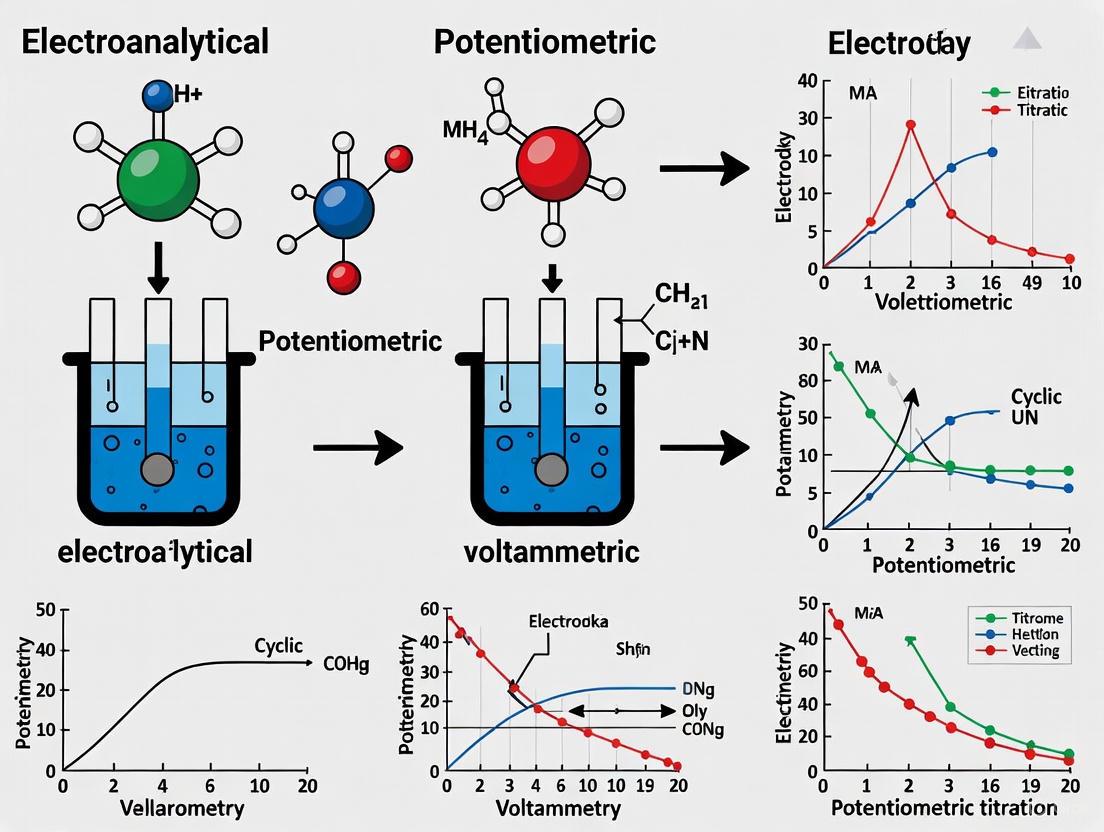
This article provides a comprehensive exploration of the correlation between potentiometric and voltammetric electrochemical methods, tailored for researchers and professionals in drug development.
Correlating Potentiometric and Voltammetric Analysis: A Strategic Guide for Enhanced Drug Development
Abstract
This article provides a comprehensive exploration of the correlation between potentiometric and voltammetric electrochemical methods, tailored for researchers and professionals in drug development. It covers the foundational principles of both techniques, detailing how potentiometry measures potential at near-zero current for ion activity, while voltammetry applies a voltage profile to study redox behavior. The scope extends to methodological applications in pharmaceutical analysis, from API and excipient assay to therapeutic drug monitoring, troubleshooting common issues like electrode fouling and signal drift, and a rigorous framework for method validation and comparative analysis to leverage the synergistic strengths of each technique for more robust analytical outcomes.
Understanding the Core Principles: Potentiometry vs. Voltammetry
Electrochemical analysis provides powerful tools for quantifying chemical substances, with potentiometry and voltammetry representing two foundational yet distinct techniques. These methods are central to a growing field of research focused on correlation studies, which seek to establish meaningful relationships between signals generated from different electrochemical platforms. Potentiometry operates by measuring potential (voltage) under static, zero-current conditions, where the system is at or near equilibrium. In contrast, voltammetry operates by applying controlled potential changes and measuring the resulting current, a dynamic non-equilibrium process [1]. This fundamental difference in what is measured—potential versus current—and the conditions under which measurements are taken, defines their respective applications, strengths, and limitations in analytical science.
Understanding the relationship between these signals is crucial for researchers aiming to cross-validate methods, develop multi-technique sensors, or extract complementary information from a single sample. This guide provides a detailed comparison of these techniques, supported by experimental data and protocols, to inform their correlated use in advanced research, particularly in pharmaceutical and bioanalytical contexts.
Technical Comparison: Potentiometry vs. Voltammetry
The following table summarizes the fundamental and practical differences between these two electrochemical methods.
Table 1: Fundamental Comparison Between Potentiometry and Voltammetry
| Feature | Potentiometry | Voltammetry |
|---|---|---|
| Measured Signal | Potential (Voltage, E) | Current (I) |
| Applied Signal | Zero current (static conditions) | Controlled potential sweep/pulse (dynamic conditions) |
| Governing Equation | Nernst Equation [2] [1] | Variety based on technique (e.g., Randles-Ševčík for Cyclic Voltammetry) |
| Primary Analytical Output | Ion activity (concentration) | Analyte concentration, reaction kinetics, mechanisms |
| Sensitivity | Limited by Nernst factor (~59 mV per decade for monovalent ion) [3] | High sensitivity for trace analysis; can be nano-molar range [4] [5] |
| Selectivity | Achieved via ion-selective membrane (e.g., in ISEs) [6] [1] | Achieved via applied potential, electrode material, and chemical environment |
| Key Techniques | Direct potentiometry, Potentiometric titrations [1] | Cyclic Voltammetry (CV), Square-Wave Voltammetry (SWV), Differential Pulse Voltammetry (DPV) [4] [5] [1] |
Experimental Data from Correlation Studies
Recent research demonstrates how these techniques are applied and compared in practical settings. The table below summarizes quantitative data from key studies, highlighting the performance metrics achievable with each method.
Table 2: Experimental Performance Data from Recent Studies
| Analyte | Technique | Electrode | Linear Range | Limit of Detection (LOD) | Application Context | Source |
|---|---|---|---|---|---|---|
| Edoxaban (anticoagulant drug) | Square-Wave Voltammetry | Pencil Graphite | 0.2–1.8 µM | 0.073 µM | Drug and urine analysis | [4] |
| Calcium Ions (Ca²⁺) | Potentiometry | BAPTA-based Polymer Sensor | 0.1–1.0 mM | Not specified | Detection of inflammation/infection | [6] |
| Bumadizone (anti-inflammatory drug) | Differential Pulse Voltammetry | nRGO-modified Carbon Paste | 90–1500 ng mL⁻¹ | Nano-concentrations | Pharmaceutical forms and biological fluids | [5] |
| Thymoquinone (bioactive compound) | Square-Wave Voltammetry | Carbon Paste | Based on peak current height | 8.9 nmol·L⁻¹ | Nigella sativa products and supplements | [7] |
Detailed Experimental Protocols
Protocol 1: Voltammetric Determination of a Pharmaceutical
A 2023 study developed a sensitive voltammetric method for the anticoagulant drug Edoxaban [4].
- Electrode System: A three-electrode system was used, comprising a pencil graphite (PG) working electrode, a platinum wire counter electrode, and an Ag/AgCl reference electrode [4].
- Electrode Activation: The PG electrode was activated before use by applying a potential of +1.4 V for 60 seconds in a Britton-Robinson (BR) buffer at pH 9.0 [4].
- Measurement Technique: Using Cyclic Voltammetry (CV), an irreversible oxidation peak for Edoxaban was observed at approximately +0.98 V. For quantitative analysis, the more sensitive Square-Wave Voltammetry (SWV) technique was employed [4].
- Sample Preparation: Drug tablets were dissolved in dimethyl sulfoxide (DMSO). Urine samples were collected from a healthy volunteer and vortexed for 5 minutes before analysis using the standard addition method [4].
- Validation: The method was validated by comparing the results with those obtained from a spectroscopic method, confirming the compatibility of the data [4].
Protocol 2: Potentiometric Sensing of Calcium Ions
A 2025 study created a potentiometric sensor for detecting calcium ions (Ca²⁺), a marker for inflammation and infection [6].
- Sensor Fabrication: A conductive copolymer was synthesized from 2,2′-bithiophene (BT) and 1,2-bis(o-aminophenoxy)ethane-N,N,N′,N′-tetraacetic acid (BAPTA), a known calcium chelator, via electrochemical polymerization to form the sensing layer [6].
- Measurement Principle: The sensor operates as an ion-selective electrode. The binding of Ca²⁺ ions to the BAPTA sites in the polymer matrix alters the membrane potential, which is measured against a reference electrode under zero-current conditions [6].
- Performance: The sensor exhibited Nernstian behavior, with a sensitivity of approximately 20 ± 0.3 mV per decade of calcium concentration in the range of 0.1 mM to 1 mM. This means the potential changes linearly with the logarithm of the Ca²⁺ activity, as predicted by the Nernst equation [6].
Visualization of Techniques and Workflows
The diagrams below illustrate the core principles and experimental workflows for potentiometry and voltammetry.
Diagram 1: Core principles of potentiometry and voltammetry
Diagram 2: Experimental workflow for correlation studies
The Scientist's Toolkit: Essential Research Reagents and Materials
Successful experimentation in both potentiometry and voltammetry relies on a suite of specialized materials and reagents.
Table 3: Essential Reagents and Materials for Electrochemical Analysis
| Item | Function / Description | Example Use Cases |
|---|---|---|
| Three-Electrode System | Comprises Working, Reference, and Counter electrodes; provides precise potential control [1]. | Universal setup for most modern voltammetric and potentiometric experiments. |
| Ion-Selective Membrane | A polymer membrane containing an ionophore; confers selectivity to a specific ion in potentiometry [6] [3]. | Calcium sensing with BAPTA-based membranes [6]. |
| Pencil Graphite Electrode (PGE) | A disposable, low-cost, and eco-friendly working electrode [4]. | Determination of drugs like Edoxaban in biological samples [4]. |
| Carbon Paste Electrode (CPE) | A versatile working electrode made from graphite powder and paraffin oil [5] [7]. | Detection of Thymoquinone and Bumadizone [5] [7]. |
| Britton-Robinson (BR) Buffer | A universal buffer solution effective over a wide pH range (2-12) [4] [5]. | Used as a supporting electrolyte to maintain pH and ionic strength. |
| Ionophore (e.g., BAPTA, Valinomycin) | A molecular component that selectively binds to a target ion within a sensor membrane [6] [3]. | BAPTA for Ca²⁺ selectivity [6]; Valinomycin for K⁺ selectivity [3]. |
| Conducting Polymer (e.g., Polythiophene) | Serves as an ion-to-electron transducer in solid-contact ion-selective electrodes [6] [3]. | Improves stability and potential reproducibility in solid-state sensors. |
Potentiometry and voltammetry offer distinct yet complementary views of an analyte's electrochemical properties. Potentiometry provides a direct, equilibrium-based measurement of ion activity, while voltammetry offers a dynamic probe into redox behavior and concentration with high sensitivity. The choice between them is not a matter of superiority but of strategic application. As correlation studies continue to evolve, the synergistic use of both techniques—leveraging their respective strengths—will be key to unlocking deeper analytical insights, particularly in complex matrices like pharmaceuticals and biological fluids. This integrated approach facilitates robust method validation and the development of sophisticated, multi-functional sensing platforms.
The choice of electrode configuration is a fundamental consideration in electrochemical research, directly impacting the quality, reliability, and interpretability of data in both potentiometric and voltammetric studies. Electrochemical cells operate by measuring or controlling electrical signals—potential, current, or charge—to elucidate chemical information about an analyte in solution. The core components of these systems are electrodes that serve distinct functions in the electrochemical circuit [1].
The three-electrode system represents the standard configuration for most quantitative electrochemical analyses, particularly in voltammetric techniques. It consists of a Working Electrode (WE) where the redox reaction of interest occurs, a Reference Electrode (RE) that provides a stable, known potential against which the WE potential is measured or controlled, and a Counter Electrode (CE) (also known as auxiliary electrode) that completes the circuit, carrying the current needed to balance the current at the WE [1]. This separation of functions ensures precise control of the working electrode potential without polarizing the reference electrode, leading to highly accurate and reproducible measurements [1].
In contrast, the two-electrode system simplifies this setup by combining the functions of the reference and counter electrodes into a single unit. This configuration uses a Working Electrode and a combined Reference/Counter Electrode (often termed a pseudo-reference electrode in some contexts) [8]. While this setup offers simplicity and is advantageous for miniaturized systems or field applications, it introduces specific limitations regarding potential control and current carrying capacity that researchers must carefully consider [9] [8].
The ongoing development and application of these configurations are critical across diverse fields. As highlighted in a 2023 study, in vivo electrochemistry for bionic implants often must adapt these ideals to anatomical and biocompatibility constraints, sometimes using two-electrode configurations or similarly sized electrodes, which can fundamentally alter the electrochemical response and its interpretation [9]. Similarly, advancements in potentiometric sensors for clinical and biomedical applications, including wearable devices and point-of-care diagnostics, heavily rely on appropriate electrode selection and design to ensure stability and accuracy [10].
Theoretical Foundations and Operational Principles
Fundamental Electrochemical Principles
All electrochemical techniques are grounded in the study of redox reactions, which involve the transfer of electrons between chemical species. The relationship between electrical signals and chemical activity is governed by well-established physical laws. Faraday's Laws of Electrolysis quantify the relationship between the amount of substance produced or consumed at an electrode and the total electrical charge passed through the cell, forming the basis for coulometric techniques [1]. For potentiometric methods, the Nernst Equation is paramount. It describes the relationship between the equilibrium potential of an electrode and the concentration (more accurately, the activity) of the species undergoing redox reaction [11] [1]. The Nernst equation is expressed as:
[ E = E^0 + \frac{RT}{zF} \ln(a) ]
where (E) is the measured potential, (E^0) is the standard potential, (R) is the gas constant, (T) is temperature, (z) is the charge number, (F) is Faraday's constant, and (a) is the ion activity [11].
The Three-Electrode System: A Detailed Look
The three-electrode system is designed for precision and control. Its key advantage lies in the functional isolation of the reference electrode. By ensuring that virtually no current flows through the reference electrode, its potential remains stable and unchanging, providing a truly constant reference point [1]. The counter electrode, typically made from an inert material like platinum or graphite with a large surface area, freely passes the current required for the reaction at the working electrode without becoming a limiting factor. This setup allows the potentiostat to accurately control the potential at the working electrode/solution interface, which is crucial for techniques like cyclic voltammetry where the potential is scanned and the resulting current is measured [1].
The Two-Electrode System: A Detailed Look
The two-electrode system operates on a simpler principle but with compromised functionality. The combined reference/counter electrode must simultaneously maintain a stable potential and pass all the current flowing through the cell. This dual role creates inherent limitations. If the electrode has poor kinetics or a small surface area, the current passage can cause a shift in its potential, a phenomenon known as polarization. This effectively means the reference point is no longer stable, introducing uncertainty into the potential control or measurement of the working electrode [9] [8]. The performance becomes highly dependent on the properties of the single combined electrode. As noted in microbiologically influenced corrosion (MIC) detection research, a two-electrode setup is often employed in practical test kits where a fragile, separate reference electrode is undesirable, but this requires validation against three-electrode data to ensure reliability [8].
Comparative Analysis: Performance and Data Interpretation
Direct experimental comparisons reveal how the choice of electrode configuration significantly impacts key electrochemical parameters and the overall interpretation of data.
Quantitative Performance Data
The following table summarizes experimental findings that highlight the practical differences between the two systems.
Table 1: Experimental Comparison of Two-Electrode vs. Three-Electrode System Performance
| Experimental Parameter | Three-Electrode System | Two-Electrode System | Context and Implications |
|---|---|---|---|
| Charge Storage Capacity (CSC) | 2.9 μC (reduction), 1.8 μC (oxidation) [9] | Variable, depends on counter electrode size [9] | In a 3-electrode setup with a large Pt mesh CE, CSC is well-defined. In a 2-electrode setup, the CSC can be limited by the smaller combined electrode, distorting measurements critical for bionic devices [9]. |
| Open Circuit Potential (OCP) | Stable, well-defined vs. Ag|AgCl RE [9] | Less stable, defined by the combined electrode [9] | A stable OCP in a 3-electrode system provides a reliable starting point for experiments. Potential drift in 2-electrode systems complicates measurements [9]. |
| Polarization Resistance Shifts | Measured against a stable RE [8] | Comparable trend reliability for corrosion rate monitoring [8] | In MIC detection, 2E scans were found to be as reliable as 3E scans for reflecting corrosion trends after chemical injections, despite absolute value differences [8]. |
| Limiting Factors | Kinetics and mass transfer at the WE [1] | Rate-limiting charge transfer at either electrode [9] | In a 3E system, the response is dictated by the WE. In a 2E system with similarly sized electrodes, the slower electrode dictates the overall response, invalidating standard calibrations [9]. |
Impact on Specific Electrochemical Techniques
Potentiometry: This is a zero-current technique, measuring the potential difference between two electrodes at equilibrium [1]. While traditionally associated with two-electrode cells (an Ion-Selective Electrode and a Reference Electrode), the stability of the reference electrode is absolutely critical for long-term accuracy [10]. The trend towards solid-contact ion-selective electrodes (SC-ISEs) and miniaturized sensors highlights the importance of a stable reference, as any drift in the reference potential directly translates to measurement error [10] [11].
Voltammetry: This category of techniques, including Cyclic Voltammetry (CV) and Differential Pulse Voltammetry (DPV), measures current as a function of applied potential [1]. The three-electrode system is the undisputed standard here. The precise control of the working electrode potential is essential for obtaining meaningful voltammograms that accurately reflect the redox behavior of the analyte. For instance, a 2024 study on a Hg²⁺ sensor used a three-electrode cell (nanocomposite working electrode, calomel reference, graphite counter) for cyclic voltammetry to validate its sensitivity, ensuring the recorded current was solely due to the applied potential [12].
Specialized In Vivo and Field Applications: In non-ideal environments, compromises are often necessary. For example, a 2023 study on implanted bionic electrodes warned that using two-electrode configurations or similarly sized counter electrodes in vivo can make the electrochemical response dependent on the rate-limiting electrode, which could "invalidate calibration curves, standard analytical methods, and equations" [9]. Conversely, in field-deployable corrosion detection kits, two-electrode setups are pragmatically used for durability, but their results must be carefully cross-verified to ensure they correctly reflect trends like biofilm maturity and biocide efficacy [8].
Experimental Protocols and Methodologies
Protocol for Three-Electrode Cyclic Voltammetry
This protocol is adapted from methods used for characterizing electrode materials and sensor performance [9] [12].
- Objective: To characterize the electrochemical behavior and charge storage capacity of a platinum working electrode in a degassed saline solution.
- Materials & Reagents:
- Electrolyte Solution: 0.1 M NaCl, degassed with argon for at least 10 minutes to remove dissolved oxygen [9].
- Working Electrode (WE): 0.6 mm diameter platinum disc electrode [9].
- Reference Electrode (RE): Ag|AgCl (3 M KCl) [9] [12].
- Counter Electrode (CE): 1 cm² platinum mesh [9].
- Instrumentation: Potentiostat (e.g., Gamry 1010E).
- Procedure:
- Electrode Preparation: Polish the platinum disc working electrode with 0.3 μm alumina slurry on a microcloth polishing pad. Rinse thoroughly with deionized water and dry gently [9].
- Cell Assembly: Place the three electrodes into the degassed 0.1 M NaCl solution in the electrochemical cell.
- Instrument Setup: In the potentiostat software, set the parameters for cyclic voltammetry.
- Data Acquisition: Run the experiment and collect the current-potential data.
- Data Analysis: Calculate the Cathodic Charge Storage Capacity (CSCc) by integrating the total cathodic current over the forward and backward scan. The Anodic Charge Storage Capacity (CSCa) is calculated on the backward scan from where the current crosses 0 A up to 0.8 V [9].
Protocol for Two-Electrode Potentiometric Sensing
This protocol is based on procedures for detecting ions using a simple potentiometric cell [12].
- Objective: To detect and quantify Hg²⁺ ions in an aqueous solution using a WS₂-WO₃/P2ABT nanocomposite sensing electrode.
- Materials & Reagents:
- Sensing Electrode: WS₂-WO₃/P2ABT nanocomposite film as the working/sensing electrode [12].
- Reference/Counter Electrode: Calomel electrode (Hg/Hg₂Cl₂) [12].
- Analyte Solutions: Hg²⁺ standard solutions with concentrations ranging from 10⁻⁶ M to 10⁻¹ M.
- Instrumentation: High-impedance voltmeter or potentiometer for potential measurement.
- Procedure:
- Cell Assembly: Immerse the nanocomposite sensing electrode and the calomel electrode into the first standard Hg²⁺ solution.
- Potential Measurement: With zero or negligible current flowing, measure the steady-state open-circuit potential (EMF) between the two electrodes. Allow the reading to stabilize.
- Calibration: Rinse the electrodes with deionized water and repeat the measurement for each Hg²⁺ standard solution across the concentration range.
- Data Analysis: Plot the measured potential (EMF) against the logarithm of the Hg²⁺ concentration. The plot should yield a linear relationship, the slope of which can be compared to the Nernstian ideal (e.g., 33.0 mV/decade for Hg²⁺) [12].
Research Reagent Solutions and Materials
The following table details key materials and their functions in electrochemical experiments, as cited in recent research.
Table 2: Essential Research Reagents and Materials for Electrochemical Studies
| Material/Reagent | Function in Experiment | Example Application | |
|---|---|---|---|
| Platinum (Pt) Disc Electrode | Working electrode for studying redox reactions in model systems. | Inert, well-characterized surface for benchmarking and fundamental electrochemistry studies [9]. | |
| Ag | AgCl Reference Electrode | Provides a stable, reproducible reference potential for 3-electrode measurements. | Standard reference electrode in benchtop electrochemistry for accurate potential control [9] [1]. |
| Platinum Mesh Counter Electrode | Large-surface-area inert electrode to pass current without limiting the system. | Used as the CE in 3-electrode setups to ensure current passage does not polarize the RE [9]. | |
| Ion-Selective Membrane (ISM) | Recognizes and selectively interacts with a target ion, providing sensor selectivity. | Key component of potentiometric sensors for clinical (Na⁺, K⁺) and environmental (Pb²⁺, Hg²⁺) analysis [10] [11]. | |
| Solid-Contact (SC) Layer | Replaces inner filling solution in solid-contact ISEs; transduces ion signal to electron signal. | Enables miniaturization and robust design of potentiometric sensors for wearable devices [10]. | |
| Hexaammineruthenium(III) Chloride | Reversible redox couple for electrode characterization and method validation. | Used as a benchmark analyte to test electrode performance and system setup [9]. | |
| WS₂-WO₃/P2ABT Nanocomposite | Sensing material with high affinity and selectivity for a specific target ion. | Used as the working electrode material in a two-electrode potentiometric sensor for Hg²⁺ ions [12]. |
Schematic Workflows and System Diagrams
Visual representations of the experimental setups and decision-making processes are invaluable for researchers.
Diagram 1: Electrode System Selection Workflow
Diagram 2: Electrode System Configurations
The choice between two-electrode and three-electrode systems is fundamental, dictated by the specific requirements of the electrochemical experiment. The three-electrode system is the configuration of choice for any study requiring precise potential control, detailed investigation of reaction kinetics, or quantitative analysis using voltammetric techniques. Its ability to isolate the reference electrode from current flow ensures data accuracy and reliability, making it indispensable for fundamental research and method development [9] [1].
The two-electrode system finds its niche in applications where simplicity, miniaturization, and ruggedness are prioritized over absolute potential precision. Its use is well-established in potentiometric sensing [12] [11], and it is increasingly being validated for specific applications in field-deployable corrosion monitors [8] and biomedical implants [9], where its trends can be correlated with more rigorous measurements.
For researchers conducting correlation studies between potentiometric and voltammetric results, understanding this distinction is critical. While potentiometry can often be performed reliably in a two-electrode configuration, voltammetry generally demands a three-electrode cell for interpretable results. Correlating data from these different techniques requires careful consideration of the electrode configurations used, as the underlying principles and potential limitations—particularly the stability of the reference potential—are fundamentally different. The ongoing development of new materials, especially for solid-contact electrodes and stable pseudo-reference systems, continues to blur the lines, pushing the performance of simpler two-electrode systems closer to that of the more complex three-electrode standard [10] [8].
Electrochemical methods are fundamental tools in analytical chemistry, providing critical insights for drug development, environmental monitoring, and clinical diagnostics. This guide focuses on two cornerstone techniques: potentiometry, which measures potential at zero current, and voltammetry, which measures current as a function of applied potential. The theoretical frameworks governing these methods are distinct yet complementary. Potentiometry is predominantly described by the Nernst equation, establishing a logarithmic relationship between potential and analyte activity. Conversely, voltammetry analyzes current-voltage relationships derived from faradaic processes under controlled mass transport. Understanding their theoretical bases, performance characteristics, and appropriate applications is essential for selecting the optimal method for specific analytical challenges within correlative research. Recent studies continue to demonstrate their relevance, from detecting heavy metals in environmental samples to analyzing antibiotics in biological fluids and profiling DNA methylation biomarkers [13] [14] [12].
Theoretical Foundations
The Nernst Equation in Potentiometry
Potentiometry involves measuring the potential of an electrochemical cell under conditions of zero net current. This measured potential is related to the concentration of the target ion via the Nernst equation [15] [16].
For a general reduction half-reaction: [ aA + ne^- \rightleftharpoons bB ] The Nernst equation is expressed as: [ E = E^0 - \frac{RT}{nF} \ln \frac{\mathcal{A}B^b}{\mathcal{A}A^a} ] where:
- (E) is the measured electrode potential,
- (E^0) is the standard electrode potential,
- (R) is the universal gas constant (8.314 J/mol·K),
- (T) is the temperature in Kelvin,
- (n) is the number of electrons transferred in the half-reaction,
- (F) is the Faraday constant (96,485 C/mol),
- (\mathcal{A}A) and (\mathcal{A}B) are the activities of the oxidized and reduced species, respectively [15].
In practical applications, activities are often approximated by concentrations, and formal potentials ((E^{0'})) are used which incorporate activity coefficients and are valid under specific experimental conditions [15] [16]. At 25 °C, the equation simplifies to: [ E = E^{0'} - \frac{0.0592}{n} \log \frac{[B]^b}{[A]^a} ] This simplified form highlights the logarithmic dependence of the measured potential on the concentration ratio of the redox species, providing a theoretical basis for direct concentration measurement [15].
Current-Voltage Relationships in Voltammetry
Voltammetry encompasses a group of techniques where a controlled potential is applied to a working electrode and the resulting current is measured. The current-voltage relationship provides quantitative and qualitative information about electroactive species [17] [18].
The current response is governed by the rates of electron transfer at the electrode surface and mass transport of the analyte to the electrode. The three modes of mass transport are diffusion, migration, and convection [18]. In most quantitative applications, the supporting electrolyte concentration is kept high to minimize migration, and the solution is unstirred to eliminate convection, making diffusion the primary transport mechanism [17].
Key parameters obtained from a voltammogram include:
- Peak Current ((ip)): For many techniques, this is proportional to the concentration of the analyte. In cyclic voltammetry, for a reversible system, the Randles-Ševčík equation describes the peak current: ( ip = (2.69 \times 10^5) n^{3/2} A C D^{1/2} v^{1/2} ), where (A) is the electrode area, (C) is the bulk concentration, (D) is the diffusion coefficient, and (v) is the scan rate [18].
- Peak Potential ((E_p)): The potential at which the peak current is observed, characteristic of the redox species and its electrochemical reversibility.
- Half-wave Potential ((E_{1/2})): A characteristic potential related to the standard reduction potential of the redox couple, useful for qualitative identification [17] [18].
The shape of the voltammogram and the relationship between these parameters reveal reaction mechanisms, including electron transfer kinetics and coupled chemical reactions [18].
Methodological Comparison and Experimental Protocols
Core Principles and Measurement Outputs
The fundamental difference between potentiometry and voltammetry lies in what is measured and the conditions of measurement.
Potentiometry is a zero-current technique. It measures the equilibrium potential of an electrochemical cell, which is related to the logarithm of the analyte's activity (or concentration) via the Nernst equation. The system is kept as close to equilibrium as possible, and the measured potential reflects the thermodynamic tendency for a redox reaction to occur [15] [19].
Voltammetry is a non-equilibrium technique. It applies a controlled potential excitation signal and measures the resulting faradaic current. This current is proportional to the rate of the electrochemical reaction, which is governed by both kinetics and mass transport. The output is a voltammogram (current vs. potential plot) [17] [18].
Table 1: Core Theoretical and Operational Comparison
| Feature | Potentiometry | Voltammetry |
|---|---|---|
| Measured Quantity | Potential (Volts) | Current (Amperes) |
| System State | Equilibrium (or near-equilibrium) | Non-equilibrium (Dynamic) |
| Fundamental Relationship | Nernst Equation (Logarithmic) | Current-Potential-Concentration (Linear) |
| Primary Theoretical Basis | Thermodynamics | Kinetics & Mass Transport |
| Typical Sensitivity | Micromolar (µM) to Millimolar (mM) | Nanomolar (nM) to Picomolar (pM) |
| Key Output Parameter | Slope (mV / concentration decade) | Peak Current, Peak Potential, Half-wave Potential |
Experimental Protocols and Workflows
The experimental setup and procedural steps for these techniques differ significantly, tailored to their respective measurement principles.
Potentiometric Protocol (e.g., for Ion Detection) This protocol is commonly used with ion-selective electrodes or for direct potentiometric measurements [12].
- Electrode System: A two-electrode cell is typically used, comprising an Indicator Electrode (e.g., ion-selective electrode, metal wire) and a Reference Electrode (e.g., Ag/AgCl, calomel) with a stable, known potential [12].
- Calibration: The electrode system is calibrated using a series of standard solutions with known analyte concentrations. The potential (E) is measured for each standard, and a calibration curve of E vs. log(concentration) is constructed. The slope is compared to the theoretical Nernstian slope (e.g., ~59.2/n mV/decade at 25°C) [15] [12].
- Sample Measurement: The potential of the sample solution is measured using the same electrode system.
- Quantification: The sample concentration is determined from the calibration curve.
Voltammetric Protocol (e.g., Cyclic Voltammetry for Antioxidant Analysis) This protocol is adapted from studies analyzing antioxidant capacity in plant extracts [13].
- Electrode System: A three-electrode cell is used, consisting of a Working Electrode (e.g., glassy carbon, mercury film, modified electrode), a Reference Electrode (e.g., Ag/AgCl), and a Counter (Auxiliary) Electrode (e.g., platinum wire, graphite rod) [13] [17].
- Solution Preparation: The analyte is dissolved in a suitable solvent containing a high concentration of supporting electrolyte (e.g., 0.1 M KCl or tetrabutylammonium hexafluorophosphate) to minimize resistive drop and migration effects [17]. The solution is often purged with an inert gas (e.g., nitrogen) to remove dissolved oxygen, which can interfere electrochemically [17].
- Instrument Parameters: The potential waveform is defined. For Cyclic Voltammetry, parameters include the initial potential, switching potential(s), final potential, and scan rate (e.g., 50-500 mV/s) [18].
- Measurement: The potential is swept according to the defined waveform, and the current response is recorded, generating a voltammogram.
- Data Analysis: The voltammogram is analyzed for characteristic parameters such as anodic peak potential (Ep,a), which indicates the antioxidant's reducing power, and anodic peak current (ip,a), which relates to the concentration and strength of electron-donating species [13].
Diagram 1: Experimental workflow for potentiometry and voltammetry.
Applications in Correlative Research: Supporting Data
The complementary nature of potentiometry and voltammetry is evident in modern research, where they are used to solve complex analytical problems. The following case studies and data tables illustrate their performance in practical scenarios.
Case Study: Heavy Metal Ion Sensing
A 2024 study developed a flower-like WS2-WO3/P2ABT nanocomposite sensor for detecting toxic Hg²⁺ ions in aqueous solutions. The research employed both potentiometric and voltammetric techniques to fully characterize the sensor's performance, demonstrating a successful correlation between the two methods [12].
Table 2: Comparative Sensor Performance for Hg²⁺ Detection [12]
| Analytical Technique | Electrode Cell Configuration | Key Analytical Output | Reported Performance Value |
|---|---|---|---|
| Potentiometry | Two-electrode cell | Nernstian Slope (mV / concentration decade) | 33.0 mV/decade |
| Cyclic Voltammetry | Three-electrode cell | Sensitivity (Current / Concentration) | 2.4 μA M⁻¹ |
The study confirmed the sensor's exceptional selectivity for Hg²⁺ against interfering ions like Zn²⁺, Ni²⁺, Ca²⁺, and others using cyclic voltammetry. The correlation between the potentiometric signal (potential change) and the voltammetric signal (current increase) validated the sensor's efficacy for environmental monitoring of highly poisonous ions [12].
Case Study: Pharmaceutical and Biomolecular Analysis
Voltammetric techniques are particularly dominant in areas requiring high sensitivity and specificity, such as pharmaceutical quality control and biomarker detection, as evidenced by recent publications.
Table 3: Voltammetric Applications in Drug and Biomarker Analysis
| Analyte | Voltammetric Technique | Electrode | Analytical Performance | Application Context |
|---|---|---|---|---|
| Ciprofloxacin (Antibiotic) [14] | Differential Pulse Voltammetry (DPV) | Modified Glassy Carbon | LOD: 2.0 nM; LOQ: 6.8 nM | Detection in human serum & cow's milk |
| 5-Methylcytosine (DNA Biomarker) [20] | DPV & Square Wave Voltammetry (SWV) | Disposable Pencil Graphite | Distinction from cytosine over pH 2–11 | Epigenetic research & clinical diagnosis |
| Antioxidants (in Vegetables) [13] | Cyclic Voltammetry (CV) | Not Specified | Identification of redox-active electron-donating compounds | Profiling antioxidant potential |
The study on ciprofloxacin highlights the capability of advanced voltammetry to achieve ultra-sensitive detection in complex biological matrices. Meanwhile, the research on 5-methylcytosine showcases how voltammetry can discriminate between structurally similar molecules, which is crucial for biomedical research [14] [20].
The Scientist's Toolkit: Essential Research Reagents and Materials
Successful execution of potentiometric and voltammetric experiments requires specific materials and reagents. The following table details key items and their functions.
Table 4: Essential Research Reagents and Materials
| Item | Function / Purpose | Common Examples |
|---|---|---|
| Reference Electrode | Provides a stable, known reference potential for measurements. | Ag/AgCl, Saturated Calomel (SCE) [17] [12] |
| Working/Indicator Electrode | The electrode where the electrochemical reaction of interest occurs. | Glassy Carbon (GC), Ion-Selective Electrodes (ISE), Hanging Mercury Drop Electrode (HMDE) [17] [14] [20] |
| Counter Electrode | Completes the electrical circuit in a three-electrode system, allowing current to flow. | Platinum wire, graphite rod [17] [12] |
| Supporting Electrolyte | Carries current to minimize migration; provides a controlled ionic strength. | KCl, [n-Bu₄N][PF₆], phosphate buffers [13] [17] |
| Electrode Modifiers | Enhance sensitivity, selectivity, and reduce fouling. | Polymers, nanomaterials, metal complexes (e.g., poly(Na₂[Cu(HR)₄])) [14] [12] |
| Standard Solutions | Used for calibration of the analytical system. | Certified metal ion solutions, pH buffer standards, pure analyte stocks |
Potentiometry and voltammetry offer distinct and powerful pathways for quantitative analysis, each with a robust theoretical foundation. Potentiometry, governed by the Nernst equation, is an equilibrium technique ideal for direct concentration measurement, often with simpler instrumentation. Voltammetry, analyzing current-voltage relationships under dynamic conditions, provides superior sensitivity, rich mechanistic insight, and the ability to probe reaction kinetics.
The choice between them is not a matter of superiority but of strategic application. For direct monitoring of specific ions in environmental or clinical samples, potentiometry offers a straightforward solution. For trace-level detection of drugs, profiling complex antioxidant mixtures, or studying redox mechanisms, voltammetry is unparalleled. As demonstrated by contemporary research, these techniques can be powerfully correlated to validate new sensors and methods, providing a comprehensive electrochemical toolkit for researchers and drug development professionals tackling modern analytical challenges.
Ion Activity from Potentiometry and Redox Characteristics from Voltammetry
Electrochemical analysis provides powerful tools for characterizing substances, with potentiometry and voltammetry serving as two fundamental techniques that probe complementary chemical properties. Potentiometry measures the potential difference at zero current to determine ion activity, serving as a cornerstone for pH and ion measurements in solutions [1]. In contrast, voltammetry measures the current resulting from redox reactions as a function of applied potential, unlocking both quantitative and qualitative information about electroactive species [1]. While potentiometry excels at determining ion concentrations through selective membranes, voltammetry reveals intricate details about electron transfer processes, reaction mechanisms, and redox characteristics [21] [1]. Understanding the distinct measurables, capabilities, and limitations of each technique is essential for researchers selecting the optimal analytical approach for pharmaceutical, clinical, or materials science applications.
Fundamental Principles and Key Measurables
Core Principles and Theoretical Foundations
The operational principles of potentiometry and voltammetry stem from different applications of electrochemical theory. Potentiometry relies on the Nernst equation, which describes the relationship between the measured potential and the activity of target ions in solution [1] [22]. For a cation M⁺, the Nernst equation is expressed as E = E⁰ + (RT/F)ln(aM⁺), where E is the measured potential, E⁰ is the standard potential, R is the gas constant, T is temperature, F is Faraday's constant, and aM⁺ is the ion activity [22]. This relationship enables direct quantification of ion concentrations without consuming the analyte, making it ideal for continuous monitoring applications [21].
Voltammetry operates on the principle of driving redox reactions by applying controlled potentials to a working electrode while measuring the resulting current [1]. The current-potential profiles (voltammograms) provide characteristic signatures of analytes, with peak potentials indicating redox characteristics and peak currents correlating with concentration [23] [5]. The Randles-Ševčík equation describes the relationship between peak current and scan rate in cyclic voltammetry, helping distinguish between diffusion-controlled and adsorption-controlled processes [4]. Voltammetric techniques are particularly valuable for studying electron transfer kinetics, reaction mechanisms, and simultaneous determination of multiple analytes [1] [5].
Comparison of Key Characteristics
Table 1: Fundamental comparison between potentiometry and voltammetry
| Characteristic | Potentiometry | Voltammetry |
|---|---|---|
| Measured Quantity | Potential (voltage) at zero current [1] | Current as function of applied potential [1] |
| Primary Application | Ion activity/concentration measurement [1] | Redox behavior and quantitative analysis [1] |
| Theoretical Basis | Nernst equation [1] [22] | Randles-Ševčík, Butler-Volmer equations [4] |
| Analyte Consumption | Virtually none [21] | Significant during measurement [21] |
| Detection Limit | Typically 10⁻⁶ - 10⁻⁸ M [24] [10] | Can reach 10⁻⁸ - 10⁻¹¹ M with pulsed techniques [5] |
| Selectivity Source | Ion-selective membrane or ionophore [24] [6] | Potential control and electrode modification [21] [5] |
| Suitability for Small Volumes | Excellent with proper cell design [21] | Limited by diffusion and analyte consumption [21] |
Experimental Protocols and Methodologies
Potentiometric Sensor Fabrication and Measurement
Modern potentiometric sensors increasingly utilize solid-contact ion-selective electrodes (SC-ISEs) that eliminate the internal filling solution found in traditional designs [10]. The fabrication typically involves preparing an ion-selective membrane containing a polymer matrix (commonly PVC), plasticizer, ionophore (ion-recognition molecule), and ionic additives [24] [6]. For example, a calcium-selective sensor can be created by electropolymerizing a conductive copolymer of 2,2'-bithiophene and 1,2-bis(o-aminophenoxy)ethane-N,N,N',N'-tetraacetic acid (BAPTA), which incorporates calcium chelating properties directly into the polymer matrix [6].
The measurement protocol involves immersing the potentiometric sensor and a reference electrode in the sample solution and measuring the potential at zero current [1]. The electrode is calibrated using standard solutions of known concentration, and the potential values are plotted against the logarithm of ion activity to obtain a calibration curve [24]. The slope of this curve should approach the theoretical Nernstian value (59.16 mV/decade for monovalent ions at 25°C) for ideal response [6]. For cytarabine detection, sensors demonstrated a near-Nernstian slope of 52.3 ± 1.2 mV/decade across a linear range of 1.0 × 10⁻⁶ – 1.0 × 10⁻³ M [24].
Voltammetric Techniques and Protocols
Voltammetric analysis requires a three-electrode system consisting of a working electrode, reference electrode, and counter electrode [1] [5]. The working electrode material varies based on application, with common choices including glassy carbon, gold, platinum, or modified electrodes such as pencil graphite or nano-reduced graphene oxide (nRGO) [5] [4]. Electrode activation is often necessary, as demonstrated in edoxaban analysis where pencil graphite electrodes were activated at +1.4 V for 60 seconds in Britton-Robinson buffer (pH 9.0) [4].
Cyclic voltammetry (CV) involves scanning the potential linearly between set limits while recording current [23] [22]. For flavin derivatives, CV measurements are typically performed at scan rates of 100, 200, 500, and 1000 mV·s⁻¹ to study electron transfer kinetics [23]. Differential pulse voltammetry (DPV) and square wave voltammetry (SWV) apply potential pulses to minimize charging current, enhancing sensitivity for trace analysis [5]. These techniques were successfully employed for bumadizone determination using nRGO-modified electrodes, achieving detection limits in the nanogram per milliliter range [5].
Comparative Experimental Data
Performance Metrics in Pharmaceutical Analysis
Table 2: Application of potentiometry and voltammetry in pharmaceutical analysis
| Analyte | Technique | Electrode Type | Linear Range | Detection Limit | Reference |
|---|---|---|---|---|---|
| Cytarabine (anti-leukemia) | Potentiometry | Molecularly imprinted polymer ISE | 1.0 × 10⁻⁶ – 1.0 × 10⁻³ M | 5.5 × 10⁻⁷ M | [24] |
| Bumadizone (anti-inflammatory) | Square Wave Voltammetry | 10% nRGO-modified electrode | 0.9 × 10² – 15 × 10² ng mL⁻¹ | Not specified | [5] |
| Edoxaban (anticoagulant) | Cyclic Voltammetry | Pencil graphite electrode | 0.2 – 1.8 µM | 0.073 µM | [4] |
| Calcium ions | Potentiometry | BAPTA-based polymer sensor | 0.1 – 1 mM | Not specified | [6] |
| Flavin derivatives | Cyclic Voltammetry | Glassy carbon, gold, platinum | Varies by derivative | Not specified | [23] |
Advantages and Limitations in Practical Applications
The selection between potentiometry and voltammetry depends heavily on the specific analytical requirements. Potentiometry offers distinct advantages for continuous monitoring and measurements in small sample volumes since it consumes negligible analyte [21]. This makes ISEs ideal for clinical applications such as electrolyte analysis and for integration into wearable sensors for real-time health monitoring [10]. Solid-contact ISEs are particularly promising for miniaturization and long-term implantation, as demonstrated by calcium-sensing polymers for early detection of inflammation around orthopedic implants [6].
Voltammetry provides superior sensitivity for trace analysis and rich mechanistic information about redox processes [1] [5]. The technique excels at characterizing complex redox behavior, such as the multi-step electron transfers observed in flavin derivatives [23]. However, voltammetry faces limitations in small volumes due to analyte consumption during measurement and potential diffusion limitations that can hinder measurements without stirring [21]. Recent approaches to overcome these limitations include using microelectrode arrays to enhance mass transport and modified electrodes with nanomaterials to increase sensitivity and selectivity [21] [5].
Research Reagent Solutions
Table 3: Essential materials and reagents for electrochemical research
| Reagent/Category | Specific Examples | Function/Application | Reference |
|---|---|---|---|
| Ionophores | BAPTA (Ca²⁺ selective), crown ethers (cation selective) | Molecular recognition elements in ISE membranes | [6] |
| Polymer Matrices | Poly(vinyl chloride) (PVC), methacrylic acid (MAA) | Support matrix for ion-selective membranes | [24] [6] |
| Plasticizers | o-Nitrophenyl octyl ether (o-NPOE), dioctyl phthalate (DOP) | Provide mobility for ionophores in polymer membranes | [24] |
| Conducting Polymers | Poly(3,4-ethylenedioxythiophene), polythiophene, polyaniline | Ion-to-electron transduction in solid-contact ISEs | [10] [6] |
| Electrode Materials | Glassy carbon, gold, platinum, pencil graphite, nRGO | Working electrode substrates | [23] [5] [4] |
| Buffer Systems | Britton-Robinson buffer, phosphate buffer, acetate buffer | Control pH and ionic strength | [5] [4] |
Potentiometry and voltammetry offer distinct yet complementary approaches to electrochemical analysis, each with characteristic strengths and applications. Potentiometry provides direct, non-consumptive measurement of ion activities with simplicity and suitability for continuous monitoring, while voltammetry delivers unparalleled insights into redox mechanisms with high sensitivity for trace analysis. The choice between these techniques should be guided by the specific analytical question—whether the primary interest lies in determining ion concentrations or understanding electron transfer processes and redox characteristics. For comprehensive characterization of complex systems, both techniques may be employed synergistically to obtain complete electrochemical profiles, combining the ion activity data from potentiometry with the redox characteristics revealed by voltammetry. As both fields advance through developments in materials science, miniaturization, and data analysis, their applications continue to expand across pharmaceutical, clinical, environmental, and materials research domains.
Practical Applications in Drug Analysis and Biomarker Monitoring
Assaying Active Pharmaceutical Ingredients (APIs) and Excipients
This guide provides a comparative analysis of two key electrochemical techniques—potentiometry and voltammetry—for the analysis of Active Pharmaceutical Ingredients (APIs) and excipients in pharmaceutical development. The content is framed within a broader research context investigating the correlation between potentiometric and voltammetric results, offering methodologies and data relevant to scientists and drug development professionals.
Analytical Technique Comparison: Potentiometry vs. Voltammetry
Potentiometry and voltammetry offer distinct approaches for quantifying analytes, each with unique working principles, advantages, and limitations. Their responses can provide complementary information, particularly in complex systems involving APIs and excipients.
The table below summarizes the core characteristics of these two techniques for a direct comparison.
| Feature | Potentiometry | Voltammetry |
|---|---|---|
| Working Principle | Measures potential (voltage) at zero current between indicator and reference electrode [11]. | Measures current resulting from an applied potential (voltage) waveform at a working electrode [25]. |
| Measured Quantity | Ion activity (free concentration) [11]. | Concentration of electrochemically labile (available) species [11]. |
| Key Response Model | Nernst Equation: EMF = K + (RT/zF) ln(aI) [11]. |
Current-Potential relationship (e.g., polarographic wave) [25]. |
| Detection Limit (Typical) | Can reach sub-nanomolar (parts-per-trillion) levels for some ions [11]. | Dependent on technique and analyte; often very sensitive. |
| Key Information | Free ion activity, speciation information [11]. | Chemical lability, kinetic information, redox properties [11]. |
| Primary Limitation | Defined LOD is unique to potentiometry and not directly comparable to other methods [11]. | Cannot detect chemically inert complexes or species bound to suspended particles [11]. |
Detailed Experimental Protocols
To implement these techniques, standardized experimental protocols are essential. The following sections detail methodologies for assaying an API using potentiometric sensors and for studying metal-ligand systems relevant to excipient interactions using voltammetry.
Protocol 1: Potentiometric Assay of an API (Cytarabine)
This protocol outlines the steps for determining the concentration of an API, such as the antileukemia drug cytarabine, using a customized potentiometric sensor [24].
Key Research Reagent Solutions:
| Reagent/Solution | Function in the Experiment |
|---|---|
| Cytarabine Hydrochloride Stock Solution (10⁻³ M) | The primary analyte; used for preparing calibration standards and samples [24]. |
| Molecularly Imprinted Polymer (MIP) Beads | Synthetic receptors in the sensor membrane that provide selective recognition for cytarabine [24]. |
| Poly(Vinyl Chloride) (PVC) | The polymeric matrix that forms the backbone of the ion-selective membrane [24]. |
| o-Nitrophenyl Octyl Ether (o-NPOE) | A plasticizer incorporated into the PVC membrane to ensure proper flexibility and function [24]. |
| Potassium Tetrakis (3,5-bis(trifluoromethyl)phenyl)borate (KTFPB) | A lipophilic salt added to the membrane to improve ion-exchange properties and selectivity [24]. |
| Acetate Buffer Solution (30 mM, pH 3.5) | Provides a consistent ionic background and pH for measurements, ensuring stable sensor response [24]. |
Step-by-Step Workflow:
Sensor Fabrication:
- Thoroughly mix 8.8 mg of MIP beads, 66.5 mg of PVC, 127 mg of o-NPOE, and 2.2 mg of KTFPB in a petri dish with 3 mL of tetrahydrofuran (THF) [24].
- Allow the THF to evaporate slowly at room temperature, forming a plastic membrane [24].
- Section the membrane and glue a 10 mm diameter piece to a PVC tube. Fill this tube with an internal solution of 10⁻³ M cytarabine hydrochloride [24].
Calibration:
- Prepare standard cytarabine solutions in the range of 10⁻⁶ M to 10⁻³ M in acetate buffer (pH 3.5) [24].
- Immerse the fabricated cytarabine sensor and a reference electrode (e.g., Ag/AgCl) in each standard solution under stirring [24].
- Record the stable potential (EMF) reading for each concentration and plot the potential (mV) versus the logarithm of the cytarabine concentration [24].
Sample Measurement:
Protocol 2: Voltammetric Study of Metal-Ligand Systems
This protocol describes how voltammetric techniques, like direct current polarography (DCP), can be used to study metal-ligand interactions, which is relevant for understanding complexes involving metal ions and phosphonate-based excipients [25].
Step-by-Step Workflow:
System Setup: Use a polarographic instrument with a working electrode (e.g., dropping mercury electrode), a reference electrode, and a counter electrode. Maintain a constant ionic strength (e.g., 0.15 M with NaCl) and temperature (e.g., 298 K) [25].
Titration and Data Acquisition:
- Prepare a solution containing the metal ion of interest (e.g., Ni²⁺) [25].
- Record the polarographic signal (current) as a function of applied potential for the metal ion alone [25].
- Titrate the metal ion solution with increasing concentrations of the ligand (e.g., methylene diphosphonic acid, MDP) at a fixed pH [25].
- For each ligand addition, record the polarographic wave, noting shifts in the half-wave potential and changes in the limiting diffusion current [25].
Data Refinement and Model Building:
- The dynamic polarographic data can be converted into "virtual potentiometric" (VP) data, which can then be refined alongside data from glass electrode potentiometry (GEP) using dedicated software (e.g., ESTA) to determine the stability constants of the formed complexes [25].
- This approach allows for the establishment of a speciation model (e.g., identifying complexes like ML, ML₂, ML(OH)) and refining their stability constants (log β) [25].
Technique Selection & Workflow Diagrams
The decision to use potentiometry, voltammetry, or both depends on the specific research question. The following diagrams illustrate logical pathways for technique selection and a combined experimental workflow.
Diagram 1: A decision tree for selecting between potentiometric and voltammetric techniques based on the specific information required from the pharmaceutical analysis.
Diagram 2: A workflow for a correlation study, showing how potentiometric and voltammetric data are generated in parallel and then combined to build a comprehensive speciation model of the sample.
Supporting Data from Research
The following table compiles quantitative data from research studies that utilize these electrochemical techniques, providing a reference for expected outcomes.
| Analyte / System | Technique Used | Key Quantitative Result | Experimental Context / Relevance |
|---|---|---|---|
| Cytarabine (API) | Potentiometric Sensor | LOD: 5.5 × 10⁻⁷ MLinearity: 1.0 × 10⁻⁶ – 1.0 × 10⁻³ MSlope: 52.3 ± 1.2 mV/decade | Determination of an antileukemia drug in pharmaceuticals and spiked biological fluids using a molecularly imprinted polymer-based sensor [24]. |
| Ni²⁺–MDP–OH System | DC Polarography (Voltammetry) & Virtual Potentiometry | log β (ML): 7.94 ± 0.02log β (ML₂): 13.75 ± 0.02log β (ML(OH)₂): 16.75 ± 0.05 | Refinement of stability constants for metal complexes with a diphosphonic acid ligand, a model for bone-seeking radiopharmaceuticals [25]. |
| Lead (Pb²⁺) & Copper (Cu²⁺) Ions | Potentiometric Sensors | LOD for Pb²⁺: 8 × 10⁻¹¹ MLOD for Cu²⁺: 1 × 10⁻⁹ M | Speciation analysis of metal ions in drinking water and seawater, demonstrating applicability at trace levels [11]. |
| Docetaxel (API) Stability | HPLC (Reference Method) | API Recovery in SR⁺ Excipient: >90%API Recovery in Std. Excipient: as low as 10-50% | Highlights how excipient purity (a variable that could be monitored electrochemically) critically impacts API stability. †SR: Super Refined [26]. |
The accurate monitoring of biomarkers in biofluids is a cornerstone of modern precision medicine, enabling early disease detection, personalized treatment, and continuous health assessment. Among various biofluids, interstitial fluid (ISF) has emerged as a highly attractive and rich source of clinically relevant biomarkers, offering a minimally invasive alternative to traditional blood sampling [27]. This guide focuses on the monitoring of uric acid (UA), a critical biomarker for conditions like gout, chronic kidney disease, and cardiovascular disorders, through advanced sensing platforms that leverage both potentiometric and voltammetric principles [28] [29] [30].
The thesis central to this discussion posits that a correlative approach, integrating data from both potentiometric and voltammetric measurement techniques, can provide a more comprehensive and reliable framework for biomarker quantification in complex matrices like ISF. While potentiometry offers logarithmic sensitivity ideal for tracking biomarkers across broad concentration ranges, voltammetric methods can deliver enhanced sensitivity and the potential for multi-analyte detection from a single sensor [3]. This guide will objectively compare the performance of various biosensing platforms for UA monitoring, detail their underlying experimental protocols, and situate these advancements within the broader context of correlation studies for research and clinical validation.
The Scientific Rationale for Interstitial Fluid and Uric Acid Monitoring
Interstitial fluid, which bathes the cells in the body's tissues, is a plasma ultrafiltrate with a biomarker composition highly analogous to blood. Its key advantage lies in easier accessibility, which facilitates the development of less invasive, wearable, and continuous monitoring devices [27]. The concentration of an analyte in ISF relative to blood plasma is largely governed by its molecular size. Small molecules like uric acid (MW 168 Da), glucose, and urea can passively diffuse through capillary walls, resulting in ISF concentrations that closely reflect their plasma levels [27]. This makes ISF a clinically relevant biofluid for tracking metabolic biomarkers.
Hyperuricemia, or elevated uric acid levels, is a primary risk factor for gout and is associated with kidney disease, hypertension, and metabolic syndrome [28] [29]. Traditional management involves periodic blood draws and laboratory analysis, which provides only a snapshot in time and can hinder effective "treat-to-target" strategies. The development of ISF-based UA sensors aims to overcome these limitations, enabling more frequent or continuous monitoring to improve patient adherence and clinical outcomes [29] [30].
Comparative Analysis of Uric Acid Sensing Platforms
The following section provides a data-driven comparison of representative biosensing platforms for uric acid, highlighting the distinct advantages and performance metrics of different technological approaches.
Table 1: Performance Comparison of Uric Acid Biosensing Platforms
| Sensor Technology | Detection Method | Linear Range | Limit of Detection (LOD) | Key Advantages | Main Challenges |
|---|---|---|---|---|---|
| Plasmonic Microneedle SERS Sensor [28] | Optical (SERS) | 10 µM - 1 mM | 0.51 µM | Label-free detection, excellent specificity, high sensitivity | Requires complex nanostructure fabrication, potential signal interference |
| Wearable Antifouling Electrochemical Sensor [30] | Voltammetric (Electrochemical) | 0.5 µM - 2.5 µM; 9.6 µM - 2.15 mM | 0.17 µM | Integrated antifouling/antimicrobial properties, suitable for continuous monitoring | Multi-step sensor layer fabrication, long-term in vivo stability to be proven |
| HumaSensplus Point-of-Care Meter [29] | Potentiometric (Enzymatic) | 180 µM - 1190 µM | Not Specified | Clinical validation, ease of use, fast results | Invasive (finger-prick), single-time measurement, limited dynamic range |
| Microfluidic Paper-Based Analytical Device (μPAD) [31] | Optical (Colorimetric/Fluorescence) | Varies by design | ~µM range | Extremely low cost, portability, disposable | Semi-quantitative, susceptible to environmental interference, calibration needed |
Table 2: Correlation Study Data: HumaSensplus POC Meter vs. Laboratory Assay [29]
| Statistical Parameter | Value | Interpretation |
|---|---|---|
| Intraclass Correlation Coefficient (ICC) | 0.90 (95% CI: 0.87-0.92) | Excellent reliability between methods |
| Lin's Concordance Coefficient | 0.91 (0.88-0.93) | Substantial agreement beyond simple correlation |
| Capillary UA Threshold for 360 µmol/L Plasma UA | 340 µmol/L | High predictive value for clinical hyperuricemia threshold |
| Comparison with LC-MS (Reference) | ICC: 0.84 (Capillary) vs. 0.96 (Plasma Lab) | Laboratory plasma assay shows superior concordance with gold standard |
Experimental Protocols for Featured Platforms
A critical understanding of sensor performance is rooted in the methodologies used for their fabrication and testing. Below are detailed protocols for two cutting-edge platforms.
This protocol describes the creation of a hollow microneedle device for ISF sampling and uric acid detection via Surface-Enhanced Raman Spectroscopy (SERS).
Device Fabrication:
- Microneedle Array: Fabricate a hollow microneedle array from a biocompatible polymer (e.g., methacrylic acid esters) using a micro-molding technique.
- Microfluidic Chip & Suction Cup: Create a flexible polydimethylsiloxane (PDMS) microfluidic chip via soft lithography. Integrate a finger-actuated suction cup to generate negative pressure for ISF extraction.
- SERS Substrate: Fabricate a three-dimensional (3D) gold nanoarray substrate using electrochemical deposition or a similar method to create a high-density, reproducible plasmonic surface.
Experimental Setup & Measurement:
- ISF Sampling: Apply the device to skin-simulating phantoms or animal models. Activate the suction cup to generate negative pressure, inserting the microneedles and extracting simulated or real ISF into the microchannel.
- SERS Detection: Deliver the extracted fluid to the SERS substrate chamber. Use a portable or handheld Raman spectrometer for detection. Focus the laser (e.g., 785 nm) onto the SERS substrate and collect the scattered light.
- Quantification: Record the characteristic Raman spectrum of uric acid. Plot the intensity of a specific uric acid peak (e.g., ~640 cm⁻¹) against known standard concentrations to generate a calibration curve.
This protocol outlines the development of a dual-layer microneedle patch for voltammetric detection of UA with enhanced biocompatibility.
Sensor Fabrication:
- Antimicrobial Microneedle Layer: Prepare a composite solution of polyvinyl alcohol (PVA), carboxylated nanocellulose, quaternary ammonium chitosan (antimicrobial agent), and carbon nanotubes (for conductivity). Mold this solution into a microneedle array with sufficient mechanical strength for skin penetration.
- Antifouling Sensing Layer: Prepare a separate layer using bacterial cellulose, epoxy propyl dimethyl dodecyl ammonium chloride (antifouling agent), carbon nanotubes, and electrodeposited gold nanoparticles (for signal amplification and UA oxidation).
Electrochemical Measurement:
- Sensor Integration: Integrate the antimicrobial microneedle layer and the antifouling sensing layer into a single wearable patch. Connect the sensing layer to a portable potentiostat.
- In Vivo Testing: Apply the patch to an animal model (e.g., mice). The microneedles penetrate the skin, and ISF is transported to the sensing layer via capillary action.
- Voltammetric Detection: Perform techniques such as Linear Sweep Voltammetry (LSV) or Differential Pulse Voltammetry (DPV). Apply a potential sweep and measure the resulting current from the electrochemical oxidation of uric acid on the gold nanoparticle surface.
- Validation: Correlate the anodic peak current with UA concentration. Validate the results against a standard method like ELISA on extracted ISF samples.
Research and Validation Workflow for Biofluid Biosensors
The Scientist's Toolkit: Essential Research Reagents and Materials
Successful development and validation of biofluid sensors require a carefully selected set of materials and reagents.
Table 3: Essential Research Reagent Solutions for ISF Biosensor Development
| Category / Item | Specific Examples | Function in Research & Development |
|---|---|---|
| Sensor Fabrication Materials | Polyvinyl alcohol (PVA), Carboxylated nanocellulose, Polydimethylsiloxane (PDMS), Carbon nanotubes (CNTs), Gold nanoparticles (AuNPs) | Provides structural integrity, biocompatibility, electrical conductivity, and enhances the sensing signal (e.g., SERS or electrochemical). |
| Biorecognition Elements | Uricase enzyme, Specific aptamers, Molecularly Imprinted Polymers (MIPs) | Confers specificity by selectively binding to the target uric acid molecule. Uricase is common in enzymatic sensors. |
| Antifouling & Antimicrobial Agents | Quaternary ammonium chitosan, Epoxy propyl dimethyl dodecyl ammonium chloride, Bovine Serum Albumin (BSA) | Prevents non-specific protein adsorption and biofilm formation, crucial for sensor stability and accuracy in complex biofluids. |
| Validation & Calibration Reagents | Uric acid analytical standards, Phosphate Buffered Saline (PBS), Artificial Interstitial Fluid, ELISA kits | Used for calibrating sensor response, preparing control samples, and validating sensor accuracy against gold-standard methods. |
| Reference Methodologies | Liquid Chromatography-Mass Spectrometry (LC-MS), Enzymatic Colorimetric Assay (Uricase) | Serves as the reference for correlation studies to establish the validity and reliability of the new sensor technology. |
The landscape of uric acid monitoring is rapidly evolving from invasive, single-timepoint blood tests toward minimally invasive, continuous sensing platforms that leverage the biomarker-rich interstitial fluid. As the data and protocols in this guide illustrate, no single technology is without limitations. Plasmonic SERS sensors offer high sensitivity and label-free detection but face fabrication complexities. Advanced electrochemical sensors integrate innovative antifouling strategies for reliable in vivo operation but require further long-term validation. Even established POC meters, while clinically useful, are limited to discrete measurements.
This underscores the core thesis: a correlative approach that leverages the strengths of both potentiometric and voltammetric techniques provides the most robust pathway for accurate biomarker quantification. Correlation studies are not merely a final validation step but an integral part of the sensor development cycle—guiding the refinement of materials, design, and data interpretation. As these technologies mature, the fusion of advanced materials science with sophisticated electroanalytical techniques and rigorous correlation frameworks will undoubtedly unlock new frontiers in personalized healthcare, enabling dynamic, real-time management of metabolic disorders like hyperuricemia and gout.
The field of personalized healthcare is undergoing a transformative shift with the advent of advanced wearable sensors. Among these, 3D-printed microneedle arrays (MNAs) have emerged as a groundbreaking technology for minimally invasive monitoring and drug delivery. These devices penetrate the skin's outer barrier to access rich biofluids like interstitial fluid (ISF) and blood, enabling precise measurement of physiological parameters. This review objectively compares the performance of two primary electrochemical sensing methodologies—potentiometry and voltammetry—as integrated into MNA-based wearable patches. The convergence of advanced manufacturing, novel materials, and intelligent system design is creating a new paradigm for closed-loop therapeutic management of chronic conditions, from diabetes and gout to inflammatory skin diseases.
Analytical Techniques: Potentiometric vs. Voltammetric Sensing in MNAs
Fundamental Principles and Operational Mechanisms
Potentiometric sensors measure the potential difference (electromotive force) between a working ion-selective electrode and a reference electrode when negligible current is flowing. This potential is logarithmically related to the activity of the target ion, following the Nernst equation. Recent trends favor solid-contact ion-selective electrodes (SC-ISEs) that replace traditional inner filling solutions with solid conductive layers, enabling miniaturization and enhanced stability for wearable applications [10]. These systems excel in continuous monitoring of electrolytes (Na⁺, K⁺, Ca²⁺) and other ionic species with high selectivity, rapid response (as fast as 15 seconds), and excellent power efficiency [10] [32].
In contrast, voltammetric sensors apply a controlled potential waveform to an electrochemical cell and measure the resulting current, which is directly proportional to the concentration of the electroactive analyte. A notable example is a 3D-printed MNA voltammetric sensor based on nanostructured gold for uric acid (UA) monitoring. This system demonstrated highly reversible signals when pierced into porcine skin and exhibited remarkable performance across the physiological UA range (150–500 μM) with a sensitivity of 9.2 nA μM⁻¹ [33]. Voltammetry is particularly suited for detecting non-ionic molecules like metabolites (glucose, lactate, uric acid) and pharmaceuticals.
Comparative Performance Analysis
Table 1: Performance Comparison of Potentiometric and Voltammetric MNA Sensors
| Performance Parameter | Potentiometric MNAs | Voltammetric MNAs |
|---|---|---|
| Measured Signal | Potential (mV) [10] | Current (A) [33] |
| Detection Limit | ~5.0 × 10⁻⁸ mol L⁻¹ (for Cu(II)) [32] | Within physiological range (e.g., 150–500 μM for UA) [33] |
| Response Time | ~15 seconds [32] | Rapid reversibility (<3.3% difference between upwards/downwards calibrations) [33] |
| Selectivity | High for ionic species (e.g., selectivity coefficients for Cu(II)) [32] | Excellent for electroactive species (e.g., uric acid) [33] |
| Power Consumption | Low (measures potential at zero current) [10] | Higher (requires applied potential) [33] |
| Key Applications | Electrolyte monitoring (Na⁺, K⁺), pharmaceutical detection [10] | Metabolite monitoring (e.g., uric acid, glucose) [33] |
Experimental Protocols and Methodologies
Fabrication of 3D-Printed Microneedle Arrays
1. Design and Prototyping: The process begins with computer-aided design (CAD) of the MNA structure, specifying needle height (e.g., 900 μm), diameter (e.g., 300 μm), tip sharpness (<30 μm), and array pattern [33] [34]. Common 3D printing techniques include:
- Stereolithography (SLA) and Digital Light Processing (DLP): Use photopolymer resins that solidify when exposed to specific light wavelengths, achieving high resolution and fine details essential for MNAs [34].
- Two-Photon Polymerization (2PP): Enables fabrication of extremely intricate designs but is slower compared to other methods [35].
2. Post-processing: Printed MNAs are cleaned, rinsed, and sometimes post-cured to ensure complete polymerization and remove any unreacted components that could cause cytotoxicity [34].
3. Electrode Functionalization: Conductive surfaces are created for electrochemical sensing. Methods include:
- Sputtering or Physical Vapor Deposition (PVD): Used to deposit thin metal layers (e.g., nanostructured gold) onto 3D-printed MNAs [33].
- Direct Ink Writing: Low-cost graphene composite inks can be printed onto MNA surfaces to form stable working and reference electrodes [36].
Sensor Characterization and Analytical Validation
1. Mechanical and Morphological Characterization:
- Insertion Capability: tested by inserting the MNA into excised porcine skin or synthetic skin simulants, followed by visualization using optical or electron microscopy to confirm penetration without fracture [33].
- Robustness Testing: involves multiple insertions (e.g., four cycles) with signal variation monitoring (e.g., <8.4% signal decrease target) [33].
2. Electrochemical Characterization:
- Potentiometric Sensors: Characterized by measuring the Nernstian slope (e.g., 29.571 ± 0.8 mV/decade for Cu(II)), response time, working pH range (e.g., 3.5-6.5), and selectivity against interfering ions using methods like the separate solution method (SSM) and fixed interference method (FIM) [32].
- Voltammetric Sensors: Characterized by performing calibrations in buffer solutions, protein-enriched media, and emulated ISF to determine linear range, sensitivity (e.g., 9.2 nA μM⁻¹ for UA), and limit of detection [33].
3. On-Body Performance Evaluation:
- Ex Vivo Testing: Sensors are calibrated while pierced into porcine skin to assess signal reversibility and stability in a tissue environment [33].
- Preliminary On-Body Testing: A proof-of-concept test on a human subject assesses the MNA's ability to pierce skin and generate a stable signal with minimal difference (e.g., <6%) before and after wear [33].
System Integration and Closed-Loop Applications
The true potential of MNA sensors is realized through their integration into fully wearable, closed-loop systems that combine sensing, data analysis, and therapeutic intervention.
Diagram 1: Closed-loop system workflow for integrated MNA patches. The system automatically triggers therapy upon biomarker detection.
Integrated System Workflow: As shown in Diagram 1, these systems function autonomously. A biosensor (e.g., a potentiometric or voltammetric MNA) continuously monitors a target biomarker [36]. A microcontroller processes this data. If an abnormal level is detected, it triggers a therapeutic actuator—such as a micropump or a heating element controlling drug release from microneedles—to deliver a corrective dose [37] [36]. Energy harvesters, like piezoelectric generators, can power the entire system from body movements, enabling long-term operation [37].
Table 2: Research Reagent Solutions for MNA Sensor Development
| Reagent/Material | Function/Application | Key Characteristics |
|---|---|---|
| Graphene Composite Ink [36] | Forming sensing electrodes on MNAs | High conductivity, high surface area, cost-effective, simple fabrication process |
| Schiff Base Ligands [32] | Ionophore in potentiometric sensors for metal ions (e.g., Cu(II)) | Tridentate ligand (phenolic, amino, azomethine groups), forms stable chelates, enables high selectivity |
| Nanostructured Gold [33] | Electrode material for voltammetric sensors | Excellent electrochemical performance, antibiofouling properties against proteins |
| Hyaluronic Acid (HA) [37] | Biopolymer matrix for dissolvable microneedles | Biocompatibility, strong water retention, sufficient mechanical strength for skin penetration |
| Photopolymer Resins (e.g., GelMA) [34] | Base material for 3D printing MNAs via SLA/DLP | Biocompatible, photocrosslinkable, enables high-resolution geometries |
| Polyethylene Glycol (PEG) [36] | Functionalization of micropumps for drug delivery | Antifouling properties, enhances stability and lifetime of insulin-delivering pumps |
The objective comparison presented in this guide demonstrates that both potentiometric and voltammetric MNA sensors offer distinct advantages suited to different analytical challenges. Potentiometry provides a robust, low-power solution for continuous ionic species monitoring, while voltammetry excels in sensitive detection of metabolic biomarkers. The choice between them hinges on the target analyte, required sensitivity, and system power constraints. The ongoing integration of these sensing modalities with advanced materials, affordable 3D manufacturing, and intelligent control systems is paving the way for sophisticated, closed-loop therapeutic devices. These integrated "smart" patches represent the future of personalized medicine, capable of autonomously managing chronic diseases with minimal patient intervention, thereby improving treatment outcomes and quality of life.
Therapeutic Drug Monitoring (TDM) for Drugs with a Narrow Therapeutic Index
Therapeutic Drug Monitoring (TDM) is a clinical practice defined as the measurement of specific drugs at designated intervals to maintain a constant concentration in a patient's bloodstream, thereby optimizing individual dosage regimens [38]. The fundamental goal of TDM is to use appropriate concentrations of difficult-to-manage medications to optimize clinical outcomes in various clinical situations by enhancing drug efficacy and reducing toxicity [38]. This process is particularly crucial for drugs with a narrow therapeutic index (NTI), where the difference between the minimum effective concentration and the minimum toxic concentration is small, making dosage individualization challenging [10] [39].
The science of TDM introduced a new aspect of clinical practice in the 1960s with the publication of initial pharmacokinetic studies linking mathematical theories to patient outcomes [38]. The emergence of clinical pharmacokinetic monitoring was encouraged by increasing awareness of drug concentration-response relationships, the mapping of drug pharmacokinetic characteristics, and advancements in analytical technology [38]. TDM is predicated on the assumption that a definable relationship exists between dose and plasma or blood drug concentration, and between concentration and therapeutic effects [38]. For a limited number of drugs where there is a better relationship between plasma or blood concentration-response than dose-response, measuring plasma or blood concentrations has become a valuable surrogate index of drug exposure in the body [38].
TDM for Narrow Therapeutic Index Drugs
Criteria for TDM
Not all medications require therapeutic drug monitoring. TDM is used mainly for monitoring drugs with narrow therapeutic ranges, drugs with marked pharmacokinetic variability, medications for which target concentrations are difficult to monitor, and drugs known to cause therapeutic and adverse effects [38]. A drug should satisfy certain criteria to be suitable for therapeutic drug monitoring, including [39]:
- Narrow target range
- Significant pharmacokinetic variability
- Reasonable relationship between plasma concentrations and clinical effects
- Established target concentration range
- Availability of cost-effective drug assay
When an effect, such as changes in blood pressure, pain, or serum cholesterol is readily measured, the dose of a drug should be adjusted according to the response. However, monitoring drug concentration is more useful when drugs are used to prevent an adverse outcome (e.g., graft rejection) or to avoid toxicity (e.g., with aminoglycosides) [39].
Commonly Monitored NTI Drugs
The most commonly monitored drugs are probably carbamazepine, valproate, and digoxin [39]. Table 1 shows established target ranges for drugs regularly monitored in clinical practice and those for which monitoring may be useful.
Table 1: Drugs Suitable for Therapeutic Drug Monitoring with Target Ranges [39]
| Drug | Target Range | Notes |
|---|---|---|
| Digoxin | 0.8-2 µg/L | < 0.01 µg/L in refractory heart failure |
| Lithium (acute mania) | 0.8-1.2 mmol/L | |
| Lithium (maintenance) | 0.4-1.0 mmol/L | |
| Perhexiline | 0.15-0.6 mg/L | |
| Phenytoin | 10-20 mg/L | |
| Cyclosporin | 50-125 µg/L (serum/plasma) 150-400 µg/L (whole blood) | Concentrations differ for various clinical settings |
| Sirolimus | 5-15 µg/L (whole blood) | |
| Tacrolimus | 5-20 µg/L (whole blood) | |
| Amiodarone | 1-2.5 mg/L | Monitoring may be useful |
| Carbamazepine | 5-12 mg/L | Monitoring may be useful |
| Vancomycin | Trough 10-20 mg/L | Monitoring may be useful |
Clinical Applications and Timing
The appropriate indications for therapeutic drug monitoring include [39]:
- Toxicity: Diagnosing toxicity when the clinical syndrome is undifferentiated (e.g., unexplained nausea in a patient taking digoxin) or avoiding toxicity (e.g., with aminoglycosides, cyclosporin)
- Dosing: After dose adjustment (usually after reaching a steady state), assessment of adequate loading dose (after starting phenytoin treatment), or dose forecasting to help predict a patient's dose requirements
- Monitoring: Assessing compliance (anticonvulsant concentrations in patients having frequent seizures), diagnosing undertreatment (particularly important for prophylactic drugs), or diagnosing failed therapy
Timing of plasma sampling is critical for accurate TDM. Unless used for dose forecasting or toxicity concerns, samples should be taken at steady state (4-5 half-lives after starting therapy) [39]. The least variable point in the dosing interval is just before the next dose is due. This pre-dose or trough concentration is what is usually measured [39]. For drugs with long half-lives such as phenobarbitone and amiodarone, samples can be collected at any point in the dosage interval [39].
Correct sample timing should also take into account absorption and distribution. For example, digoxin monitoring should not be performed within six hours of a dose because it will still be undergoing distribution, making plasma concentrations erroneously high [39].
Analytical Techniques in TDM: Potentiometry vs. Voltammetry
Electroanalytical techniques provide powerful tools for TDM applications, with potentiometry and voltammetry representing two prominent approaches with distinct advantages and limitations.
Potentiometric Sensing
Potentiometry is a well-established electrochemical technique that provides a sensitive and selective method for measuring various analytes by measuring the potential difference between two electrodes when negligible current is flowing, allowing for direct and rapid readout of ion concentrations [10]. The advantages of potentiometric sensors include [10] [21]:
- Ease of design, fabrication, and modification
- Rapid response time
- High selectivity
- Suitability for use with colored and/or turbid solutions
- Minimal consumption of analyte during measurements, especially important for small sample volumes with low analyte concentrations
- Power efficiency as it measures potential across an interface with negligible bias current
- Relatively insensitive to electrode size, allowing miniaturization without negatively impacting sensitivity
Potentiometric sensors are classified according to the nature of the interface on the backside of the ion-selective membrane (ISM): liquid-contact (LC-ISE) and solid-contact (SC-ISE) electrodes [10]. LC-ISEs consist of an ISM, internal electrolyte solution, and internal reference electrode, while SC-ISEs replace the inner-filling solution with a solid contact layer that also serves as an ion-to-electron transducer [10]. SC-ISEs are known for advantages such as ease of miniaturization, portability, stability, and enhanced detection in complex matrices [10].
In TDM applications, potentiometry has been employed for the determination of various biomarkers, pharmaceuticals, and diverse ionic species in biological fluids [10]. This is especially valuable when the pharmaceutical drug has a narrow therapeutic index or shows high inter-individual pharmacokinetic variability [10].
Voltammetric Sensing
Voltammetry involves measuring current as a function of applied voltage, which allows for the determination of a system's electrochemical parameters [40]. Voltammetric sensing is based on measuring the oxidation or reduction current of the analyte, with selectivity achieved by measuring current at potentials where the target analyte is oxidized or reduced while interferences remain in their native forms [21].
Voltammetric techniques include [40]:
- Linear Sweep Voltammetry (LSV)
- Cyclic Voltammetry (CV)
- Square-wave Voltammetry (SWV)
- Differential Pulse Voltammetry (DPV)
Voltammetric methods represent promising alternatives for drug determination, known for their simplicity, low cost, and ability to provide rapid results, making them ideal for routine analysis in both research and industrial settings [7]. These techniques are particularly advantageous because they require minimal sample preparation and can be applied directly to complex matrices, such as oils and biological fluids [7].
Comparative Analysis: Potentiometry vs. Voltammetry
Table 2: Comparison of Potentiometric and Voltammetric Sensing Techniques
| Parameter | Potentiometric Sensing | Voltammetric Sensing |
|---|---|---|
| Measured Signal | Potential (voltage) difference [10] | Current [40] |
| Analyte Consumption | Virtually zero [21] | Yes, due to redox reactions [21] |
| Detection Limit | Can achieve low detection limits [10] | Can achieve very low detection limits (e.g., 10⁻⁹ M) [21] |
| Selectivity Mechanism | Ion-selective membrane [10] | Applied potential and electrode modification [21] |
| Small Sample Volume | Suitable due to minimal analyte consumption [21] | Limited by analyte consumption [21] |
| Power Consumption | Low (negligible current flow) [10] | Higher (current flows during measurement) |
| Miniaturization | Excellent, insensitive to electrode size [10] | Possible, but with limitations |
| Applications | Ion concentration measurements, TDM [10] | Redox-active species quantification [7] |
Correlation Studies: Integrating Potentiometric and Voltammetric Data
Correlation studies between potentiometric and voltammetric results provide valuable insights for developing robust TDM protocols, particularly for drugs with narrow therapeutic indices.
Experimental Evidence for Mercury Detection
A compelling example of correlating potentiometric and voltammetric approaches comes from research on a flower-shaped WS₂-WO₃/poly-2-aminobenzene-1-thiol (P2ABT) nanocomposite sensor for detecting harmful Hg²⁺ ions in aqueous solutions [12]. The sensing behavior was evaluated over a wide concentration range (10⁻⁶ to 10⁻¹ M) using both techniques:
- In simple potentiometric studies using a two-electrode cell, the calibration curve yielded an excellent Nernstian slope of 33.0 mV decade⁻¹ [12]
- In cyclic voltammetry employing a three-electrode cell, results showed an increasing trend in the cyclic voltammetry curve as Hg²⁺ concentration increased, with evaluated sensitivity of 2.4 μA M⁻¹ [12]
The WS₂-WO₃/P2ABT nanocomposite sensor exhibited exceptional selectivity for detecting Hg²⁺ ions, with no significant effects observed from other interfering ions (Zn²⁺, Ni²⁺, Ca²⁺, Mg²⁺, Al³⁺, K⁺) in cyclic voltammetry tests [12]. This correlation between potentiometric and voltammetric data validated the sensor's reliability for detecting Hg²⁺ ions with high sensitivity and specificity.
Dopamine Sensing Comparison
Research comparing voltammetric and potentiometric sensing of dopamine highlights fundamental differences between these approaches, particularly for small sample volumes [21]. Potentiometric sensing of dopamine relies on the protonation of the analyte, making the target species a cation, which provides an intrinsic advantage since main interferences (ascorbic and uric acids) are anionic [21]. Additionally, the minimal consumption of analyte during potentiometric measurements is especially important for small sample volumes with low analyte concentrations [21].
In contrast, voltammetric sensing of dopamine is based on measuring the oxidation current of this analyte, which is inherently accompanied by consumption of the analyte [21]. In small volumes, this may hinder measurements at low concentrations, with additional problems potentially arising from slow transportation of analyte from the sample bulk to the electrode surface [21].
Thymoquinone Quantification
A voltammetric approach for quantifying thymoquinone (TQ) in Nigella Sativa products demonstrates the practical application of electrochemical methods for bioactive compound determination [7]. Researchers developed a sensitive and cost-effective method using square-wave voltammetry (SWV) with a carbon paste electrode, achieving a broad linear range with LOD of 8.9 nmol·L⁻¹ and LOQ of 29.8 nmol·L⁻¹ [7]. This method was validated through analysis of real samples, with results showing strong correlation to those obtained by the HPLC reference method [7].
Experimental Protocols for TDM Applications
Nanocomposite-based Sensor Preparation
The preparation of the WS₂-WO₃/P2ABT nanocomposite involved oxidative polymerization of 2-aminobenzene-1-thiol (2ABT) [12]:
- Polymer Synthesis: 0.06 M of the monomer 2ABT was dissolved in 1.0 M hydrochloric acid (HCl) with 0.14 M oxidizing agent to transform the monomer into P2ABT via free radical formation
- Reaction Conditions: The chemical reaction occurred at ambient room temperature and continued for 24 hours
- Nanocomposite Fabrication: The WS₂-WO₃/P2ABT nanocomposite thin film was formed by oxidation of 2ABT using a mixture comprising 0.06 M Na₂WO₄ and 0.06 M K₂S₂O₈ as oxidizing agents
- Integration: The combination of Na₂WO₄ and K₂S₂O₇ resulted in integration of WO₃ and WS₂ into the polymer matrix, facilitating composite formation
Potentiometric Sensing Protocol
For evaluating potentiometric sensing behavior [12]:
- Electrode Configuration: Two-electrode cell with WS₂-WO₃/P2ABT nanocomposite as the primary sensing electrode and calomel electrode (Hg/Hg₂Cl₂) as reference electrode
- Measurement: Simple potentiometric technique measuring potential difference between electrodes
- Concentration Range: Evaluation over wide concentration range (10⁻⁶ to 10⁻¹ M)
- Data Analysis: Calibration curve construction with Nernstian slope calculation
Voltammetric Sensing Protocol
For evaluating sensing capabilities using voltammetry [12]:
- Electrode Configuration: Three-electrode cell using CHI608E system with WS₂-WO₃/P2ABT nanocomposite as working sensing electrode, calomel reference electrode, and graphite counter electrode (1.0 cm²)
- Technique: Cyclic voltammetry with potential scanning
- Measurement: Current response measurement as Hg²⁺ concentration increased from 10⁻⁶ to 10⁻¹ M
- Sensitivity Evaluation: Calculation of sensitivity from current-concentration relationship
- Selectivity Assessment: Testing with interfering ions (Zn²⁺, Ni²⁺, Ca²⁺, Mg²⁺, Al³⁺, K⁺) to confirm specificity
The following workflow diagram illustrates the integrated experimental approach for correlating potentiometric and voltammetric measurements in TDM research:
Research Reagent Solutions for TDM Development
Table 3: Essential Research Reagents and Materials for TDM Sensor Development
| Reagent/Material | Function/Application | Example Use Case |
|---|---|---|
| Ion-selective Membranes | Selective recognition of target ions | Potentiometric sensor core component [10] |
| Conducting Polymers (PEDOT, PANI) | Solid-contact layer in SC-ISEs, ion-to-electron transduction | Enhanced stability in miniaturized sensors [10] |
| Carbon-based Materials (graphene, CNTs) | Signal transduction, electrode modification | Improving sensitivity in voltammetric sensors [10] [7] |
| Nanocomposites (WS₂-WO₃/P2ABT) | Enhanced sensing interface with synergistic properties | Heavy metal ion detection [12] |
| Plasticizers (oNPOE) | Modifying membrane properties | Optimizing potentiometric sensor response [21] |
| Ionophores (crown ethers) | Selective ion complexation | Target-specific sensing [21] |
| Oxidizing Agents (K₂S₂O₈) | Polymerization and nanocomposite synthesis | Sensor material fabrication [12] |
Emerging Trends and Future Perspectives
Advanced Sensor Designs
The field of potentiometric sensors continues to evolve with several emerging trends [10]:
- 3D Printing: Offers improved flexibility and precision in manufacturing ion-selective electrodes and rapid prototyping decreases optimization time
- Paper-based Sensors: Cost-effective and versatile platforms for point-of-care (POC) analysis, permitting rapid determination of various analytes
- Wearable Sensors: Allow for continuous monitoring of biomarkers, electrolytes, and pharmaceuticals, especially those with a narrow therapeutic index
TDM in Clinical Practice
Recent studies continue to validate the clinical utility of TDM for various drug classes. A pre-post quasi-experimental study demonstrated that a TDM-guided strategy for continuous infusion ceftolozane/tazobactam monotherapy was cost-effective in attaining aggressive pharmacokinetic/pharmacodynamic targets against Pseudomonas aeruginosa strains with lower than standard daily doses without compromising efficacy [41]. Similarly, a systematic review of meropenem TDM found it significantly improved treatment efficacy and bacterial clearance rates in patients with moderate to severe infections [42].
Emerging research is also exploring TDM for newer drug classes. A prospective observational study protocol aims to establish therapeutic drug monitoring for Janus kinase inhibitors (JAKIs) to address exposure-dependent efficacy and tolerability issues through individualized treatment approaches [43].
Integration of Analytical Techniques
The correlation between potentiometric and voltammetric results provides a robust framework for comprehensive TDM protocol development. While each technique has distinct advantages and limitations, their complementary nature enables researchers to:
- Validate sensor performance through orthogonal measurement principles
- Expand dynamic range of detection by leveraging different sensitivity profiles
- Enhance measurement reliability through technique correlation
- Develop multi-analyte sensing platforms with complementary detection capabilities
Future directions in TDM for narrow therapeutic index drugs will likely involve increased integration of these electrochemical techniques with emerging technologies such as wearable devices, point-of-care testing platforms, and artificial intelligence for data interpretation and dosage individualization.
Therapeutic Drug Monitoring for drugs with narrow therapeutic indices represents a critical application of electrochemical sensing technologies. Both potentiometric and voltammetric techniques offer distinct advantages for TDM applications, with potentiometry providing minimal analyte consumption and high selectivity for ionic species, while voltammetry offers exceptional sensitivity for redox-active compounds. Correlation studies between these techniques, as demonstrated in heavy metal detection and pharmaceutical analysis, provide robust validation of sensing approaches and enhance measurement reliability. As sensor technologies continue to advance through innovations in nanomaterials, fabrication techniques, and integration with point-of-care platforms, the role of electrochemical methods in TDM will expand, enabling more personalized and precise dosing of critical medications with narrow therapeutic windows.
Solving Common Challenges and Enhancing Sensor Performance
Addressing Electrode Fouling and Surface Poisoning
Electrode fouling and surface poisoning represent significant challenges in electrochemical sensing, particularly in the context of pharmaceutical analysis and biomedical research. These phenomena involve the accumulation of undesirable materials on electrode surfaces, leading to diminished sensor performance, reduced sensitivity, and inaccurate measurements. Within the framework of correlation studies between potentiometric and voltammetric results, understanding and mitigating these surface degradation processes becomes paramount for ensuring data reliability and analytical validity. Electrode fouling typically occurs when reaction products, sample matrix components, or target analytes themselves adsorb strongly to the electrode surface, effectively blocking active sites and impeding electron transfer processes [44]. This issue is especially prevalent in the electrochemical analysis of complex biological samples and pharmaceutical compounds, where multifaceted matrices can accelerate surface passivation.
The implications of electrode fouling extend across both potentiometric and voltammetric techniques, though the manifestations and consequences differ between these analytical approaches. In voltammetric methods, which measure current as a function of applied voltage, fouling typically results in decreased Faradaic currents, increased overpotentials, and distorted voltammetric waveforms [10] [44]. For potentiometric sensors, which measure potential difference at zero current, fouling can cause signal drift, prolonged response times, and altered selectivity patterns [10] [45]. These divergent effects complicate direct correlation studies between potentiometric and voltammetric results, as fouling may impact each technique through different mechanisms and to varying degrees. Consequently, developing effective antifouling strategies that maintain electrode performance across multiple electrochemical modalities remains an active research frontier with significant implications for drug development and clinical diagnostics.
Fundamental Mechanisms and Impact on Electroanalytical Performance
Chemical Pathways of Electrode Surface Degradation
Electrode fouling manifests through several distinct chemical mechanisms, each with characteristic impacts on electrochemical performance. The most prevalent pathway involves the electropolymerization of phenolic compounds and similar aromatic structures commonly found in pharmaceutical compounds and biological molecules. During voltammetric analysis, these compounds undergo oxidation to form reactive radical intermediates that subsequently polymerize on the electrode surface, creating an insulating layer that impedes electron transfer [44]. This phenomenon is particularly problematic in the detection of endocrine-disrupting chemicals like bisphenol A (BPA), where oxidation products form passivating polymeric films that progressively diminish electrochemical signals.
A second major fouling mechanism involves nonspecific adsorption of proteins, lipids, and other macromolecular constituents from complex sample matrices. In biological fluids such as blood, serum, or saliva, these adsorbates can form a persistent biofilm that physically blocks access to active electrode sites [46] [45]. Similarly, in pharmaceutical analysis, excipients and formulation additives may competitively adsorb to electrode surfaces, leading to progressive signal attenuation. A third pathway, chemical poisoning, occurs when specific compounds form strong coordinative bonds with electrode materials, particularly noble metals. Sulfur-containing compounds, heavy metals, and cyanide ions can irreversibly bind to catalytic sites, permanently deactivating the electrode for specific electrochemical reactions [47] [48].
The kinetics of fouling processes are influenced by multiple factors including electrode potential, solution composition, temperature, and hydrodynamic conditions. High overpotentials often accelerate fouling by generating more reactive intermediates, while elevated temperatures can either mitigate fouling by enhancing desorption or exacerbate it by increasing reaction rates. Understanding these fundamental mechanisms provides the foundation for developing targeted antifouling strategies tailored to specific analytical challenges and electrode materials.
Comparative Impacts on Potentiometric and Voltammetric Techniques
The consequences of electrode fouling manifest differently across electrochemical techniques, creating distinctive challenges for correlation studies. The table below summarizes these differential effects:
Table 1: Comparative Impact of Fouling on Potentiometric and Voltammetric Techniques
| Aspect | Potentiometric Sensors | Voltammetric Sensors |
|---|---|---|
| Primary Effect | Signal drift, altered membrane potential | Decreased current response, shape distortion |
| Response Time | Significant prolongation | Moderate increase |
| Selectivity | Modified selectivity coefficients | Altered peak separation |
| Sensitivity | Gradual decrease | Rapid deterioration |
| Detection Limit | Progressive elevation | Marked elevation |
| Reversibility | Often partially reversible | Frequently irreversible |
For voltammetric techniques, fouling primarily diminishes Faradaic currents through active site blocking and increased electron transfer resistance. Cyclic voltammograms exhibit decreased peak currents, increased peak separations, and sometimes complete disappearance of redox features. The fouling layer acts as a physical barrier that both limits reactant access to the electrode surface and hinders product dissipation, leading to distorted voltammetric waveforms. In severe cases, fouling can completely suppress electrochemical signals, rendering quantification impossible without electrode renewal [44].
In potentiometric sensors, fouling predominantly affects the potential-forming process at the electrode-electrolyte interface. Ion-selective electrodes (ISEs) experience gradual shifts in standard potential and diminished response slopes due to compromised ion-to-electron transduction. The high impedance of fouling layers exacerbates signal instability and noise, particularly in solid-contact ISEs where the absence of an inner filling solution eliminates this buffer against surface contamination. Additionally, fouling can alter potentiometric selectivity by changing the relative permeability of the sensing membrane to different ions, potentially leading to erroneous concentration measurements in complex samples [10] [45].
These differential impacts complicate direct correlation between potentiometric and voltammetric results, as fouling may progress at different rates and through distinct mechanisms in each technique. Understanding these technique-specific vulnerabilities is essential for designing robust correlation studies and implementing appropriate countermeasures against surface degradation.
Experimental Assessment and Mitigation Strategies
Standardized Methodologies for Fouling Assessment
Systematic evaluation of antifouling strategies requires standardized experimental protocols that quantify the extent and kinetics of electrode passivation. For voltammetric assessment, researchers typically employ repetitive cycling in solutions containing known fouling agents while monitoring the decay of characteristic redox signals. The protocol for evaluating BPA-induced fouling exemplifies this approach: a carbon paste electrode is cycled repeatedly in a 50 μM BPA solution using phosphate buffer (pH 7.0) as supporting electrolyte, with square-wave voltammetry parameters set at frequency 15 Hz, amplitude 25 mV, and step potential 5 mV [44]. The percentage signal decrease per cycle serves as a quantitative fouling metric, with additional insights provided by changes in peak potential and peak width.
For potentiometric evaluation, fouling assessment focuses on potential drift and response time deterioration. A standardized methodology involves alternately exposing ion-selective electrodes to samples and calibrants while recording the potential stability and time required to reach steady-state readings (t95). The experimental protocol for MWCNT-modified graphite ISEs suggests successive measurements in artificial saliva samples spiked with increasing BPA concentrations (10-9 to 10-2 mol·L-1), with intermediate rinsing steps using Britton-Robinson buffer (pH 7) [45]. Key parameters include the slope deviation from Nernstian behavior, standard potential shift, and response time prolongation.
Accelerated fouling tests employing elevated contaminant concentrations or extended exposure times provide predictive insights into long-term sensor stability. Electrochemical impedance spectroscopy (EIS) serves as a complementary technique across both methodologies, quantifying the increasing charge transfer resistance associated with fouling layer formation. These standardized assessment protocols enable direct comparison between different antifouling strategies and facilitate correlation between potentiometric and voltammetric observations of surface degradation processes.
Comparative Analysis of Electrode Materials and Modifications
The selection of electrode materials and surface modifications significantly influences fouling resistance, with each option presenting distinct advantages and limitations. The following table compares the antifouling performance of various electrode configurations documented in experimental studies:
Table 2: Antifouling Performance of Different Electrode Materials and Modifications
| Electrode Material | Fouling Agent | Performance Metrics | Limitations |
|---|---|---|---|
| Conventional Carbon Paste | 50 μM BPA | 72% signal loss after 10 cycles; LOD: 0.8 μM | High fouling propensity; poor renewability |
| Glassy Carbon | 50 μM BPA | 68% signal loss after 10 cycles; LOD: 0.5 μM | Mechanical rigidity; limited modification options |
| Carbon Black Paste | 50 μM BPA + Tween 20 | 22% signal loss after 10 cycles; LOD: 0.12 μM | Higher background current; complex fabrication |
| MWCNT-modified Graphite | BPA in saliva | Linear range: 10,000-0.01 μmol·L-1; LOD: 0.000104 μmol·L-1 | Potential CNT aggregation; cost considerations |
| ZnO-coated Fe Electrodes | Organic matter in seawater | 62% DOC reduction; 59.7% absorbance reduction | Specialized application; coating stability concerns |
Carbon-based materials demonstrate variable antifouling performance depending on their nanostructure and surface chemistry. Conventional carbon paste electrodes exhibit significant fouling against phenolic compounds, with studies reporting up to 72% signal loss after 10 measurement cycles in 50 μM BPA solutions [44]. The incorporation of nanostructured carbon allotropes substantially improves this performance; carbon black paste electrodes show only 22% signal degradation under identical conditions, while multi-walled carbon nanotube (MWCNT)-modified graphite electrodes achieve remarkable detection limits (0.000104 μmol·L-1) for BPA in complex saliva samples [44] [45]. This enhanced antifouling behavior stems from the enlarged electroactive surface area, improved charge transfer kinetics, and possibly different adsorption energetics on curved graphene surfaces.
Surface modifications and coatings provide an alternative antifouling strategy by creating physical or chemical barriers against foulant adsorption. Zinc oxide (ZnO) coatings on iron electrodes demonstrate significant organic fouling mitigation in seawater applications, achieving 62% reduction in dissolved organic carbon and 59.7% reduction in UV absorbance [49]. Conducting polymer films such as poly(3,4-ethylenedioxythiophene) (PEDOT) and polyaniline form highly stable, low-fouling interfaces that maintain efficient ion-to-electron transduction while minimizing nonspecific adsorption [10]. Similarly, the incorporation of nonionic surfactants like Tween 20 alters the electrode-solution interface, preventing the accumulation of passivating polymerization products through interfacial tension modification and possibly competitive adsorption [44]. These material-based approaches can be combined with operational strategies such as pulsed potential waveforms and periodic cleaning cycles to further extend electrode lifetime in fouling environments.
Advanced Antifouling Strategies and Material Innovations
Nanomaterial-Enhanced Interfaces and Solid-Contact Designs
The integration of nanomaterials into electrode designs represents a paradigm shift in fouling mitigation strategies, particularly for solid-contact ion-selective electrodes (SC-ISEs) where the absence of an inner filling solution increases vulnerability to surface poisoning. Carbon-based nanomaterials including graphene, carbon nanotubes, and mesoporous carbon structures function as effective ion-to-electron transducers while providing fouling-resistant interfaces with exceptional electrochemical stability [10]. MWCNT-modified graphite electrodes demonstrate remarkable performance in complex biological matrices like saliva, maintaining Nernstian response over an extensive concentration range (10,000-0.01 μmol·L-1) with minimal potential drift despite exposure to proteinaceous and lipid contaminants [45]. The proposed mechanism involves the formation of a double-layer capacitance at the nanomaterial interface that buffers against surface fouling while maintaining efficient charge transduction.
Nanocomposite approaches synergistically combine multiple nanomaterials to enhance antifouling performance beyond what any single component can achieve. For instance, MoS2 nanoflowers infused with Fe3O4 nanoparticles create a hierarchical structure that simultaneously provides high capacitance, prevents structural collapse, and disperses the magnetic nanoparticles to optimize electrochemical characteristics [10]. Similarly, tubular gold nanoparticles functionalized with tetrathiafulvalene (Au-TFF) form a solid-contact layer with exceptional capacitance and potential stability for potassium ion sensing, resisting fouling through both electrical and steric mechanisms [10]. These nanocomposite interfaces typically operate through either a redox capacitance mechanism or electric-double-layer capacitance, with the former often providing superior buffering against surface contamination.
The strategic design of solid-contact architectures represents another frontier in fouling-resistant electroanalysis. By eliminating the inner filling solution of conventional ISEs, SC-ISEs avoid solution leakage and evaporation issues that can exacerbate fouling sensitivity. The solid-contact layer itself can be engineered with inherent antifouling properties through molecular imprinting, hydrophobic modification, or the incorporation of fouling-release chemistries. When combined with nanomaterial enhancements, these designs create robust sensing platforms capable of maintaining potentiometric performance in challenging biological and environmental matrices where traditional electrodes would rapidly deteriorate.
Chemical and Physical Antifouling Approaches
Beyond material selection, chemical and operational strategies provide additional layers of protection against electrode fouling and poisoning. Surfactant-based approaches utilize amphiphilic molecules to modify the electrode-solution interface, creating a protective layer that hinders the adsorption of fouling agents. Studies with BPA oxidation demonstrate that nonionic surfactants like Tween 20 significantly reduce electrode passivation, with carbon black paste electrodes exhibiting only 22% signal loss after 10 measurement cycles compared to 72% loss in surfactant-free systems [44]. The proposed mechanism involves surfactant adsorption at the electrode interface, creating a hydrophilic barrier that prevents the accumulation of polymeric oxidation products while potentially stabilizing reactive intermediates to prevent uncontrolled polymerization.
Surface regeneration techniques offer an alternative approach by periodically removing fouling layers through electrochemical, chemical, or physical means. Potential pulsing protocols that alternate between analytical measurements and cleaning potentials can rejuvenate fouled surfaces without manual intervention. For instance, applying anodic potentials can oxidatively desorb organic foulants, while cathodic polarization may reduce passivating oxide layers or disrupt electrostatic interactions with adsorbed species. These in-situ regeneration strategies are particularly valuable for continuous monitoring applications where electrode replacement or manual cleaning is impractical. Chemical additives that compete with foulants for adsorption sites without interfering with the analytical signal provide another operational strategy, though careful optimization is required to avoid introducing new sources of interference or background signal.
Biomimetic and bio-inspired coatings represent an emerging frontier in antifouling technology, drawing inspiration from natural surfaces that resist biofouling in marine environments. Non-fouling polymer brushes such as poly(ethylene glycol) and zwitterionic polymers create hydrated interfaces that present a physical and energetic barrier to protein adsorption and cell attachment. While these approaches have found widespread application in biomedical devices and marine coatings, their integration into electrochemical sensors is still developing. Early results suggest significant potential for maintaining electrode performance in complex biological fluids, though challenges remain in balancing fouling resistance with the need for specific molecular recognition in many sensing applications.
The Researcher's Toolkit: Essential Materials and Methods
Critical Reagents and Materials for Fouling Mitigation
Implementing effective antifouling strategies requires access to specialized materials and reagents specifically selected for their surface-modifying properties. The following table catalogues essential components documented in fouling mitigation research:
Table 3: Essential Research Reagents for Electrode Fouling Mitigation
| Material/Reagent | Function | Application Examples |
|---|---|---|
| Multi-walled Carbon Nanotubes (MWCNTs) | Ion-to-electron transduction; enhanced sensitivity | Potentiometric BPA sensors in saliva [45] |
| Carbon Black Nanoparticles | High surface area; fouling-resistant interface | Voltammetric BPA detection with surfactants [44] |
| Tween 20 (Nonionic Surfactant) | Interfacial modification; fouling prevention | Signal stabilization in BPA oxidation [44] |
| Poly(3,4-ethylenedioxythiophene) (PEDOT) | Conducting polymer solid contact | Potentiometric sensor stability enhancement [10] |
| ZnO Nanoparticles | Protective coating; catalytic activity | Electrode coating for organic fouling reduction [49] |
| Dioctyl Phthalate (DOP) | Plasticizer in polymer membranes | Ion-selective electrode fabrication [45] |
| Polyvinyl Chloride (PVC) | Matrix for ion-selective membranes | Potentiometric sensor construction [45] |
| Tetrahydrofuran (THF) | Solvent for membrane preparation | ISE membrane fabrication and modification [45] |
Nanostructured carbon materials form the foundation of modern antifouling electrode designs, with MWCNTs and carbon black nanoparticles offering distinct advantages. MWCNTs serve as exceptional ion-to-electron transducers in solid-contact ISEs, creating a capacitive interface that resists potential drift while enabling miniaturization [10] [45]. Carbon black nanoparticles provide exceptionally high surface area and favorable electrocatalytic properties, making them particularly effective for voltammetric detection of problematic analytes like phenolic compounds [44]. The synthesis of carbon nanomaterial composites further enhances their antifouling properties, as demonstrated by MoS2 nanoflowers filled with Fe3O4 nanoparticles, which prevent structural collapse while increasing interfacial capacitance [10].
Polymer matrices and modifiers constitute another critical category, with both conducting and insulating polymers playing important roles. Conducting polymers such as PEDOT and polyaniline facilitate charge transduction while providing steric hindrance against foulant adsorption [10]. Insulating polymers like PVC form the structural matrix for ion-selective membranes, with plasticizers like dioctyl phthalate (DOP) modulating membrane flexibility and permselectivity [45]. The incorporation of nonionic surfactants like Tween 20 represents a simpler but highly effective chemical approach to fouling mitigation, with studies demonstrating dramatically improved signal stability in the presence of these amphiphilic additives [44]. Together, these materials provide researchers with a versatile toolkit for designing fouling-resistant electrochemical sensors tailored to specific analytical challenges and sample matrices.
Decision Framework for Antifouling Strategy Selection
Selecting appropriate antifouling strategies requires systematic consideration of multiple factors including analytical technique, sample matrix, target analyte, and operational constraints. The following workflow diagram outlines the decision process for matching mitigation approaches to specific research requirements:
Antifouling Strategy Selection Workflow
This decision framework emphasizes technique-specific considerations while recognizing that complex sample matrices often require integrated approaches combining multiple antifouling strategies. For potentiometric systems facing simple matrices, membrane composition optimization with enhanced polymer matrices and plasticizers typically provides sufficient protection. For more challenging biological or environmental samples, material modifications incorporating carbon nanotubes or conducting polymer solid contacts become essential [10] [45]. In voltammetric applications, surfactant addition offers a straightforward solution for simple matrices, while nanostructured electrodes and conducting polymer modifications deliver superior performance in complex media [44]. The most demanding applications typically benefit from integrated approaches that combine material modifications, chemical additives, and operational protocols to address multiple fouling mechanisms simultaneously.
Electrode fouling and surface poisoning present formidable challenges in electrochemical analysis, particularly when correlating results across potentiometric and voltammetric techniques. This comprehensive comparison demonstrates that while the specific manifestations of fouling differ between these methodological approaches, strategic mitigation through material selection, surface modification, and chemical additives can effectively preserve analytical performance in both cases. The experimental data summarized herein provides clear guidance for researchers navigating these challenges, with nanostructured carbon materials, conducting polymers, and surfactant systems emerging as particularly versatile solutions across multiple application contexts.
For the drug development professionals and researchers constituting the primary audience for this review, the implications extend beyond methodological considerations to impact fundamental research quality and reliability. Effective fouling mitigation enables more robust correlation studies between potentiometric and voltammetric techniques, facilitating multi-method validation approaches that enhance confidence in analytical results. As electrochemical sensing continues its expansion into complex biological matrices and demanding pharmaceutical applications, the antifouling strategies detailed in this comparison will play an increasingly critical role in ensuring data integrity and methodological robustness.
Optimizing Signal Stability and Minimizing Drift in Solid-Contact Electrodes
Solid-contact ion-selective electrodes (SC-ISEs) represent a significant advancement over traditional liquid-contact ion-selective electrodes, offering substantial benefits for miniaturization, portability, and integration into wearable and point-of-care devices [50]. These electrodes eliminate the need for internal filling solutions, which previously posed challenges related to evaporation, osmotic pressure effects, and miniaturization limitations [50]. Despite these advantages, SC-ISEs continue to face significant challenges associated with signal drift and long-term instability, primarily arising from the formation of undesired water layers and poor interfacial adhesion between the ion-selective membrane (ISM) and the solid-contact transducer layer [50] [51].
The stability of SC-ISEs is critically important across numerous applications, including clinical diagnostics, environmental monitoring, and continuous health tracking [50] [51]. Signal drift compromises measurement accuracy, necessitates frequent recalibration, and limits the operational lifespan of these sensors [50]. Consequently, researchers have focused extensively on developing innovative materials and structural designs to enhance the robustness of the solid-contact layer, improve interfacial contacts, and increase hydrophobicity to prevent water layer formation [51]. This guide systematically compares the performance of various electrode materials and architectures, providing experimental data and methodologies relevant to correlation studies between potentiometric and voltammetric analyses.
Material Strategies for Enhanced Stability
Transducer Layer Materials
The solid-contact (SC) layer facilitates ion-to-electron transduction and is pivotal in determining the overall electrode stability. These layers are broadly categorized based on their charge storage mechanisms: redox capacitance-type and electric double-layer (EDL) capacitance-type [50].
Table 1: Comparison of Solid-Contact Transducer Materials
| Material Type | Specific Examples | Transduction Mechanism | Reported Stability Performance | Key Advantages |
|---|---|---|---|---|
| Conducting Polymers | PEDOT:PSS [52], Poly(3-octylthiophene) [50] | Redox Capacitance | Potential drift < 0.1 mV/h [50] | High redox capacitance, mixed ionic/electronic conductivity |
| Carbon Nanomaterials | Multi-walled Carbon Nanubes (MWCNTs) [53], Laser-Induced Graphene (LIG) [51] | Electric Double-Layer Capacitance | ~75% signal retention after 50 days [54] | Excellent chemical stability, high surface area |
| Composite Materials | MXene/PVDF Nanofiber [51], CS-NPC@MWCNT [51] | Mixed/Enhanced EDL | Potential drift of 0.04-0.08 mV/h [51] | Combines high conductivity with hydrophobicity |
| Diamond Nanoparticles | Undoped DNPs [55] | Surface Redox Activity | Wide linear range (0.025–606.65 μM) [55] | Excellent electrocatalytic activity, high stability |
Ion-Selective Membrane (ISM) Optimization
The composition of the Ion-Selective Membrane is equally critical for long-term stability. Research has demonstrated that incorporating block copolymers like polystyrene-block-poly(ethylene-butylene)-block-polystyrene (SEBS) into conventional polyvinyl chloride (PVC) membranes significantly improves hydrophobicity and mitigates the leaching of membrane components [51]. This strategy effectively suppresses the formation of a water layer between the ISM and the SC layer, a primary cause of potential drift. Optimized membranes with a PVC:SEBS ratio of 30:30 wt% have demonstrated exceptional long-term performance with potential drift below 0.04 mV h⁻¹ in simulated sweat conditions [51].
Experimental Comparison of Electrode Architectures
Performance Metrics and Experimental Data
Evaluating the performance of different SC-ISE architectures involves standardized metrics, including potential drift, sensitivity, linear range, and response time. The following table consolidates experimental data from recent studies for direct comparison.
Table 2: Experimental Performance Data of Different SC-ISE Architectures
| Electrode Architecture | Target Analyte | Sensitivity (mV/decade) | Linear Range | Potential Drift | Long-Term Stability | Experimental Context |
|---|---|---|---|---|---|---|
| Flexible Trihexylthiol Anchor [54] | DNA | N/A | N/A | N/A | 75% signal retention after 50 days | E-DNA sensor in buffer storage |
| MPNFs/LIG@TiO₂ [51] | Na⁺, K⁺ | 48.8 (Na⁺), 50.5 (K⁺) | Physiological sweat range | 0.04 mV/h (Na⁺), 0.08 mV/h (K⁺) | Excellent (low drift) | Simulated sweat, flexible patch |
| MWCNT-Modified Graphite [53] | Bisphenol A | N/A | 10,000–0.01 μmol·L⁻¹ | N/A | Good (successful real-sample application) | Saliva samples |
| DNPs/SPCE [55] | Flutamide | 0.403 μA μM⁻¹ cm⁻² | 0.025 to 606.65 μM | N/A | High stability in environmental samples | Pond and river water |
| PEDOT:PSS-based [52] | Biosignals (ECG/EEG) | N/A | N/A | Low impedance maintained for 7 days in vivo | Superior to Au electrodes in vivo | Neural recording |
Detailed Experimental Protocols
To ensure reproducibility in correlation studies, below are detailed methodologies for fabricating and characterizing two prominent high-stability electrodes.
Protocol 1: Fabrication of a Flexible MPNFs/LIG@TiO₂ SC-ISE Patch [51]
This protocol outlines the creation of a highly stable, flexible electrode using laser-induced graphene and MXene composites.
Synthesis of MXene (Ti₃C₂Tₓ):
- Etching: Slowly add 1.0 g of Ti₃AlC₂ (MAX phase) powder to a mixture of 12 mL HCl, 2 mL HF, and 6 mL DI water stirring at 100 rpm at 35°C.
- Reaction: Increase stirring to 300 rpm and react for 24 hours in a loosely sealed HF-safe container.
- Washing: Centrifuge the product at 4000 rpm for 10 minutes at 10°C and decant the supernatant. Repeat until the supernatant reaches a neutral pH (~6). Dry the resulting multilayer MXene sediment in a vacuum oven at 75°C overnight.
Fabrication of MXene@PVDF Nanofibers (MPNFs) Mat:
- Solution Preparation: Disperse the multilayer MXene powder in a binary solvent (acetone and DMF, 7:5 v/v) to achieve a 2.1 wt% dispersion. Use probe sonication (40 W, 15 min) for uniform exfoliation.
- Polymer Addition: Add PVDF powder (12 wt% of the total solution mass) and stir at 55°C and 600 rpm for 2 hours to achieve a homogeneous, viscous solution.
- Electrospinning: Load the solution into a syringe with a 21-gauge needle. Electrospin at an applied voltage of 18 kV, a flow rate of 2.0 mL h⁻¹, and a tip-to-collector distance of 12 cm. Collect the nanofibers on aluminum foil.
- Drying: Dry the collected nanofibers in an oven at 50°C for 3 hours, then detach them from the foil using isopropyl alcohol (IPA) and dry again at 50°C for 3 hours.
Laser-Induced Graphene (LIG) Patterning:
- Use a CO₂ laser engraver to directly pattern the electrospun MPNFs mat. The laser power and speed should be optimized to convert the PVDF matrix into LIG while simultaneously oxidizing the MXene surface to generate TiO₂ nanoparticles, creating the MPNFs/LIG@TiO₂ composite.
Ion-Selective Membrane (ISM) Application:
- Prepare a traditional ISM cocktail containing ionophore, ion exchanger, plasticizer (e.g., DOS), and polymer matrix (e.g., a blend of PVC and SEBS).
- Drop-cast the ISM cocktail onto the patterned LIG electrode surface and allow it to dry.
Protocol 2: Potentiometric Measurements and Drift Characterization [53] [51]
This protocol describes how to characterize the potentiometric response and stability of the fabricated SC-ISE.
Electrode Setup: Use a standard two-electrode system for potentiometric measurements. The fabricated SC-ISE serves as the working electrode, and an Ag/AgCl electrode with a suitable electrolyte bridge (e.g., 3 M KCl) is used as the reference electrode.
Sensor Calibration:
- Immerse the sensor in conjunction with the reference electrode in a series of standard solutions with known concentrations of the target analyte (e.g., Na⁺, K⁺, or Bisphenol A).
- Measure the equilibrium potential (EMF) at each concentration using a high-input impedance pH/mV meter.
- Plot the recorded EMF values against the logarithm of the ion activity (-log[ion]). The slope of the linear region represents the sensor's sensitivity.
Potential Drift Test:
- Immerse the sensor in a constant-composition solution (e.g., a mid-range concentration of the target ion or a simulated biological fluid like sweat).
- Continuously monitor the potential output over an extended period (e.g., several hours to days).
- Calculate the potential drift as the average change in potential per hour (ΔmV/h) over the test duration.
Correlation of Potentiometric and Voltammetric Analyses
Correlating data from potentiometric techniques, which measure equilibrium potential, with voltammetric techniques, which probe electron transfer kinetics under applied potential, provides a more comprehensive understanding of SC-ISE performance. For instance, Electrochemical Impedance Spectroscopy (EIS), a voltammetric method, is extensively used to examine the electron transfer capability and interfacial properties of the solid-contact layer [55].
A key correlation exists between a transducer's high capacitance and the SC-ISE's low potential drift. This capacitance can be measured voltammetrically using Cyclic Voltammetry (CV) or EIS. A material with high double-layer capacitance (Cₚₗ) can buffer against potential changes, leading to a more stable signal [50] [51]. For example, the MPNFs/LIG@TiO₂ architecture is designed to achieve high EDL capacitance, which directly correlates with its remarkably low measured potential drift of 0.04 mV/h [51]. Furthermore, voltammetric techniques can be used to assess the stability of electron transfer rates (e.g., using square wave voltammetry as in [54]), which is a critical factor for sensors requiring repeated electrochemical interrogation.
Diagram 1: Relationship between electrode components, material strategies, and performance outcomes for signal stability. The diagram illustrates how different material choices for the transducer and membrane directly influence key properties like capacitance and hydrophobicity, which correlate with the critical outcome of low potential drift.
The Scientist's Toolkit: Essential Research Reagents and Materials
Table 3: Key Reagent Solutions for SC-ISE Development
| Item Name | Function/Application | Specific Example & Rationale |
|---|---|---|
| Ionophores & Carriers | Selective recognition of target ions in the ISM. | Sodium ionophore X for Na⁺ sensing; critical for sensor selectivity [50]. |
| Ion Exchangers | Introduce ionic sites into the ISM for proper ion exchange. | Sodium tetrakis(pentafluorophenyl)borate (NaTFPB); enables "Donnan exclusion" [50]. |
| Polymer Matrices | Provide mechanical backbone for the ISM. | PVC and SEBS blends; SEBS improves hydrophobicity and reduces water layer [51]. |
| Plasticizers | Confer fluidity and plasticity to the ISM. | Bis(2-ethylhexyl) sebacate (DOS), Dioctyl phthalate (DOP); optimizes ionophore function [50] [53]. |
| Transducer Materials | Serve as the ion-to-electron transduction layer. | MWCNTs [53], PEDOT:PSS [52], MXene composites [51]; provide high capacitance and stability. |
| Hydrophobic Additives | Minimize water layer formation at the ISM/transducer interface. | SEBS copolymer [51], TiO₂ nanoparticles [51]; enhance long-term signal stability. |
| Solvents | Dissolve membrane components for drop-casting. | Tetrahydrofuran (THF) [53]; commonly used for preparing ISM cocktails. |
The strategic optimization of solid-contact electrodes is paramount for achieving high signal stability and minimal drift. As evidenced by the experimental data, material choice is the cornerstone of performance. Architectures employing composite materials and hydrophobic polymers consistently demonstrate superior stability, with potential drift values falling below 0.1 mV/h, a benchmark for many practical applications [51]. The correlation between voltammetrically measured capacitance and potentiometric drift provides a powerful tool for predicting and validating sensor performance during development. Future research will continue to focus on nanomaterial engineering, innovative polymer blends, and scalable fabrication techniques to further push the boundaries of stability, enabling the next generation of robust, reliable, and maintenance-free electrochemical sensors for long-term monitoring in complex environments.
In modern analytical science and drug development, the accurate detection of specific ions or molecules in complex matrices is paramount. The core challenge lies in achieving high selectivity for the target analyte while minimizing interference from other species. Two predominant electrochemical strategies have emerged to address this: sensors based on ion-selective membranes and those utilizing modified electrodes. Although both potentiometric and voltammetric techniques aim to quantify analytes, their underlying principles, operational workflows, and responses to interferents differ significantly. Potentiometry measures the potential difference across an ion-selective membrane at near-zero current, providing a direct readout of ion activity [10]. Voltammetry, conversely, applies a potential to drive redox reactions at a modified electrode surface and measures the resulting current, which relates to the concentration of electroactive species [56]. This guide provides a comparative analysis of these strategies, detailing their mechanisms, performance, and optimal applications within a research context focused on correlating potentiometric and voltammetric data.
Principles of Potentiometric Sensing with Ion-Selective Membranes
Potentiometric sensors, particularly Ion-Selective Electrodes (ISEs), operate on the principle of measuring an equilibrium potential difference across a selective membrane. The measured electromotive force (EMF) relates to the target ion's activity by the Nernst equation: EMF = K + (RT/zF)ln(a_I), where a_I is the ion activity, and z is its charge [11]. This direct relationship with ion activity, rather than total concentration, provides unique information on the biologically available fraction of an analyte, which is crucial for understanding bioavailability in pharmaceutical and clinical research [11].
A key advancement is the transition from traditional liquid-contact ISEs to Solid-Contact ISEs (SC-ISEs), which replace the internal filling solution with a solid electron-ion transducer. This design eliminates problems of internal solution leakage and evaporation, enabling easier miniaturization, better portability, and enhanced stability [10] [57]. The performance and selectivity of the SC-ISE hinge on two critical components:
- The Ion-Selective Membrane (ISM): This hydrophobic polymer membrane (e.g., PVC) is doped with key ingredients: an ionophore (a selective receptor for the target ion), a lipophilic ion-exchanger to facilitate ion transport, and a plasticizer [10] [11]. The ionophore's molecular recognition capability is the primary determinant of selectivity.
- The Solid-Contact Transducer: This layer, situated between the electrode substrate and the ISM, converts ionic signals from the membrane into electronic signals measured as potential. Materials with high capacitance and hydrophobicity are ideal as they prevent the formation of a thin water layer, which causes signal drift [10] [58]. Common transducers include conducting polymers (e.g., PEDOT, polyaniline) and carbon-based nanomaterials like graphene, carbon nanotubes (CNTs), and fullerene (C60) [10] [57] [58].
The following workflow diagram illustrates the typical fabrication and operational process of a solid-contact ion-selective electrode.
Principles of Voltammetric Sensing with Modified Electrodes
Voltammetric techniques are characterized by applying a controlled potential waveform to an electrode and measuring the resulting current from the redox reaction of analytes. Unlike potentiometry, voltammetry is a dynamic technique that involves a net current flow. A powerful variant for trace analysis is Stripping Voltammetry, a two-step method involving a preconcentration step where target analytes are deposited onto the electrode surface, followed by a stripping step where they are re-dissolved, producing a measurable current peak [56]. The position of the peak potential identifies the analyte, while the peak current is proportional to its concentration.
The selectivity and sensitivity of voltammetric sensors are profoundly enhanced by electrode modification. Modified electrodes are designed to preconcentrate the target, catalyze its redox reaction, or provide recognition sites to mitigate interference.
Common modification strategies include:
- Nanostructured Carbon Materials: CNTs and graphene provide a large surface area, excellent conductivity, and catalytic properties, which enhance electron transfer rates and sensitivity [59] [56].
- Conducting Polymers (CPs): Polymers like polypyrrole and polyaniline can be doped with specific counter-ions or functionalized to selectively preconcentrate target analytes through ion-exchange or other interactions [56].
- Biomolecules: DNA, enzymes, or whole cells can be immobilized on the electrode surface. These biomolecules offer exceptional selectivity by binding specific metal ions or through enzyme inhibition assays, where the analyte reduces enzymatic activity [56].
- Metal Nanoparticles: Noble metal nanoparticles (e.g., gold) can catalyze specific redox reactions, lower overpotentials, and improve the selectivity and sensitivity for metals like arsenic and chromium [56].
A critical consideration is the dispersion of nanomaterials like CNTs. The choice of dispersion solvent (e.g., NMP, DMF) and surfactants (e.g., DDAB) significantly affects the homogeneity of the modified layer and, consequently, the electrode's electrochemical performance and reproducibility [59].
The following diagram outlines the core process of a voltammetric measurement using a modified electrode, highlighting the key steps from modification to quantitative analysis.
Comparative Performance Analysis
To objectively compare these strategies, the table below summarizes key performance metrics for the detection of heavy metals and pharmaceuticals, supported by experimental data.
Table 1: Performance Comparison of Selectivity and Interference Strategies
| Analyte | Sensor Strategy | Key Material / Modification | Limit of Detection (LOD) | Selectivity & Interference Notes | Experimental Protocol Summary |
|---|---|---|---|---|---|
| Lead (Pb²⁺) | Potentiometric SC-ISE [58] | Graphene as solid contact; Ionophore IV | 3.4 × 10⁻⁸ M | Not specified; relies on ionophore selectivity. | Electrode: GC/Graphene/ISM. Conditioning: 12h in 10⁻³ M Pb²⁺. Measurement: EMF in Pb(NO₃)₂ solutions (10⁻¹¹–10⁻³ M). |
| Lead (Pb²⁺) | Voltammetric ASV [56] | Gold or Silver electrode | ~nM range | Au unsuitable for Cd/Pb mixtures; Ag excellent for Pb/Cd. | Deposition: Cathodic potential. Stripping: Anodic scan (DP or SW mode). |
| Cadmium (Cd²⁺) | Voltammetric ASV [56] | Silver electrode | ~nM range | High repeatability for Cd and Pb detection. | Similar protocol as for Pb²⁺ above. |
| Dissolved Ammonia | Potentiometric Dual-ISE [60] | Coupled NH₄⁺-ISE and H⁺-ISE | <10 ppm | Minimal drift; matrix-independent in seawater/wastewater. | Simultaneous potential measurement from dual electrodes. Calculation of NH₃ via equilibrium. |
| Diclofenac | Potentiometric ISE [57] | Polymeric membrane | Not specified | Rapid response; suitable for pharmaceuticals. | Response time: 2-3 seconds. Direct measurement in pharmaceutical samples. |
| Copper (Cu²⁺) | Potentiometric ISE [11] | Polymeric membrane | 10⁻⁹ M (Total) | Measures free Cu²⁺ activity; useful for speciation. | Used for speciation of copper in seawater. |
The data reveals distinct operational profiles. Modern SC-ISEs achieve detection limits rivaling voltammetry (down to 10⁻⁸–10⁻¹¹ M) for ions like Pb²⁺ and Cu²⁺ [11] [58]. Their primary advantage is direct, rapid response (2-6 seconds for some drugs [57]) and insensitivity to sample color/turbidity [10]. In contrast, voltammetric sensors, particularly ASV, offer excellent sensitivity for heavy metals and can differentiate multiple metals in a single scan based on their distinct stripping potentials [56].
The Scientist's Toolkit: Essential Research Reagents and Materials
Successful implementation of these strategies requires specific materials. The table below lists key reagents and their functions in sensor development.
Table 2: Essential Research Reagents and Materials for Sensor Fabrication
| Material / Reagent | Function | Example Use Cases |
|---|---|---|
| Ionophore (e.g., Lead Ionophore IV) | Selective molecular recognition of target ion within the membrane [58]. | Pb²⁺-selective electrodes [58]. |
| Lipophilic Ion Exchanger (e.g., NaTFPB) | Facilitates ion transport and governs membrane permselectivity [58]. | Component of PVC-based ion-selective membranes [58]. |
| Poly(vinyl chloride) - PVC | Polymer matrix for the ion-selective membrane [58]. | Standard material for constructing polymeric ISEs [58]. |
| Plasticizer (e.g., o-NPOE) | Provides mobility for membrane components and influences dielectric constant [58]. | Added to PVC to create a flexible, functional membrane [58]. |
| Carbon Nanomaterials (Graphene, CNTs) | Solid-contact transducer; high capacitance/hydrophobicity prevents water layer [10] [58]. | Intermediate layer in SC-ISEs for Pb²⁺ [58]; modifier for voltammetric electrodes [59]. |
| Conducting Polymers (e.g., PEDOT, PANI) | Solid-contact transducer; conducts both ions and electrons [10] [57]. | Used as ion-to-electron transducer in SC-ISEs [10] [57]. |
| Functionalized CNTs | Electrode modifier; enhances electron transfer kinetics and surface area [59] [56]. | Drop-cast on glassy carbon electrodes for voltammetric detection [59]. |
| Cationic Surfactant (e.g., DDAB) | Dispersing agent for nanomaterials; can improve voltammetric response [59]. | Used in bulk solution to optimize CNT-modified electrode performance [59]. |
Correlation in Analytical Research
Correlating data from potentiometric and voltammetric sensors can provide a deeper understanding of sample composition, particularly regarding speciation and bioavailability. As illustrated below, each technique probes a different fraction of the total analyte.
- Potentiometric ISEs measure the free ion activity [11].
- Voltammetric Techniques typically detect the concentration of chemically labile species [11].
- Spectroscopic Techniques (e.g., AAS, ICP-MS) measure the total concentration [11] [56].
This multi-method approach is powerful. For example, in environmental monitoring, a potentiometric ISE could measure the free, bioavailable Cu²⁺ in seawater, while ASV could determine the labile copper fraction, and ICP-MS the total copper content. Discrepancies between these values provide insights into complexation strength and dynamics [11]. Similarly, in pharmaceutical analysis, the correlation between potentiometric results (e.g., drug ion activity) and voltammetric responses can illuminate drug-membrane interactions or release profiles from formulations.
The following diagram conceptualizes how these techniques relate to each other and the information they provide about an analyte in a complex sample.
The strategic selection between ion-selective membranes and modified electrodes is dictated by the specific analytical question. Potentiometric ISEs are unparalleled for direct, rapid, and continuous monitoring of ionic activity, especially with the advent of robust solid-contact designs using nanomaterials like graphene. Their utility in therapeutic drug monitoring and point-of-care diagnostics is significant [10] [57]. Voltammetric sensors with modified electrodes offer superior sensitivity and multi-analyte capability for trace-level heavy metals and other electroactive species, albeit often with more complex sample handling and the application of a potential [56].
For researchers correlating potentiometric and voltammetric data, the synergy between these methods is clear. Neither renders the other obsolete; instead, they provide complementary layers of information. By understanding their respective strategies for overcoming selectivity and interference challenges, scientists can design more effective experiments, develop more reliable sensors, and gain a holistic view of analyte behavior in complex environments from biological fluids to environmental waters.
The Role of Nanomaterials and Conducting Polymers in Enhancing Sensitivity
The pursuit of higher sensitivity in electrochemical sensors represents a cornerstone of modern analytical chemistry, particularly within pharmaceutical and biomedical research. The correlation between potentiometric and voltammetric results fundamentally depends on the electrode materials' ability to interact efficiently with target analytes. Nanomaterials and conducting polymers (CPs) have emerged as transformative components in sensor design, engineered to enhance electron transfer kinetics, increase electroactive surface area, and improve overall sensor performance. These advanced materials address critical limitations of conventional electrodes, including slow electron transfer, passivation, and interference from competing species, thereby enabling more reliable correlations between different electrochemical measurement techniques.
The synergy created by combining nanostructured materials with conducting polymers establishes a new paradigm in sensor technology. This composite approach leverages the high surface-to-volume ratio of nanomaterials with the exceptional charge transport properties and structural flexibility of CPs. Such architectures are particularly valuable in drug development, where precise monitoring of biomarkers, active pharmaceutical ingredients, and potential toxicants is required at increasingly lower concentrations and in complex biological matrices.
Enhancement Mechanisms and Material synergies
The enhanced sensitivity of nanomaterial-conducting polymer composites arises from several interconnected mechanisms that optimize the interface between the sensor and the analyte.
Increased Electroactive Surface Area: Nanostructuring creates surfaces with abundant active sites for analyte interaction. Conducting polymer nanomaterials feature high surface area and small dimensions, which drastically increase the area available for electrochemical reactions and enhance interaction with analytes [61]. This expanded surface directly correlates with higher current outputs in voltammetric measurements.
Shortened Mass and Charge Transport Pathways: The nanoscale dimensions of these materials reduce the diffusion distance for ions and electrons, facilitating rapid analyte penetration and significantly decreasing response times [62]. This kinetic advantage is crucial for real-time monitoring applications in drug discovery processes.
Molecular Selectivity through Functionalization: Conducting polymers can be chemically modified to incorporate recognition elements. Their chemical and structural diversity provides a foundation for achieving high sensitivity and selectivity, surpassing the capabilities of many inorganic counterparts [61]. Strategies such as molecular imprinting create specific cavities complementary to target molecules, while the incorporation of redox mediators enhances electron transfer efficiency for specific reactions [63].
Table 1: Key Mechanisms Contributing to Enhanced Sensitivity in Composite Sensors
| Enhancement Mechanism | Primary Contributor | Impact on Sensor Performance |
|---|---|---|
| Increased Surface Area | Nanostructured morphology (nanotubes, nanofibers) | Higher current response, lower detection limits |
| Rapid Electron Transfer | Conjugated backbone of conducting polymers | Faster response times, improved signal-to-noise ratio |
| Specific Binding Sites | Molecular imprinting, functional groups | Enhanced selectivity, reduced interference effects |
| Synergistic Catalysis | Metal nanoparticles in polymer matrix | Lower overpotentials, amplified faradaic signals |
The following diagram illustrates the synergistic relationship between these enhancement mechanisms within a composite sensor and the resulting sensor performance improvements:
Performance Comparison of Sensor Architectures
Substantial experimental data demonstrates the superior performance of sensors incorporating nanomaterials and conducting polymers compared to conventional electrode systems. These enhancements are quantifiable across key parameters including detection limit, sensitivity, and linear dynamic range.
Table 2: Comparative Performance of Selected Nanomaterial-Based Electrochemical Sensors
| Sensor Architecture | Analyte | Technique | Detection Limit | Linear Range | Reference Application |
|---|---|---|---|---|---|
| Fe₃O₄NPs/MWCNTs/GCE | Pb²⁺ | Voltammetry | 0.002 ppb | 0.01–100 ppb | Water pollution control [64] |
| GQDs/AuNPs/GCE | Hg²⁺ | Voltammetry | 0.004 ppb | 0.01–150 ppb | Heavy metal detection [64] |
| AgNPs/GCE | As³⁺ | Voltammetry | 0.0096 ppb | 0.05–200 ppb | Environmental monitoring [64] |
| PPy Nanotubes | Neurotransmitters | Amperometry | ~nM range | Not specified | Biomedical sensing [61] [65] |
| PEDOT/Graphene | Dopamine | DPV | ~10 nM | 0.1–100 μM | Neurochemical analysis [65] |
The data reveals that nanocomposite sensors consistently achieve detection limits in the parts-per-trillion (ppt) range for heavy metals, representing an improvement of several orders of magnitude over traditional electrodes. For biological analytes like neurotransmitters, which are critical in drug development for neurological disorders, these materials enable detection at physiologically relevant nanomolar concentrations without the need for enzymatic amplification, thereby simplifying assay design and improving stability.
The performance advantages extend beyond mere detection limits. Composite sensors demonstrate excellent signal-to-noise ratios due to the efficient charge transfer properties of conducting polymers like PEDOT and PPy, and the electrocatalytic activity of metal nanoparticles. Furthermore, the mechanical flexibility of polymer matrices facilitates their integration into wearable and implantable sensor formats for continuous monitoring applications in clinical trials and personalized medicine [63].
Experimental Protocols for Sensor Fabrication and Testing
Reproducible fabrication and rigorous testing are fundamental to correlating sensor composition with performance. The following protocols detail standardized methodologies for creating and validating these advanced sensor platforms.
Hard-Template Synthesis of Conducting Polymer Nanotubes
This method produces well-defined, high-aspect-ratio nanostructures suitable for maximizing electroactive surface area.
- Template Preparation: Use a commercial anodic aluminum oxide (AAO) membrane (e.g., pore diameter 100-200 nm, thickness 60 μm) as a solid-phase template.
- Polymerization Precursor Infiltration: Prepare a 0.1 M monomer solution (e.g., pyrrole or aniline) in a suitable solvent (e.g., water or acetonitrile). For electrochemical polymerization, place the template-coated working electrode in this solution containing 0.1 M LiClO₄ as the supporting electrolyte.
- Electrodeposition: Apply a constant potential of +0.8 V (vs. Ag/AgCl) until a total charge of 100-200 mC is passed, indicating polymer growth within the pores.
- Template Removal: Carefully dissolve the AAO template by immersing the composite in a 3 M NaOH solution for 2 hours.
- Product Isolation: Rinse the resulting conducting polymer nanotubes thoroughly with deionized water and dry under a nitrogen stream [61].
Electrochemical Deposition of Nanocomposite Films
This one-pot method is ideal for creating uniform, adherent sensing layers directly on transducer surfaces.
- Electrode Pretreatment: Clean the glassy carbon electrode (GCE) successively with 0.3 and 0.05 μm alumina slurry on a polishing cloth, followed by sonication in ethanol and deionized water for 2 minutes each.
- Composite Solution Preparation: Prepare an aqueous solution containing 0.1 M monomer (e.g., pyrrole), 1-5 mg/mL of dispersed carbon nanotubes or graphene oxide, and 1-2 mM metal salt precursor (e.g., HAuCl₄ for gold nanoparticles).
- Electrodeposition: Using a standard three-electrode system, subject the GCE to 15-20 cycles of cyclic voltammetry between -0.2 and +1.0 V at a scan rate of 50 mV/s.
- Post-Treatment: Rinse the modified electrode gently with deionized water to remove loosely adsorbed species and condition it by performing 10 cyclic voltammetry cycles in a clean supporting electrolyte (e.g., 0.1 M PBS, pH 7.4) [65].
Analytical Validation via Voltammetric and Potentiometric Correlation
This protocol ensures the sensor's reliability for quantitative analysis and validates the correlation between different electrochemical techniques.
- Calibration Curve: Spike the analyte of interest at increasing concentrations into the supporting electrolyte. For voltammetric sensors, record the differential pulse voltammetry (DPV) peak current or the cyclic voltammetry (CV) peak height. For potentiometric sensors, record the steady-state potential.
- Data Plotting: Plot the sensor signal (current for voltammetry, potential for potentiometry) against the logarithm of the analyte concentration.
- Correlation Analysis: Perform linear regression on both datasets. A strong correlation (typically R² > 0.99) between the voltammetric current and the potentiometric potential shift across the concentration series indicates robust sensor performance and validates that both techniques are tracking the same underlying surface interaction.
- Interference Study: Test the sensor's response in the presence of common interferents (e.g., ascorbic acid, uric acid for biological sensors) at concentrations 5-10 times higher than the target analyte. The signal change should be less than 5% [63] [65].
The experimental workflow from fabrication to validation is summarized below:
The Scientist's Toolkit: Essential Research Reagents and Materials
The development and application of high-performance electrochemical sensors rely on a curated set of specialized materials and reagents. The following table details these essential components and their specific functions within the experimental framework.
Table 3: Essential Research Reagents and Materials for Sensor Development
| Material/Reagent | Function | Specific Examples |
|---|---|---|
| Conducting Polymer Monomers | Serves as the building block for the polymer matrix, providing conductivity and structural flexibility. | Pyrrole, Aniline, 3,4-Ethylenedioxythiophene (EDOT) [61] [62] |
| Nanocarbon Materials | Enhances electrical conductivity, provides high surface area, and improves mechanical stability. | Multi-Walled Carbon Nanotubes (MWCNTs), Graphene Quantum Dots (GQDs), Reduced Graphene Oxide (rGO) [64] [65] |
| Metal Nanoparticle Precursors | Source for electrocatalytic nanoparticles that lower overpotential and amplify signals. | Hydrogen tetrachloroaurate (HAuCl₄), Silver nitrate (AgNO₃) [64] [65] |
| Solid-Phase Templates | Creates defined nanostructures (tubes, wires) during synthesis to maximize surface area. | Anodic Aluminum Oxide (AAO) Membranes, Track-Etched Polymer Membranes [61] |
| Supporting Electrolytes | Provides ionic conductivity in the electrochemical cell and influences double-layer structure. | Phosphate Buffered Saline (PBS), Lithium perchlorate (LiClO₄), Potassium chloride (KCl) [63] [65] |
| Redox Mediators | Shuttles electrons between the analyte and the electrode, enhancing charge transfer for specific reactions. | Ferrocene derivatives, Methylene Blue, Hexaammineruthenium(III) chloride [63] |
The integration of nanomaterials with conducting polymers has unequivocally established a new benchmark for sensitivity in electrochemical sensing. The quantifiable enhancements in detection limits, selectivity, and response time are a direct result of the synergistic effects between these advanced materials. For researchers in drug development, this translates to powerful analytical tools capable of monitoring minute concentrations of drug candidates, biomarkers, and contaminants with unprecedented reliability.
The correlation between potentiometric and voltammetric data, when obtained from these well-engineered sensors, provides a more robust and holistic view of analyte-electrode interactions, strengthening the validity of experimental findings. As the field progresses, the convergence of these sensor technologies with artificial intelligence for data analysis [66] [67] and their integration into wearable and point-of-care devices [63] will further amplify their impact. This evolution promises to accelerate drug discovery cycles, enhance patient monitoring in clinical trials, and ultimately contribute to the development of safer and more effective therapeutics.
Validating Methods and Comparing Analytical Strengths
In the realm of electroanalytical chemistry, the reliable quantification of a method's performance is paramount. Figures of Merit (FOMs) such as sensitivity, limit of detection (LOD), and linear range provide the foundational metrics that enable researchers to validate, compare, and select appropriate analytical techniques for their specific applications. Within the context of a broader correlation study between potentiometric and voltammetric research, understanding these parameters becomes critical for interpreting data across methodological boundaries. Potentiometry, which measures the potential difference between electrodes under conditions of negligible current, and voltammetry, which measures current as a function of applied potential, offer complementary yet distinct approaches to quantification [10] [68]. This guide objectively compares the performance of these techniques, supported by experimental data and detailed protocols, to provide researchers, scientists, and drug development professionals with a practical framework for evaluating electrochemical sensor technologies.
Core Definitions and Theoretical Framework
Defining the Key Figures of Merit
- Sensitivity in electrochemical sensors refers to the ability of the method to produce a measurable change in output for a small change in analyte concentration. In potentiometry, this is represented by the Nernstian slope (typically 59.2/z mV/decade at 25°C for a monovalent ion), where a slope close to this theoretical value indicates high sensitivity [10] [32]. In voltammetry, sensitivity is often derived from the slope of the calibration curve (current vs. concentration) and is highly dependent on electrode surface area and electrocatalytic properties [68] [7].
- Limit of Detection (LOD) is the lowest analyte concentration that can be reliably distinguished from the analytical noise. The Limit of Blank (LoB) and LOD are statistically defined, with LOD typically calculated as LoB + 1.645(SD of a low concentration sample) [69]. It is a critical parameter for determining an assay's capability at low analyte levels and is distinct from the Limit of Quantification (LOQ), which is the lowest concentration at which the analyte can be quantified with acceptable precision and accuracy (typically with a signal-to-noise ratio of 10:1) [69] [70].
- Linear Range is the concentration interval over which the analytical response changes linearly with the analyte concentration, bounded by the LOQ at the lower end and a deviation from linearity at the upper end. This range defines the operational window of the method without requiring sample dilution or pre-concentration.
Standardized Protocols for Calculation
The calculation of LOD and LOQ can follow several internationally recognized criteria, leading to potential discrepancies if not properly documented [71]. The most common approaches include:
- Signal-to-Noise Ratio (S/N): LOD is defined as a S/N of 3:1, while LOQ is 10:1. This is common in chromatographic and spectroscopic techniques [70].
- Statistical Methods (CLSI EP17): Utilizing the mean and standard deviation of the blank (LoB) and a low-concentration sample (LOD) [69].
- Calibration Curve Method: LOD is calculated as 3.3σ/S and LOQ as 10σ/S, where σ is the standard deviation of the response and S is the slope of the calibration curve [71].
A proposed workflow for complex samples recommends an initial estimation using the S/N approach, followed by a final estimation using guidelines from organizations like IUPAC, USEPA, or EURACHEM to ensure robustness [71].
Comparative Performance: Potentiometry vs. Voltammetry
Performance Metrics in Recent Sensor Research
Table 1: Comparative Figures of Merit for Potentiometric Sensors
| Analyte | Sensor Type / Modification | Linear Range | Sensitivity (Slope) | LOD | LOQ | Application | Citation |
|---|---|---|---|---|---|---|---|
| Cu(II) | Graphite w/ Schiff Base | 1×10⁻⁷ – 0.1 mol L⁻¹ | 29.57 ± 0.8 mV/decade | 5.0×10⁻⁸ mol L⁻¹ | 1.65×10⁻⁷ mol L⁻¹ | Vegetable foliar, water, pharmaceuticals | [32] |
| Bisphenol A | MWCNT-modified Graphite | 0.01 – 10,000 μmol L⁻¹ | Not Specified | 1.04×10⁻⁷ μmol L⁻¹ | Not Specified | Baby product saliva samples | [72] |
| Phosphate | CuPc/MWCNT (EIS) | 0.001 – 100 μM | Not Specified | 0.13 nM | Not Specified | Water quality monitoring | [73] |
Table 2: Comparative Figures of Merit for Voltammetric Sensors
| Analyte | Technique / Electrode | Linear Range | Sensitivity | LOD | LOQ | Application | Citation |
|---|---|---|---|---|---|---|---|
| Thymoquinone | SWV / CPE (Peak Height) | Not Specified | Not Specified | 8.9 nmol L⁻¹ | 29.8 nmol L⁻¹ | Nigella Sativa products | [7] |
| Phosphate | SWV / CuPc/MWCNT | 10 – 100 μM | Not Specified | 1.15 μM | Not Specified | Water quality monitoring | [73] |
| Heavy Metals | ASV / Nanomaterial Electrodes | Varies | High | Often ppb range | Varies | Environmental samples | [68] |
Critical Comparison of Techniques
The data reveals distinct performance profiles for each technique. Potentiometric sensors generally offer a broader linear range, often spanning several orders of magnitude, as seen with the Cu(II) and BPA sensors [32] [72]. Their sensitivity is standardized via the Nernst equation, making performance predictable. In contrast, voltammetric techniques, particularly stripping methods like ASV, frequently achieve superior (lower) LODs, sometimes down to parts per billion (ppb) levels, due to the pre-concentration of analyte on the electrode surface [68]. The choice of technique is thus application-dependent: potentiometry is ideal for direct, continuous monitoring over a wide concentration window, while voltammetry is preferred for ultra-trace level detection.
Experimental Protocols for FOM Determination
Representative Potentiometric Protocol: Cu(II) Detection
The following methodology outlines the development and validation of a graphite-based sensor for Cu(II) [32]:
- Sensor Fabrication: Combine 250 mg graphite powder, 5-20 mg of the synthesized Schiff base ionophore (2-(((3-aminophenyl) imino) methyl) phenol), and 0.1 mL of a plasticizer (e.g., o-NPOE) in a mortar. Mix thoroughly to form a homogeneous paste. Pack the paste into a Teflon electrode body and establish electrical contact with a stainless-steel rod. Polish the surface on filter paper before use.
- Calibration and Slope (Sensitivity) Measurement: Immerse the conditioned sensor alongside a reference electrode (e.g., Ag/AgCl) in a series of standard Cu(II) solutions (e.g., 1×10⁻⁷ to 1×10⁻¹ mol L⁻¹). Measure the potential (mV) at each concentration after stabilization. Plot the measured potential versus -log[Cu²⁺]. The slope of the linear portion of this curve, determined by regression analysis, represents the sensitivity (mV/decade).
- LOD/LOQ Determination: The LOD and LOQ are calculated from the calibration curve data. The specific method used in [32] yielded an LOD of 5.0×10⁻⁸ mol L⁻¹ and an LOQ of 1.65×10⁻⁷ mol L⁻¹.
- Interference Study (Selectivity): Evaluate selectivity using methods like the Separate Solution Method (SSM) or Fixed Interference Method (FIM). Measure the potential response of the sensor to solutions of Cu(II) and potential interfering ions (e.g., Zn²⁺, Pb²⁺, Cd²⁺) at the same concentration. Calculate the potentiometric selectivity coefficient (log K) to quantify the sensor's selectivity for the primary ion over interferents.
Representative Voltammetric Protocol: Thymoquinone Detection
This protocol details the quantification of Thymoquinone (TQ) using Square-Wave Voltammetry (SWV) [7]:
- Electrode Preparation: Prepare a Carbon Paste Electrode (CPE) by mixing 1.0 g of graphite powder with 0.3 mL of paraffin oil. Pack the paste into an electrode body.
- Calibration and Sensitivity: In a voltammetric cell, add the supporting electrolyte (e.g., Britton-Robinson buffer) and known increments of a TQ standard solution. Using a three-electrode system (CPE as working electrode, Ag/AgCl reference, Pt wire auxiliary), run Square-Wave Voltammetry (SWV) scans over a defined potential window. Measure the oxidation peak current (or area) for each TQ concentration. Plot the current (or area) versus TQ concentration; the slope of this calibration curve represents the method's sensitivity.
- LOD/LOQ Calculation: Based on the calibration curve constructed from peak current height, the LOD and LOQ were calculated to be 8.9 nmol L⁻¹ and 29.8 nmol L⁻¹, respectively [7]. The specific statistical formula was not detailed but aligns with standard practices for low-concentration calibration [71].
- Validation vs. Reference Method: Validate the voltammetric method by analyzing real samples (e.g., Nigella sativa seed oil) and comparing the results with those obtained from a reference method like HPLC. Statistical tests (e.g., F-test, t-test) can confirm no significant difference between the methods.
The Scientist's Toolkit: Essential Research Reagents and Materials
Table 3: Key Reagents and Materials for Electrochemical Sensor Development
| Item | Function / Purpose | Example Use-Cases |
|---|---|---|
| Ionophores / Recognition Elements | Selective binding of target analyte | Schiff bases for Cu(II) [32], metalloporphyrins for anions [74] |
| Conducting Polymers | Ion-to-electron transduction in solid-contact ISEs | Poly(3,4-ethylenedioxythiophene) - PEDOT [10] [74] |
| Carbon Nanomaterials | Enhance conductivity, surface area, and stability | MWCNTs in BPA sensors [72], graphene in voltammetric sensors [68] |
| Plasticizers | Provide flexibility and adjust dielectric constant of polymer membranes | o-NPOE, DOP, TCP in PVC-based ISEs [32] [72] |
| Electrode Materials | Serve as the sensing platform | Graphite rods [32], Screen-printed carbon electrodes (SPCEs) [73], Glassy Carbon (GC) |
| Redox Probes | Benchmark electrode performance in voltammetry | Ferri/Ferrocyanide ([Fe(CN)₆]³⁻/⁴⁻) [73] |
The establishment of sensitivity, LOD, and linear range is a non-negotiable step in the validation of any electrochemical method. As this comparison demonstrates, potentiometric and voltammetric techniques offer a range of capabilities. Potentiometry excels with its wide linear range and operational simplicity, making it suitable for direct, continuous monitoring. Voltammetry, particularly in its stripping and pulse variants, provides unparalleled sensitivity and low detection limits for trace analysis. The ongoing integration of novel materials like nanomaterials and selective ionophores continues to push the boundaries of both techniques [68] [10] [72]. For researchers conducting correlation studies, a clear understanding of how these FOMs are derived and compared is essential for drawing meaningful conclusions across different analytical platforms. The choice between them should be guided by the specific analytical requirements of the application, including the required detection limit, concentration range, sample matrix, and need for portability.
Electroanalytical techniques are fundamental tools in modern analytical chemistry, relying on the measurement of electrical signals to determine chemical parameters. Potentiometry and voltammetry represent two principal branches of this field, each with distinct operating principles and applications. Potentiometry involves measuring the potential (electromotive force) between two electrodes under conditions of negligible current flow. This technique provides a direct and rapid readout of ion activities, making it a powerful method for the sensitive and selective measurement of a variety of analytes. Its advantages include ease of design, fabrication, and modification; rapid response time; high selectivity; and suitability for use with colored or turbid solutions [10].
In contrast, voltammetry encompasses a group of techniques that measure current as a function of applied voltage, providing information about a system's electrochemical parameters such as diffusion coefficient, electron transfer rate, and redox potentials. A common subset, amperometry, determines analyte concentration by measuring current at a constant applied voltage. Both voltammetry and amperometry typically utilize a three-electrode cell arrangement consisting of reference, working, and counter electrodes [10]. The choice between these techniques often depends on the specific analytical requirements, including the nature of the analyte, required detection limits, sample matrix, and available instrumentation.
The cross-validation of results obtained from these complementary techniques is a critical practice in analytical science, particularly in pharmaceutical development and biomedical research where result accuracy is paramount. Correlation studies between potentiometric and voltammetric methods provide a robust framework for method validation, enhancing the reliability of analytical data and fostering confidence in quantitative measurements across diverse applications from environmental monitoring to therapeutic drug monitoring.
Theoretical Foundations and Measurement Principles
Fundamental Operating Principles
The theoretical basis for potentiometric and voltammetric techniques stems from their distinct approaches to electrochemical measurement. Potentiometric sensors operate by measuring the potential difference between an indicator electrode (typically an ion-selective electrode, ISE) and a reference electrode when negligible current is flowing. This potential difference correlates with the logarithm of the target ion's activity according to the Nernst equation, allowing for direct quantification of ionic species. Potentiometric systems can be configured as liquid-contact (LC-ISE) or solid-contact (SC-ISE) electrodes, with the latter replacing the inner-filling solution with a solid contact layer that acts as an ion-to-electron transducer, enabling easier miniaturization and enhanced stability [10].
Voltammetric techniques, including anodic stripping voltammetry (ASV) and adsorptive stripping voltammetry (AdSV), operate on different principles. These methods involve applying a controlled potential sequence to drive electrochemical reactions, then measuring the resulting current. In ASV, the analyte is first preconcentrated onto the working electrode surface by electrodeposition at a reducing potential, followed by a potential sweep that oxidizes (strips) the deposited material back into solution, generating a measurable current peak proportional to concentration. This two-step process enables exceptional sensitivity for trace metal analysis, with detection limits often reaching nanomolar or sub-nanomolar levels [75] [76].
Comparative Strengths and Limitations
Each technique offers distinct advantages that make it suitable for particular analytical scenarios. Potentiometry provides simplified instrumentation and direct measurement of ionic activities without sample pretreatment, which is particularly advantageous for continuous monitoring applications. Its minimal power requirements (due to negligible current flow) and insensitivity to electrode size facilitate the development of miniaturized and portable sensing systems for point-of-care testing and embedded applications [10].
Voltammetry offers superior sensitivity for trace analysis, particularly when incorporating preconcentration steps like those in stripping techniques. The various voltammetric waveforms (differential pulse, square wave, linear sweep) provide flexibility in optimizing selectivity and sensitivity for challenging matrices. However, voltammetric methods often require more complex instrumentation and can be susceptible to interferents that affect electrode fouling or competing Faradaic processes [75] [76].
Table 1: Fundamental Characteristics of Potentiometric and Voltammetric Techniques
| Characteristic | Potentiometry | Voltammetry |
|---|---|---|
| Measured Signal | Potential (voltage) | Current |
| Applied Signal | Zero current | Controlled potential |
| Detection Limit | μM to nM range | Often sub-nM with stripping techniques |
| Selectivity Mechanism | Ion-selective membranes | Potential control & electrode modification |
| Primary Applications | Ion concentration measurement, pH, continuous monitoring | Trace metal analysis, organic compounds, redox speciation |
| Power Consumption | Very low | Moderate to high |
| Miniaturization Potential | Excellent | Good |
Experimental Protocols for Cross-Correlation Studies
Protocol for Pharmaceutical Compound Analysis
The cross-validation of analytical methods for pharmaceutical compounds requires carefully designed experimental protocols that highlight the complementary nature of potentiometric and voltammetric approaches.
Thymoquinone Determination Protocol: A recent study demonstrated the cross-correlation of voltammetric results with HPLC for thymoquinone quantification in Nigella sativa products. The voltammetric method utilized square-wave voltammetry (SWV) with a carbon paste electrode in a three-electrode system. The experimental sequence involved: (1) electrode activation through potential cycling in blank electrolyte; (2) standard/sample introduction with nitrogen purging; (3) square-wave voltammogram recording from -0.2V to +0.6V vs. Ag/AgCl; (4) peak current measurement at approximately +0.3V; and (5) quantification via standard addition or calibration curve. The method achieved a detection limit of 8.9 nmol·L⁻¹ with excellent correlation to HPLC (R² > 0.99), validating the voltammetric approach for quality control of natural products [7].
Paracetamol Quantification Protocol: Another cross-validation study developed a highly sensitive electrochemical method for detecting paracetamol in pharmaceutical tablets and human serum samples using a glassy carbon electrode modified with alizarin red S (poly(ARS)/GCE). The protocol included: (1) electrode modification through electropolymerization of alizarin red S via cyclic voltammetry; (2) cyclic voltammetry characterization in the presence of paracetamol from 0.1V to 0.8V; (3) square wave voltammetry optimization with parameters including frequency 15Hz, amplitude 25mV, and step potential 4mV; (4) calibration in the range of 0.01–250.0 μM paracetamol. The method achieved an exceptional detection limit of 1.0 nM and recovery rates of 98.8–100.3% in real samples, demonstrating reliability comparable to chromatographic methods [77].
Protocol for Heavy Metal Detection
Heavy metal analysis represents another area where potentiometric and voltammetric correlation studies provide enhanced method validation.
Cadmium and Lead Determination Protocol: Research on officinal plant leaves developed an optimized method for cadmium and lead quantification using differential pulse anodic stripping voltammetry (DP-ASV) with a glassy carbon electrode modified by an in-situ mercury film (iMF-GCE). The optimized protocol established through experimental design included: (1) electrode pretreatment at +0.5V for 30s in cleaning solution; (2) mercury film formation in situ by adding Hg²⁺ to the sample solution; (3) preconcentration at -1.20V for 195s with stirring; (4) equilibration for 10s; (5) DPASV scan from -1.0V to -0.2V using pulse amplitude 50mV, pulse time 50ms, and step height 4mV. This method achieved detection limits of 0.63 μg L⁻¹ for Cd and 0.045 μg L⁻¹ for Pb, with recovery rates of 85.8% for Cd and 96.4% for Pb, validated against certified reference materials [75].
Indium(III) Determination Protocol: A recent study developed innovative procedures for determining In(III) using both ASV and AdSV with a solid bismuth microelectrode (SBiµE). The ASV protocol involved: (1) electrode activation at -2.4V for 20s; (2) accumulation at -1.2V for 20s; (3) stripping from -1.0V to -0.3V. The AdSV protocol used: (1) activation at -2.5V for 45s; (2) accumulation at -0.65V for 10s with cupferron as chelating agent; (3) stripping from -0.4V to -1.0V. Both methods utilized 0.1 mol L⁻¹ acetate buffer (pH 3.0) and achieved excellent detection limits (1.4 × 10⁻⁹ mol L⁻¹ for ASV and 3.9 × 10⁻¹⁰ mol L⁻¹ for AdSV), with successful application to environmental water samples [76].
Comparative Performance Data Analysis
Quantitative Method Comparison
Cross-correlation studies generate essential quantitative data that demonstrate the relative performance characteristics of potentiometric and voltammetric methods across different analyte classes. The following tables summarize key performance metrics from recent research studies to facilitate direct comparison.
Table 2: Correlation Study Data for Pharmaceutical Compounds
| Analyte | Matrix | Potentiometric Method | Voltammetric Method | Reference Method | Correlation (R²) |
|---|---|---|---|---|---|
| Thymoquinone | Nigella sativa oil | N/A | SWV with CPE: LOD 8.9 nmol·L⁻¹ | HPLC-UV | >0.99 [7] |
| Paracetamol | Pharmaceuticals, serum | N/A | poly(ARS)/GCE: LOD 1.0 nM, Linear range 0.01–250.0 μM | HPLC | >0.99 [77] |
| Isoniazid | Pharmaceuticals | Ion-selective electrodes [78] | PEDOT/Au electrode: LOD ~0.05 μM | Spectrophotometry | >0.98 [78] |
Table 3: Correlation Study Data for Metal Ions
| Analyte | Matrix | Potentiometric Method | Voltammetric Method | Validation Method | Recovery (%) |
|---|---|---|---|---|---|
| Cadmium | Plant leaves | ISEs for heavy metals [10] | DP-ASV: LOD 0.63 μg L⁻¹ | Certified reference materials | 85.8 [75] |
| Lead | Plant leaves | ISEs for heavy metals [10] | DP-ASV: LOD 0.045 μg L⁻¹ | Certified reference materials | 96.4 [75] |
| Indium(III) | Environmental waters | N/A | ASV: LOD 1.4 × 10⁻⁹ mol L⁻¹AdSV: LOD 3.9 × 10⁻¹⁰ mol L⁻¹ | Spike recovery | 95-105 [76] |
Interpretation of Correlation Data
The correlation data reveal several important patterns regarding method selection and validation. For pharmaceutical compounds, voltammetric methods consistently demonstrate excellent correlation with established reference methods like HPLC, with correlation coefficients (R²) typically exceeding 0.98 [7] [77]. This strong agreement validates voltammetry as a reliable alternative to more complex chromatographic techniques, particularly for quality control applications where simplicity, cost-effectiveness, and rapid analysis are advantageous.
For metal ion analysis, both potentiometric and voltammetric approaches show satisfactory performance, but with distinct sensitivity profiles. Voltammetric stripping techniques generally achieve significantly lower detection limits, often in the sub-ppb range, making them preferable for trace metal analysis [75] [76]. Potentiometric ISEs offer the advantage of direct measurement without preconcentration steps, making them suitable for applications where extreme sensitivity is not required but simplicity and continuous monitoring capability are valued [10].
Recovery rates in complex matrices provide another important correlation metric, with acceptable values typically falling between 85-115% depending on the matrix complexity and analyte concentration. The consistently high recovery rates observed in these studies (85.8-105%) demonstrate that both techniques can deliver accurate results in real-world samples when properly optimized and validated [75] [76].
Advanced Applications and Emerging Trends
Wearable Sensors and Biomedical Applications
The convergence of potentiometric and voltammetric principles in advanced sensor designs represents a cutting-edge trend in electroanalytical chemistry, particularly in wearable health monitoring devices. Potentiometric sensors have emerged as promising platforms for wearable applications due to their low power requirements and compatibility with miniaturization. Recent innovations include the development of solid-contact ion-selective electrodes (SC-ISEs) that eliminate liquid inner filling solutions, enhancing mechanical stability for wearable formats. These advances have enabled continuous monitoring of electrolytes (Na⁺, K⁺, Ca²⁺) and other ionic biomarkers in biological fluids like sweat and interstitial fluid [10].
Complementarily, voltammetric sensors integrated into wearable platforms facilitate the monitoring of non-ionic biomarkers including metabolites (glucose, lactate, uric acid) and pharmaceutical compounds with narrow therapeutic indices. The combination of these approaches in multi-modal sensing systems provides comprehensive physiological profiling. For instance, recent research has demonstrated flexible impedimetric e-tongue systems utilizing sensor arrays with machine learning-based pattern recognition for holistic assessment of sweat composition. These systems successfully classified six exercise-related physiological states with 97.69% accuracy by analyzing complementary responses to major sweat analytes (Na⁺, K⁺, lactic acid, and glucose) [79].
Environmental and Industrial Monitoring
Environmental monitoring represents another domain where correlation between potentiometric and voltammetric methods provides enhanced analytical confidence. Potentiometric ion-selective electrodes have been extensively applied for environmental detection of heavy metals (copper, iron, lead, mercury), nutrients (nitrate, ammonium), and chloride ions in soil and water samples [10]. Simultaneously, voltammetric methods, particularly stripping techniques, offer complementary capabilities for trace metal analysis with exceptional sensitivity, enabling detection at environmentally relevant concentrations [75] [76].
Industrial quality control applications, particularly in pharmaceuticals, also benefit from methodological correlation. Potentiometric methods find application in pharmaceutical drug concentration measurement for therapeutic drug monitoring, especially for drugs with narrow therapeutic indices [10]. Voltammetric techniques provide complementary approaches for active ingredient quantification in formulations and dissolution testing [7] [77] [78]. The cross-validation of results from these techniques ensures product quality and regulatory compliance while providing analytical redundancy.
Essential Research Reagents and Materials
The experimental protocols for potentiometric and voltammetric correlation studies utilize specialized materials and reagents that are critical for method performance and reproducibility.
Table 4: Essential Research Reagents and Materials for Electroanalytical Correlation Studies
| Category | Specific Materials | Function/Application | Examples from Literature |
|---|---|---|---|
| Electrode Materials | Glassy carbon electrode (GCE) | Versatile working electrode for various voltammetric applications | DP-ASV for Cd/Pb detection [75] |
| Carbon paste electrode (CPE) | Customizable working electrode with renewable surface | Thymoquinone determination [7] | |
| Solid bismuth microelectrode (SBiµE) | Environmentally friendly alternative to mercury electrodes | In(III) determination using ASV/AdSV [76] | |
| Ion-selective membranes (ISM) | Provides selectivity for target ions in potentiometric sensors | K⁺, Na⁺, Ca²⁺ ISEs [10] | |
| Electrode Modifiers | Conducting polymers (PEDOT, polyaniline) | Enhance electron transfer, stability, and selectivity | PEDOT/Au electrode for isoniazid [78] |
| Metal nanoparticles | Catalyze reactions, increase surface area | Metal oxide nanoparticles in e-tongues [79] | |
| Carbon nanomaterials (MWCNTs, graphene) | Increase conductivity and surface area | MWCNTs in impedimetric e-tongues [79] | |
| Biological recognition elements | Provide molecular recognition capability | Enzymes for metabolite sensors [79] | |
| Electrochemical Reagents | Supporting electrolytes | Provide conductivity, control pH, minimize migration | Acetate buffer for In(III) determination [76] |
| Redox mediators | Facilitate electron transfer in complex systems | Cupferron for AdSV of In(III) [76] | |
| Ionophores | Selective ion recognition in ISEs | Valinomycin for K⁺ selectivity [10] | |
| Ionic additives | Optimize membrane properties in ISEs | Lipophilic salts in ISEs [10] |
Correlation studies between potentiometric and voltammetric techniques provide a robust framework for analytical method validation across diverse application domains. The experimental data and protocols presented demonstrate that these techniques, while based on different measurement principles, yield highly correlated results when properly optimized and applied to appropriate analytical challenges. Potentiometry excels in direct ion activity measurement with simplicity and low power requirements, while voltammetry offers superior sensitivity for trace analysis, particularly when incorporating preconcentration strategies.
The emerging trend of integrating both approaches in multi-modal sensing systems, such as advanced e-tongue platforms, represents a promising direction for comprehensive sample characterization. These systems leverage the complementary strengths of both techniques to overcome limitations of individual sensors, particularly in complex matrices like biological fluids. As electroanalytical chemistry continues to evolve, correlation studies will remain essential for method validation, quality assurance, and expanding the application boundaries of these powerful analytical techniques.
Electrochemical techniques represent a cornerstone of modern analytical chemistry, providing powerful tools for quantifying a vast array of analytes across pharmaceutical, environmental, and clinical domains. Among these techniques, potentiometry and voltammetry stand as two fundamental approaches with distinct operating principles and application landscapes. Potentiometry, a zero-current technique, measures the potential difference between two electrodes when no significant current flows through the cell, relating this potential to analyte activity via the Nernst equation [1]. Conversely, voltammetry encompasses a group of dynamic techniques that measure current as a function of the applied potential to the working electrode, providing both quantitative and qualitative information about electroactive species [1]. For researchers and drug development professionals, the selection between these methodologies hinges on a clear understanding of their complementary strengths, limitations, and correlation potential for specific analytical problems.
This comparative guide provides an objective analysis of potentiometric and voltammetric techniques, framed within the context of correlative studies. By synthesizing current research trends, performance data, and experimental protocols, this article aims to equip scientists with the knowledge to select the optimal electrochemical tool for their specific analytical challenges.
Fundamental Principles and Comparative Strengths
The core distinction between these techniques lies in what they measure. Potentiometry is an equilibrium method that measures potential at near-zero current, making it ideal for direct ion activity measurement. Voltammetry is a dynamic method that measures current resulting from electrochemical oxidation or reduction, ideal for detecting concentration and studying redox behavior [1].
Potentiometry excels in applications requiring continuous monitoring of specific ions, such as physiological electrolytes (e.g., Na+, K+, Ca2+) in clinical settings or environmental monitoring of ions like nitrate and ammonium [10] [1]. Its advantages include simplicity, portability, high selectivity towards target ions when using ion-selective electrodes (ISEs), and suitability for colored or turbid samples. Recent innovations have expanded its capabilities into wearable sensors for continuous biomarker monitoring and 3D-printed platforms for rapid prototyping [10].
Voltammetry, including techniques like cyclic voltammetry (CV), differential pulse voltammetry (DPV), and square wave voltammetry (SWV), offers superior sensitivity for trace analysis, often achieving nanomolar or even lower detection limits [80] [5]. It provides rich information about reaction kinetics, electron transfer rates, and diffusion coefficients, making it invaluable for studying reaction mechanisms, detecting heavy metals via anodic stripping voltammetry (ASV), and quantifying pharmaceuticals and organic compounds [80] [5] [7].
Table 1: Core Characteristics of Potentiometry and Voltammetry
| Feature | Potentiometry | Voltammetry |
|---|---|---|
| Measured Signal | Potential (Voltage) | Current |
| Current Flow | Negligible (Zero-Current) | Significant (Measured) |
| Fundamental Equation | Nernst Equation | Faraday's Laws & Nernst Equation |
| Primary Analytical Output | Ion Activity | Analyte Concentration & Redox Properties |
| Key Strength | Selective ion monitoring, Simplicity, Portability | High sensitivity, Trace analysis, Reaction mechanism studies |
| Common Detection Limit | ~10⁻⁷ to 10⁻¹¹ M [81] | Can reach nanomolar levels and lower [80] [5] |
| Sample Consumption | Low | Very Low |
| Suitability for Miniaturization | Excellent (e.g., wearable sensors) [10] | Excellent (e.g., microelectrodes, lab-on-a-chip) |
Performance Data and Application-Based Selection
The choice between potentiometry and voltammetry is critically dependent on the specific analytical problem. The following performance comparison and use-case analysis provide guidance for method selection.
Table 2: Analytical Performance in Practical Applications
| Analyte Category | Technique | Reported Performance | Representative Application |
|---|---|---|---|
| Heavy Metals (e.g., Pb²⁺) | Potentiometry (Pb²⁺-ISE) | LOD as low as 10⁻¹⁰ M; Linear Range: 10⁻¹⁰ – 10⁻² M [81] | Environmental monitoring of water and soil [81] |
| Heavy Metals (e.g., Pb²⁺, Cd²⁺, Hg²⁺) | Voltammetry (e.g., ASV, SWV) | High sensitivity for trace metals; Enhanced by nanomaterials [80] | Real-time, in-situ detection of heavy trace elements in water [80] |
| Pharmaceuticals (e.g., Bumadizone) | Voltammetry (SWV) | LOD at nano-concentrations; Wide linear range (e.g., 0.9×10² to 15×10² ng mL⁻¹) [5] | Drug quantification in pharmaceutical forms and biological fluids [5] |
| Bioactive Compounds (e.g., Thymoquinone) | Voltammetry (SWV) | LOD: 8.9 nmol·L⁻¹; LOQ: 29.8 nmol·L⁻¹ [7] | Analysis of natural products and dietary supplements [7] |
| Physiological Ions (e.g., K⁺, Na⁺) | Potentiometry (SC-ISE) | High selectivity, rapid response, continuous monitoring [10] | Wearable sensors for sweat analysis; clinical diagnostics [10] |
| DNA Hybridization | Voltammetry / Amperometry | Comparable LOD to surface plasmon resonance (SPR) methods [82] | Biosensing for molecular targets [82] |
Guidance for Technique Selection
→ Choose Potentiometry for:
- Continuous Ion Monitoring: Applications requiring real-time, continuous tracking of specific ion activities (e.g., patient electrolyte levels, environmental water quality) [10] [1].
- Simple, Robust Field Measurements: When a simple, portable, and cost-effective tool is needed for ion detection in complex matrices like colored or turbid solutions [10] [81].
- High-Selectivity Analysis: When using well-established ion-selective electrodes (ISEs) for specific ions like Pb²⁺, K⁺, or Ca²⁺ [1] [81].
→ Choose Voltammetry for:
- Ultra-Sensitive Trace Analysis: When detecting very low concentrations of analytes (nanomolar or lower), such as heavy metals in water or drug metabolites in serum [80] [5].
- Studying Reaction Mechanisms: When qualitative information about redox behavior, reaction kinetics, and electron transfer processes is required [1].
- Multi-Analyte Detection: In some configurations, voltammetry can be used to simultaneously detect several analytes in a single sample [80].
Experimental Protocols for Correlation Studies
To ensure reliability and facilitate correlation between different electrochemical methods or with other analytical techniques, standardized experimental protocols are essential. The following sections detail generalized yet rigorous methodologies for both potentiometric and voltammetric analyses.
Detailed Potentiometric Protocol for Ion Detection
This protocol outlines the procedure for determining lead ions (Pb²⁺) using a solid-contact ion-selective electrode (SC-ISE), a modern potentiometric setup [10] [81].
1. Electrode Preparation:
- Solid-Contact Layer Fabrication: Drop-cast or spin-coat a transducer layer (e.g., a conducting polymer like PEDOT or a nanocomposite such as MoS₂/Fe₃O₄) onto a solid substrate (e.g., glassy carbon or ITO) [10]. This layer acts as an ion-to-electron transducer.
- Ion-Selective Membrane (ISM) Application: Prepare a cocktail containing a polymer matrix (e.g., PVC), a plasticizer, an ionophore specific to Pb²⁺, and a lipophilic ionic additive. Dissolve in tetrahydrofuran (THF) and cast it over the solid-contact layer to form a thin, uniform membrane [81].
2. Calibration and Measurement:
- Calibration Curve: Immerse the prepared Pb²⁺-ISE and a suitable reference electrode (e.g., Ag/AgCl) in a series of standard Pb²⁺ solutions with known concentrations (e.g., from 1.0 × 10⁻⁷ M to 1.0 × 10⁻² M). Measure the equilibrium potential (EMF) in each solution under stirring [81].
- Data Analysis: Plot the measured EMF (mV) versus the logarithm of Pb²⁺ activity (log a_Pb²⁺). The plot should yield a linear region (the linear range) with a slope close to the theoretical Nernstian value (~29.5 mV/decade for Pb²⁺) [81].
- Sample Measurement: Measure the EMF of the unknown sample. Determine the Pb²⁺ concentration from the calibration curve.
3. Validation:
- Selectivity Assessment: Evaluate the electrode's response in the presence of potential interfering ions (e.g., Cu²⁺, Zn²⁺, Na⁺) using the Separate Solution Method or Fixed Interference Method to determine selectivity coefficients (K_Pb, j) [81].
- Comparison with Reference Method: Validate results by comparing with a standard technique like Inductively Coupled Plasma Mass Spectrometry (ICP-MS) [81].
Detailed Voltammetric Protocol for Pharmaceutical Analysis
This protocol describes the quantification of an organic pharmaceutical compound, such as bumadizone (BUM), using square-wave voltammetry (SWV) at a modified carbon paste electrode (CPE) [5].
1. Electrode Modification and Preparation:
- Carbon Paste Electrode (CPE) Fabrication: Thoroughly mix graphite powder with paraffin oil (e.g., in a 1.0 g : 0.3 mL ratio) in a mortar to form a homogeneous paste. Pack the paste into an electrode body (e.g., a syringe barrel) and insert a copper wire for electrical contact [5] [7].
- Surface Modification (for nRGO-CPE): Disperse nano-reduced graphene oxide (nRGO) in dimethylformamide (DMF) by sonication. Drop a specific volume (e.g., 20 µL) of the dispersion onto the CPE surface and allow the solvent to evaporate to form a modified nRGO-CPE [5].
2. Optimization of Voltammetric Parameters:
- Supporting Electrolyte and pH: Use Britton-Robinson (BR) buffer or similar as the supporting electrolyte. Record voltammograms across a pH range (e.g., 2.0 – 12.0) to determine the pH that yields the best peak shape and highest current response [5].
- Square-Wave Parameters: Optimize critical SWV parameters including pulse amplitude, frequency, and step potential to maximize the Faradaic current while maintaining acceptable peak resolution [5].
3. Calibration and Quantification:
- Standard Additions or Calibration Curve: For complex matrices like biological fluids, use the standard addition method. Add known increments of a BUM standard solution to the sample and record the SWV after each addition. Alternatively, use an external calibration curve in a clean buffer [5].
- Peak Measurement: Measure the oxidation or reduction peak current. Plot the peak current against the BUM concentration to generate the calibration curve.
- Method Validation: Validate the method according to ICH guidelines, assessing linearity, precision (repeatability), accuracy (recovery %), limit of detection (LOD), and limit of quantification (LOQ) [5].
Essential Research Reagent Solutions and Materials
A successful electrochemical analysis relies on a suite of specialized reagents and materials. The following table details key components used in the featured potentiometric and voltammetric experiments.
Table 3: Key Research Reagent Solutions and Materials
| Item Name | Function / Description | Typical Composition / Example |
|---|---|---|
| Ion-Selective Membrane (ISM) | The heart of an ISE; selectively binds the target ion. | Polymer matrix (e.g., PVC), Plasticizer (e.g., o-NPOE), Ionophore (e.g., lead ionophore IV), Ionic additive (e.g., KTpClPB) [81]. |
| Solid-Contact Transducer Layer | Replaces internal solution in modern ISEs; facilitates ion-to-electron transduction. | Conducting polymers (e.g., PEDOT, PANI) or Nanocomposites (e.g., MoS₂/Fe₃O₄, Carbon nanotubes) [10]. |
| Reference Electrode | Provides a stable, known reference potential for measurement. | Ag/AgCl (with 3 M KCl filling solution) or Saturated Calomel Electrode (SCE) [1]. |
| Supporting Electrolyte | Carries current and controls ionic strength/pH in voltammetry. | Britton-Robinson buffer, Phosphate buffer, or acids like HCl [5] [7]. |
| Electrode Modifiers | Enhance sensitivity, selectivity, and reduce fouling. | Nano-reduced Graphene Oxide (nRGO), Carbon Nanotubes (MWCNTs), Metal Nanoparticles [80] [5]. |
| Redox Probe | A molecule with known electrochemical behavior used for characterization or sensing. | Lipophilized TEMPO, Potassium Ferricyanide [83]. |
Signaling Pathways and Workflow Visualization
The following diagrams, generated using Graphviz DOT language, illustrate the core operational principles and decision workflows for potentiometric and voltammetric techniques.
Potentiometric Ion-Sensing Mechanism
Voltammetric Ion-Sensing Mechanism
Technique Selection Workflow
Potentiometry and voltammetry are not competing techniques but rather complementary pillars of electrochemical analysis. The choice between them is not a matter of superiority but of strategic alignment with the analytical goal. Potentiometry is the unequivocal choice for direct, selective, and continuous monitoring of specific ionic activities, benefiting from modern advances in solid-contact and wearable sensors [10]. Voltammetry remains the gold standard for achieving ultra-low detection limits, obtaining rich qualitative information on redox processes, and analyzing a wide range of organic and inorganic electroactive species [80] [5] [1].
For comprehensive correlation studies, employing both techniques can provide a more complete picture of a system under investigation. For instance, a voltammetric study could first identify the redox properties and optimal detection window for a new pharmaceutical compound, which could then inform the design of a robust and selective potentiometric sensor for its routine monitoring [5]. As the field progresses with trends like 3D printing, nanotechnology-enhanced interfaces, and AI-integrated data analysis, the synergy between these powerful techniques will continue to unlock new possibilities in research and drug development [10] [84].
The accurate characterization of drug compounds and the detection of potentially harmful contaminants are critical steps in ensuring drug safety and efficacy. Electrochemical sensing techniques, particularly potentiometry and voltammetry, have emerged as powerful, complementary tools for this purpose in pharmaceutical analysis [85] [68]. Potentiometry measures the potential (voltage) across an electrochemical cell under conditions of negligible current, relating this potential to analyte activity via the Nernst equation [85]. Voltammetry, in contrast, applies a potential waveform to an electrode and measures the resulting current, providing information on the concentration and identity of electroactive species through their oxidation and reduction peaks [86] [87].
This case study provides a comparative analysis of these two techniques within the context of a broader thesis on correlation studies. It objectively evaluates their performance in the analysis of a model drug compound and the detection of a common contaminant, mercury ions (Hg²⁺), leveraging supporting experimental data to highlight the strengths and optimal applications of each method.
Experimental Protocols & Workflow
The correlated analysis follows a structured workflow from sensor preparation to data fusion, providing a comprehensive analytical profile of the sample. The following diagram illustrates the core experimental process and the correlated interpretation of results from both techniques.
Sensor Fabrication and Preparation
The working electrode is central to both techniques. A flower-shaped WS₂-WO₃/Poly-2-aminobenzene-1-thiol (P2ABT) nanocomposite was synthesized for this study [12].
- Synthesis Protocol: The nanocomposite was formed via oxidative polymerization. A 0.06 M solution of the 2-aminobenzene-1-thiol monomer was dissolved in 1.0 M hydrochloric acid (HCl). An oxidizing mixture of 0.06 M sodium tungstate (Na₂WO₄) and 0.06 M potassium persulfate (K₂S₂O₈) was used to initiate the formation of free radicals, facilitating the incorporation of WO₃ and WS₂ into the polymer matrix. This reaction proceeded at ambient temperature for 24 hours to ensure complete formation of the nanocomposite thin film [12].
- Electrode Preparation: The synthesized WS₂-WO₃/P2ABT nanocomposite was used as the primary sensing material for the working electrode in both potentiometric and voltammetric cells.
Potentiometric Measurement Protocol
Potentiometry was performed to quantify the concentration of target ions, such as Hg²⁺ [12].
- Cell Configuration: A simple two-electrode cell was employed.
- Electrodes: The WS₂-WO₃/P2ABT nanocomposite served as the working (indicator) electrode. A calomel electrode (Hg/Hg₂Cl₂) was used as the reference electrode, providing a stable, known potential [12] [85].
- Measurement Procedure: The potential difference between the two electrodes was measured under static conditions (with negligible current flow) while the electrode was immersed in solutions with Hg²⁺ concentrations ranging from 10⁻⁶ M to 10⁻¹ M. The potential response was recorded and plotted against the logarithm of the ion concentration to generate a calibration curve [12] [85].
Voltammetric Measurement Protocol
Cyclic voltammetry was used to further validate the sensing capabilities and study the redox behavior of the analyte [12].
- Cell Configuration: A three-electrode cell was used, essential for controlling the working electrode's potential without drawing current through the reference electrode.
- Electrodes:
- Working Electrode: WS₂-WO₃/P2ABT nanocomposite.
- Reference Electrode: Calomel electrode (Hg/Hg₂Cl₂).
- Counter Electrode: Graphite electrode (with a surface area of 1.0 cm²) to complete the electrical circuit [12].
- Measurement Procedure: A cyclic voltammogram was recorded by applying a sweeping potential between defined limits and measuring the resulting current. For Hg²⁺ detection, the scan was performed across a range from 10⁻⁶ M to 10⁻¹ M. The peak current, typically located around 0.1 V, was analyzed for its relationship with concentration [12].
Performance Comparison: Potentiometry vs. Voltammetry
The quantitative performance data for detecting Hg²⁺ using the WS₂-WO₃/P2ABT sensor are summarized in the table below.
Table 1: Quantitative Performance Comparison for Hg²⁺ Detection
| Performance Metric | Potentiometric Method | Voltammetric Method |
|---|---|---|
| Measurement Principle | Potential at zero current [85] | Current from redox reaction [12] |
| Cell Configuration | Two-electrode cell [12] | Three-electrode cell [12] |
| Concentration Range | 10⁻⁶ M to 10⁻¹ M [12] | 10⁻⁶ M to 10⁻¹ M [12] |
| Sensitivity / Slope | 33.0 mV/decade [12] | 2.4 μA/M [12] |
| Key Output | Calibration curve (Potential vs. log[concentration]) [85] | Cyclic voltammogram (Current vs. Potential) [12] |
| Selectivity | High selectivity for Hg²⁺ (No significant interference from Zn²⁺, Ni²⁺, Ca²⁺, etc.) [12] | High selectivity for Hg²⁺ (No characteristic peaks for interfering ions) [12] |
Analysis of Comparative Data
- Complementary Nature: The data demonstrate that potentiometry and voltammetry provide complementary information. Potentiometry excels in direct quantification, yielding a classic Nernstian response of 33.0 mV per decade change in Hg²⁺ concentration, which is ideal for steady-state concentration measurement [12]. Voltammetry offers superior sensitivity to the redox activity of the analyte, with a measured sensitivity of 2.4 μA per molar concentration change, which is valuable for dynamic studies and confirming the identity of the species through its characteristic peak potential [12].
- Selectivity: Both techniques, when employing the WS₂-WO₃/P2ABT nanocomposite sensor, showed exceptional selectivity for Hg²⁺. The studies confirmed that the sensor's response was unaffected by the presence of common interfering ions like Zn²⁺, Ni²⁺, Ca²⁺, Mg²⁺, Al³⁺, and K⁺, a critical advantage for analyzing complex samples like environmental or biological matrices [12].
The Scientist's Toolkit: Essential Research Reagents & Materials
Successful execution of these electrochemical analyses requires specific reagents and materials. The following table details the key items and their functions.
Table 2: Essential Research Reagents and Materials
| Item | Function in the Experiment |
|---|---|
| 2-Aminobenzene-1-thiol | Monomer for synthesizing the conductive polymer (P2ABT) component of the nanocomposite sensor [12]. |
| Sodium Tungstate (Na₂WO₄) | Source of tungsten for forming the WS₂ and WO₃ nanostructures; also acts as an oxidizing agent during polymerization [12]. |
| Potassium Persulfate (K₂S₂O₈) | Co-oxidant used in the oxidative polymerization of 2ABT to form the nanocomposite [12]. |
| Hydrochloric Acid (HCl) | Acidic medium for the polymerization reaction; Cl⁻ ions help structure the polymer network [12]. |
| Calomel Reference Electrode | Provides a stable, known reference potential against which the working electrode's potential is measured [12] [85]. |
| Graphite Counter Electrode | Serves as the current-carrying electrode in the three-electrode voltammetric cell, completing the circuit [12]. |
| Dimethylformamide (DMF) | Common solvent for processing and depositing various electrode materials [12]. |
Correlation in Analytical Context
The correlation between potentiometric and voltammetric data strengthens the overall analytical conclusion. A positive correlation, where an increase in ion concentration (detected as a potential change in potentiometry) corresponds to an increase in Faradaic current (in voltammetry), provides robust, multi-faceted evidence for the presence and quantity of the analyte.
This correlated approach is particularly powerful in drug development. It can be applied not only to detecting metallic impurities but also in core drug discovery activities, such as predicting drug-drug interactions (DDIs) through machine learning models trained on biochemical data [88]. Furthermore, the global push for innovative drug development, as seen in the rapid growth of pipelines in the US, Europe, and China, underscores the need for reliable and efficient analytical techniques like these to characterize new chemical entities and biologics [89].
This case study demonstrates that potentiometry and voltammetry are not competing but rather synergistic techniques. Potentiometry offers a straightforward, direct quantification of ionic species with a wide dynamic range. Voltammetry provides detailed insights into redox mechanisms and high sensitivity for electroactive compounds. The correlated use of both methods, facilitated by an advanced nanomaterial-based sensor, delivers a comprehensive and reliable analytical outcome. This dual-technique framework is invaluable for ensuring drug quality and safety, from detecting toxic contaminants to characterizing the electrochemical properties of new drug candidates themselves.
Conclusion
The strategic correlation of potentiometric and voltammetric methods provides a powerful, complementary framework for drug development and biomedical analysis. While potentiometry excels in selectively monitoring specific ion activities with low power needs, voltammetry offers superior sensitivity for probing redox-active species and reaction mechanisms. The convergence of these techniques is accelerated by trends in miniaturization, 3D printing, and nanotechnology, paving the way for advanced wearable sensors and intelligent diagnostic systems. Future research should focus on developing unified multi-modal sensor platforms, integrating artificial intelligence for data correlation, and further exploring their combined potential in personalized medicine and continuous health monitoring, ultimately leading to safer and more effective therapeutics.
References
- 1. Electrochemical Analysis Methods: Potentiometry, ... [https://www.labmanager.com/electrochemical-analysis-methods-potentiometry-voltammetry-and-more-34242]
- 2. 2.2: Potentiometric Methods [https://chem.libretexts.org/Bookshelves/Analytical_Chemistry/Analytical_Chemistry_Volume_II_(Harvey)/02%3A_Electrochemical_Methods/2.02%3A_Potentiometric_Methods]
- 3. Voltammetric Ion Sensing with Ionophore-Based ... [https://pmc.ncbi.nlm.nih.gov/articles/PMC9699433/]
- 4. an eco-friendly and cost effective voltammetric method - PMC [https://pmc.ncbi.nlm.nih.gov/articles/PMC10624777/]
- 5. emphasizing green, white, and blue analytical approaches [https://www.nature.com/articles/s41598-024-69518-w]
- 6. BAPTA-based potentiometric polymer sensor - RSC Publishing [https://pubs.rsc.org/en/content/articlehtml/2025/tb/d4tb02586e]
- 7. A voltammetric approach for the quantification of ... [https://www.nature.com/articles/s41598-025-03347-3]
- 8. Two-electrode electrochemical scans vs. three- ... [https://www.sciencedirect.com/science/article/abs/pii/S1567539425001057]
- 9. Electrochemistry in a Two- or Three-Electrode Configuration to ... [https://pmc.ncbi.nlm.nih.gov/articles/PMC10141359/]
- 10. New trends in potentiometric sensors: From design to ... [https://www.sciencedirect.com/science/article/abs/pii/S0039914025001092]
- 11. Potentiometric sensors for trace-level analysis - PMC [https://pmc.ncbi.nlm.nih.gov/articles/PMC1482835/]
- 12. Simple potentiometry and cyclic voltammetry techniques for ... [https://pmc.ncbi.nlm.nih.gov/articles/PMC10811525/]
- 13. Comparative investigation of free radical scavenging and ... [https://www.nature.com/articles/s41598-025-12731-y]
- 14. An ultra-sensitive voltammetric analysis of ciprofloxacin in ... [https://www.sciencedirect.com/science/article/pii/S2214180425000911]
- 15. The Nernst Equation [https://chem.libretexts.org/Bookshelves/Analytical_Chemistry/Supplemental_Modules_(Analytical_Chemistry)/Analytical_Sciences_Digital_Library/Courseware/Analytical_Electrochemistry%3A_Potentiometry/03_Potentiometric_Theory/05_The_Nernst_Equation]
- 16. Nernst equation [https://en.wikipedia.org/wiki/Nernst_equation]
- 17. 7.5: Voltammetric Methods [https://chem.libretexts.org/Bookshelves/Analytical_Chemistry/Supplemental_Modules_(Analytical_Chemistry)/Analytical_Sciences_Digital_Library/In_Class_Activities/Electrochemical_Methods_of_Analysis/02_Text/7%3A_Electrochemical_Analytical_Methods/7.5%3A_Voltammetric_Methods]
- 18. Voltammetry - an overview [https://www.sciencedirect.com/topics/materials-science/voltammetry]
- 19. Nernst Equation explained (practical example included) [https://www.palmsens.com/knowledgebase-topic/nernst-equation/]
- 20. Voltammetric investigations of 5-methylcytosine and ... [https://pubs.rsc.org/en/content/articlelanding/2025/nj/d4nj04463k]
- 21. Voltammetric vs. potentiometric sensing of dopamine [https://www.sciencedirect.com/science/article/abs/pii/S0925400514008624]
- 22. Understanding electrochemical reactions using density ... [https://pubs.rsc.org/en/content/articlehtml/2025/cp/d5cp01464f]
- 23. Redox properties of flavin derivatives: A Comparative study [https://www.sciencedirect.com/science/article/abs/pii/S0013468625018778]
- 24. Validation of a Novel Potentiometric Method Based on ... [https://pmc.ncbi.nlm.nih.gov/articles/PMC7361695/]
- 25. Voltammetry as a virtual potentiometric sensor in modelling ... [https://www.sciencedirect.com/science/article/abs/pii/S0162013405002540]
- 26. The Power of Excipient Purity in API Stability [https://www.pharmaexcipients.com/news/power-purity-api/]
- 27. Interstitial fluid-based wearable biosensors for minimally ... [https://www.nature.com/articles/s43246-024-00468-6]
- 28. Microfluidic-based plasmonic microneedle biosensor for ... [https://www.sciencedirect.com/science/article/abs/pii/S0925400523014004]
- 29. Accuracy of the HumaSensplus point-of-care uric acid ... [https://pmc.ncbi.nlm.nih.gov/articles/PMC5932794/]
- 30. A wearable antifouling electrochemical sensor integrated ... [https://pubmed.ncbi.nlm.nih.gov/39832880/]
- 31. A Review on Optical Biosensors for Monitoring of Uric Acid ... [https://www.mdpi.com/2079-6374/15/4/222]
- 32. Characterization of a simple potentiometric graphite based ... [https://www.nature.com/articles/s41598-025-25089-y]
- 33. Wearable 3D-printed solid microneedle voltammetric ... [https://www.sciencedirect.com/science/article/abs/pii/S0956566325008103]
- 34. Advancements in Materials for 3D-Printed Microneedle ... [https://www.mdpi.com/2072-666X/15/12/1433]
- 35. 3D-Printed microneedle assays for point-of-care applications [https://www.sciencedirect.com/science/article/pii/S2950435X25000344]
- 36. A wearable , rapidly manufacturable, stability-enhancing microneedle ... [https://www.nature.com/articles/s41378-024-00663-y?error=cookies_not_supported&code=6ed55afc-ca4a-46e6-ad91-55c4bd3ec792]
- 37. A self-powered hydration-monitoring and drug-delivery ... [https://www.nature.com/articles/s41378-025-01000-7]
- 38. Overview of Therapeutic Drug Monitoring - PMC [https://pmc.ncbi.nlm.nih.gov/articles/PMC2687654/]
- 39. which drugs, why, when and how to do it - Australian Prescriber [https://australianprescriber.tg.org.au/articles/therapeutic-drug-monitoring-which-drugs-why-when-and-how-to-do-it.html]
- 40. What are some common techniques and methods used ... [https://www.palmsens.com/potentiostat/what-are-some-common-techniques-and-methods-used-with-potentiostats-in-electrochemistry/]
- 41. A pre-post quasi-experimental study of the impact of TDM ... [https://pmc.ncbi.nlm.nih.gov/articles/PMC12129583/]
- 42. Practical Utility of Meropenem Therapeutic Drug Monitoring [https://www.frontiersin.org/journals/pharmacology/articles/10.3389/fphar.2025.1725419/full]
- 43. Therapeutic Drug Monitoring for Precision Dosing of Janus ... [https://www.researchprotocols.org/2025/1/e70312]
- 44. Investigation of electrode surface fouling using various ... [https://www.sciencedirect.com/science/article/abs/pii/S1572665717301200]
- 45. Bioanalytically validated potentiometric method for deter... [https://www.degruyterbrill.com/document/doi/10.1515/revac-2025-0085/html?lang=en&srsltid=AfmBOopbqASnnFjlvIKmkYcpN1fD8M080lOhZja9HRP2R-iSoirba-05]
- 46. Biofouling prevention and control technology for marine ... [https://www.sciencedirect.com/science/article/pii/S0025326X25014006]
- 47. A review of electrode poisoning in fuel Cells [https://www.sciencedirect.com/science/article/pii/S0378775325017379]
- 48. How to Prevent Catalyst Poisoning at the Industrial Scale [https://catalysts.com/how-to-prevent-catalyst-poisoning-at-the-industrial-scale/]
- 49. Enhanced organic matter removal and fouling mitigation in ... [https://www.nature.com/articles/s41598-025-93220-0]
- 50. Recent Developments and Challenges in Solid-Contact Ion ... [https://www.mdpi.com/1424-8220/24/13/4289]
- 51. A highly stable and flexible ion-selective patch sensor for real ... [https://mnsl-journal.springeropen.com/articles/10.1186/s40486-025-00235-3]
- 52. Recent advances in electrode development for biomedical ... [https://pmc.ncbi.nlm.nih.gov/articles/PMC8155143/]
- 53. Bioanalytically validated potentiometric method for deter... [https://www.degruyterbrill.com/document/doi/10.1515/revac-2025-0085/html?lang=en&srsltid=AfmBOor7miKxChLitnczuDKxZMiPSPzhEkTvGNRFKtXaPQz4pjijhxIG]
- 54. Improving the Stability and Sensing of Electrochemical ... [https://pmc.ncbi.nlm.nih.gov/articles/PMC3956047/]
- 55. The High Stability and Selectivity of Electrochemical ... [https://www.mdpi.com/1424-8220/24/3/985]
- 56. Modified Electrodes Used for Electrochemical Detection of ... [https://pmc.ncbi.nlm.nih.gov/articles/PMC4493548/]
- 57. Emerging trends of ion-selective electrodes in ... [https://www.sciencedirect.com/science/article/abs/pii/S0013468624004468]
- 58. Performance Comparison of Solid Lead Ion Electrodes with ... [https://www.mdpi.com/1424-8220/21/5/1663]
- 59. Voltammetric studies on surface-modified electrodes with ... [https://www.sciencedirect.com/science/article/abs/pii/S0013468620312731]
- 60. A dual-ion-selective electrode system for real-time ... [https://pubs.rsc.org/en/content/articlelanding/2025/an/d5an00647c]
- 61. Current Trends in Sensors Based on Conducting Polymer ... [http://www.mdpi.com/2079-4991/3/3/524conducting]
- 62. Nanostructured conductive polymers: synthesis and ... [https://pubs.rsc.org/en/content/articlehtml/2025/tb/d4tb02513j]
- 63. Conducting polymer-based electrochemical sensors [https://www.sciencedirect.com/science/article/pii/S2666831924001097]
- 64. Nanomaterials in water pollution control: A concise review ... [https://www.sciencedirect.com/science/article/pii/S2949823625001138]
- 65. Polymeric Composite-Based Electrochemical Sensing ... [https://pmc.ncbi.nlm.nih.gov/articles/PMC12293634/]
- 66. AI-powered drug development: 2025 Revolution [https://lifebit.ai/blog/ai-powered-drug-development-2025-revolution/]
- 67. Transformative Role of Artificial Intelligence in Drug ... [https://pmc.ncbi.nlm.nih.gov/articles/PMC12406033/]
- 68. A review article on: Voltammetric detection of lead, mercury ... [https://www.sciencedirect.com/science/article/pii/S1388248125001353]
- 69. Limit of Blank, Limit of Detection and Limit of Quantitation [https://pmc.ncbi.nlm.nih.gov/articles/PMC2556583/]
- 70. Assessing Sensitivity in Pharmaceutical Methods: A Step- ... [https://altabrisagroup.com/sensitivity-in-pharmaceutical-methods/]
- 71. A tutorial for computing limits of detection and ... [https://www.sciencedirect.com/science/article/abs/pii/S0003267021011685]
- 72. Bioanalytically validated potentiometric method for deter... [https://www.degruyterbrill.com/document/doi/10.1515/revac-2025-0085/html?lang=en&srsltid=AfmBOoolbigrJ1gyUCp00hIvatyw3ySXbh5MdNEcB_UI3hx1k7fVr9q-]
- 73. A high-performance reagent-less sensor based on copper(II ... [https://pubs.rsc.org/en/content/articlehtml/2025/ra/d5ra00350d]
- 74. Electrochemical Sensors - PMC [https://pmc.ncbi.nlm.nih.gov/articles/PMC3566637/]
- 75. Experimental design optimization of a simple and cost ... [https://www.sciencedirect.com/science/article/pii/S0039914025004023]
- 76. Development and Comparison of New Voltammetric ... [https://www.mdpi.com/1420-3049/30/22/4377]
- 77. Green voltammetric strategy for sensitive determination of ... [https://www.sciencedirect.com/science/article/pii/S2214180425000583]
- 78. Design and Optimization of a New Voltammetric Method for ... [https://brieflands.com/journals/ijpr/articles/125107]
- 79. Exercise-related physiological state classification via a ... [https://link.springer.com/article/10.1007/s42247-025-01279-2]
- 80. Recent Trends in Electrochemical Methods for Real-Time ... [https://www.sciencedirect.com/science/article/abs/pii/S2451910325001085]
- 81. Tracking Lead: Potentiometric Tools and Technologies for ... [https://www.mdpi.com/1420-3049/30/17/3492]
- 82. Electrochemical and plasmonic detection methods yield ... [https://pubs.rsc.org/en/content/articlelanding/2025/an/d5an00741k]
- 83. Spatially Resolved Ion Sensing by Voltammetric ... [https://pmc.ncbi.nlm.nih.gov/articles/PMC12648306/]
- 84. Electrochemical Analysis Equipment Analysis 2025 and ... [https://www.archivemarketresearch.com/reports/electrochemical-analysis-equipment-494942]
- 85. 11.2: Potentiometric Methods [https://chem.libretexts.org/Bookshelves/Analytical_Chemistry/Analytical_Chemistry_2.1_(Harvey)/11%3A_Electrochemical_Methods/11.02%3A_Potentiometric_Methods]
- 86. A Reliable and Simple Voltammetric Method for Analysis of ... [https://www.mdpi.com/1424-8220/25/20/6424]
- 87. Software for near-real-time voltammetric tracking of tonic ... [https://pmc.ncbi.nlm.nih.gov/articles/PMC9537688/]
- 88. Evaluating the performance of machine‐learning ... [https://pmc.ncbi.nlm.nih.gov/articles/PMC9835131/]
- 89. Current landscape of innovative drug development and ... [https://www.nature.com/articles/s41392-025-02267-y]