Research Articles
Calibration Methods for Mercury-Free Electrochemical Sensors: A Guide for Robust Routine Analysis
The shift towards environmentally safe, mercury-free electrochemical sensors demands robust calibration strategies to ensure data reliability in research and drug development.
Strategies for Extending Electrode Lifetime and Preventing Surface Fouling in Biomedical Applications
This article provides a comprehensive analysis of the mechanisms and mitigation strategies for electrode surface fouling and passivation, a critical challenge that compromises sensor performance, increases costs, and disrupts long-term...
Matrix Effects in Complex Environmental Samples: From Foundational Understanding to Advanced Mitigation Strategies
This article provides a comprehensive guide for researchers and scientists tackling the pervasive challenge of matrix effects in the analysis of complex environmental samples.
Optimizing pH and Buffer Composition for Specific Metal Detection: A Strategic Guide for Biomedical Research
This article provides a comprehensive guide for researchers and scientists on the critical role of pH and buffer composition in the accurate electrochemical detection of specific heavy metals.

Overcoming Oxygen Interference in Mercury-Free Stripping Voltammetry: Advanced Electrode Materials and Strategies for Biomedical Analysis
This article comprehensively addresses the critical challenge of oxygen interference in mercury-free stripping voltammetry, a pressing issue for researchers and professionals developing sensitive analytical methods for drug development and clinical...
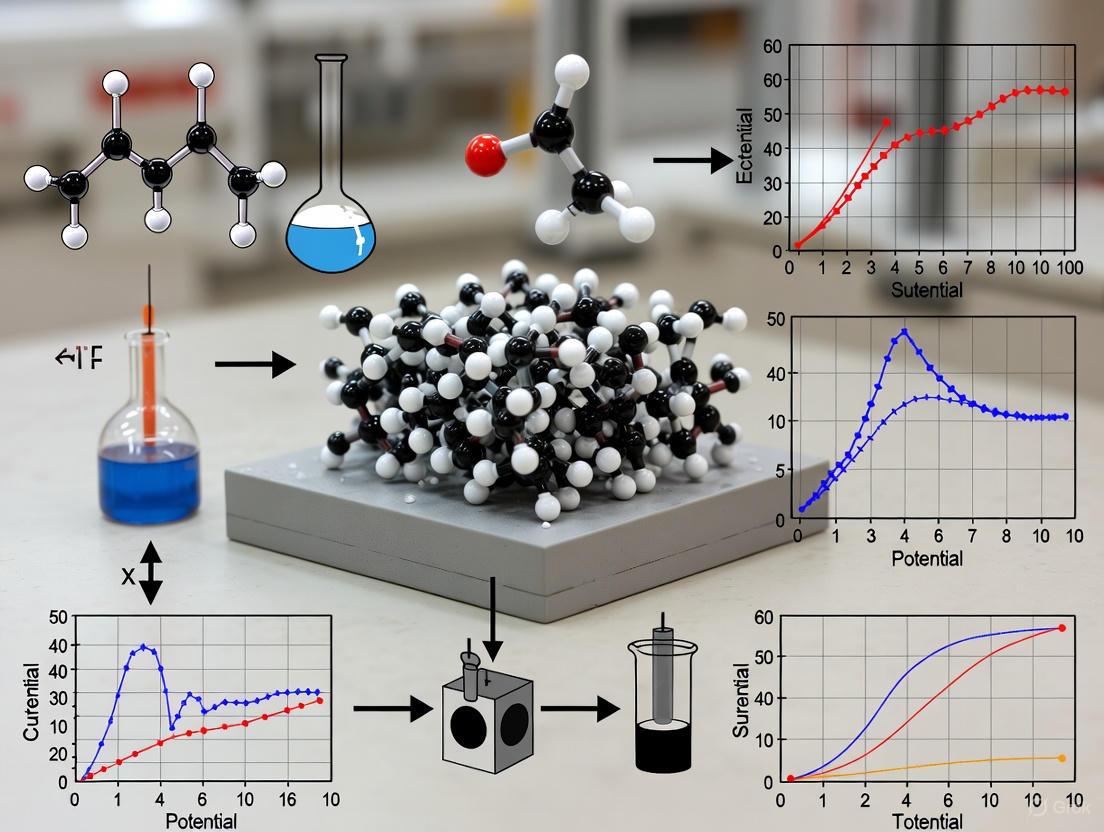
Advancing Reproducibility in Solid Electrode Surface Renewal: Strategies for Consistent Electrochemical Interfaces in Biomedical Research
This article provides a comprehensive examination of strategies to enhance the reproducibility of solid electrode surface renewal, a critical process in electroanalysis and biosensing.

Advanced Strategies for Reducing Interference in Copper Detection Using Silver Nanoparticle Sensors
Accurate detection of copper ions (Cu²⁺) is critical in biomedical research, drug development, and environmental monitoring, but is often compromised by matrix interference and the presence of other metal ions.
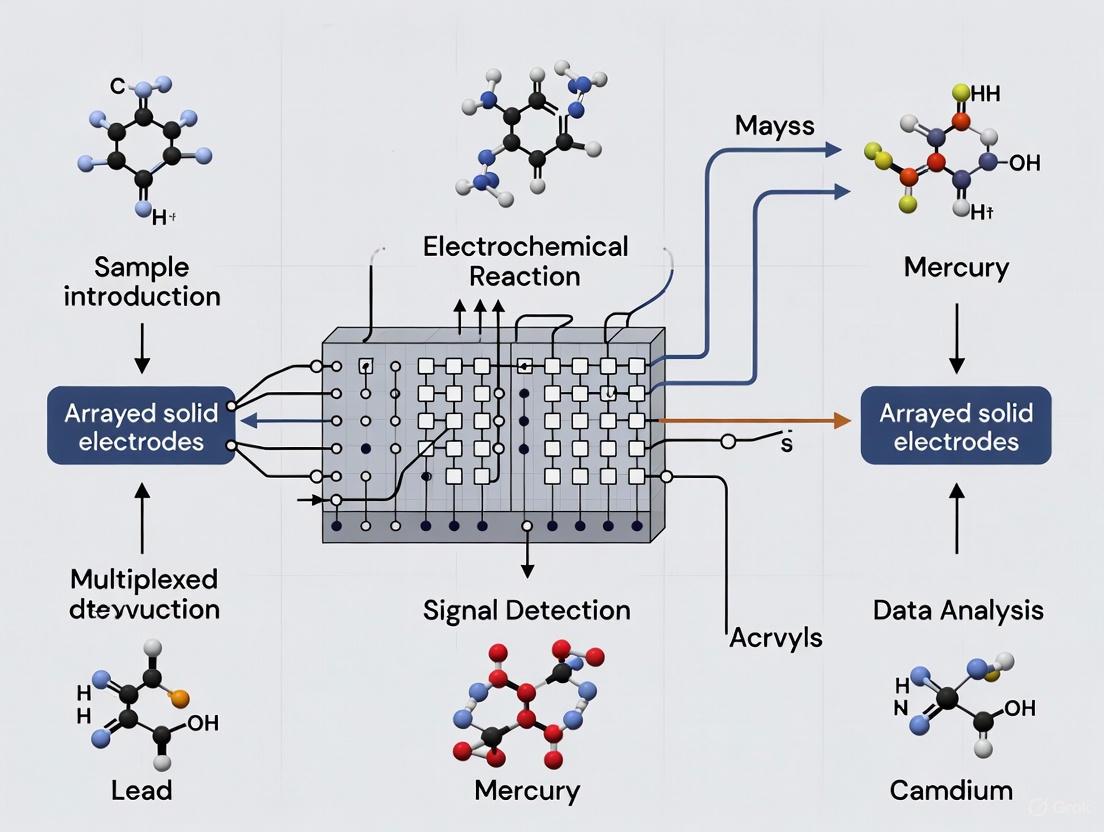
Multiplexed Heavy Metal Detection with Arrayed Solid Electrodes: Strategies, Materials, and Biomedical Applications
This article provides a comprehensive overview of the latest advancements in multiplexed heavy metal detection utilizing arrayed solid electrodes.
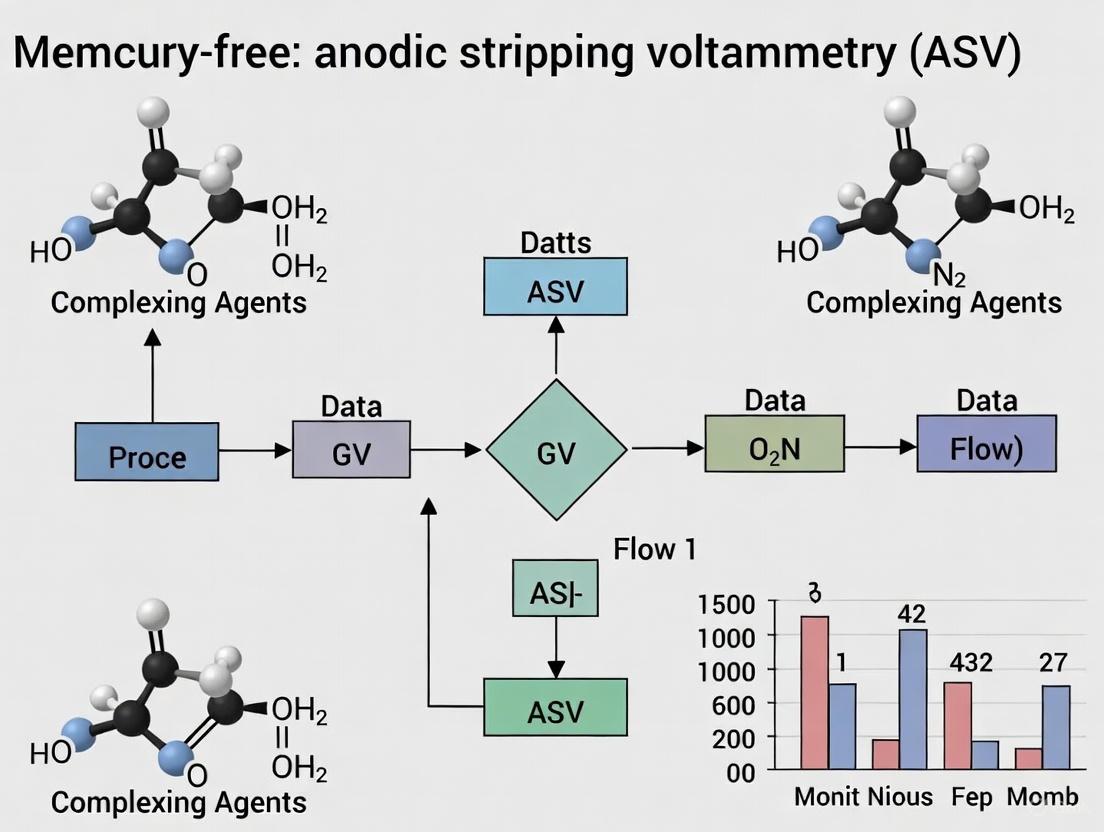
Enhancing Selectivity in Mercury-Free ASV: Advanced Complexing Agents for Biomedical and Environmental Analysis
This article explores the strategic use of complexing agents to achieve high selectivity in mercury-free Anodic Stripping Voltammetry (ASV), a critical advancement for trace metal detection in biomedical and environmental...

Portable ASV for Arsenic Speciation in Aquatic Systems: A Field-Deployable Approach for Rapid, On-Site Analysis
This article provides a comprehensive overview of the application of portable Anodic Stripping Voltammetry (ASV) for the speciation of inorganic arsenic in aquatic environments.